Are you ready to give your clothes, bags, or DIY projects a professional touch? Snap fasteners are a simple, durable way to add closures that look neat and function perfectly.
But how do you apply them without complicated tools? Using just a hammer, you can easily attach snap fasteners right at home or in your workshop. In this guide, you’ll discover clear, step-by-step tips on how to apply snap fasteners with a hammer—no special equipment needed.
By the end, you’ll have the confidence to add snaps to your fabrics quickly and securely, making your creations both stylish and practical. Keep reading to unlock this handy skill that saves time and effort!

Credit: blog.closetcorepatterns.com
Choosing Snap Fasteners
Choosing the right snap fasteners is key to a successful project. The correct snaps ensure strong closure and a neat look. Consider snap types, sizes, and suitable materials before starting. This helps avoid damage and poor fitting.
Types Of Snap Fasteners
Snap fasteners come in metal and plastic. Metal snaps suit heavy fabrics like denim and leather. Plastic snaps work well for light fabrics such as cotton and polyester. Some snaps have a decorative top, adding style. Others are plain and functional. Choose based on your fabric and design.
Selecting The Right Size
Snap sizes vary from small to large. Small snaps fit thin fabrics and light garments. Large snaps hold thick materials and heavy-duty items. Check the fabric thickness and weight before picking a size. A snap too small may not hold well. Too large can look bulky and damage fabric.
Materials Suitable For Snaps
Snaps fit many materials. Metal snaps work great on denim, canvas, leather, and upholstery. Plastic snaps suit cotton, nylon, fleece, and thin synthetics. Avoid snaps on very delicate or stretchy fabrics. These can tear or stretch out. Always test a snap on a scrap piece first.

Credit: www.youtube.com
Tools Needed
Troubleshooting common issues helps ensure your snap fasteners hold tight and look good. Problems like loose snaps, damaged fabric, or misaligned snaps can affect your project. Fixing these quickly saves time and frustration.
Loose Snaps
Loose snaps usually happen if the snap is not hammered firmly. Check if the snap parts are fully pressed together. Tap the snap gently again with the hammer, using a firm but controlled force. Avoid hitting too hard to prevent damage.
If the snap still feels loose, the fabric may be too thick or soft. Use a thinner fabric or add a small piece of interfacing behind the snap. This gives extra support and holds the snap tighter.
Damaged Fabric
Fabric can tear or wrinkle when applying snaps. Use a small piece of scrap fabric or interfacing under the snap area. This protects the fabric from hammer damage and spreads the pressure evenly.
Work on a hard, flat surface to avoid bending the fabric. Hammer softly at first to test the pressure. Replace any torn fabric pieces before reapplying snaps to keep your project neat.
Misaligned Snaps
Misaligned snaps cause the fastener not to close properly. Mark the exact snap positions with a fabric pen before hammering. Double-check the placement by folding the fabric to see if snaps meet correctly.
Align the male and female parts carefully. Hold them steady while tapping with the hammer. Use light taps to adjust the position before fully securing the snaps in place.
Credit: www.reddit.com
Frequently Asked Questions
How To Put On Snap Fasteners With A Hammer?
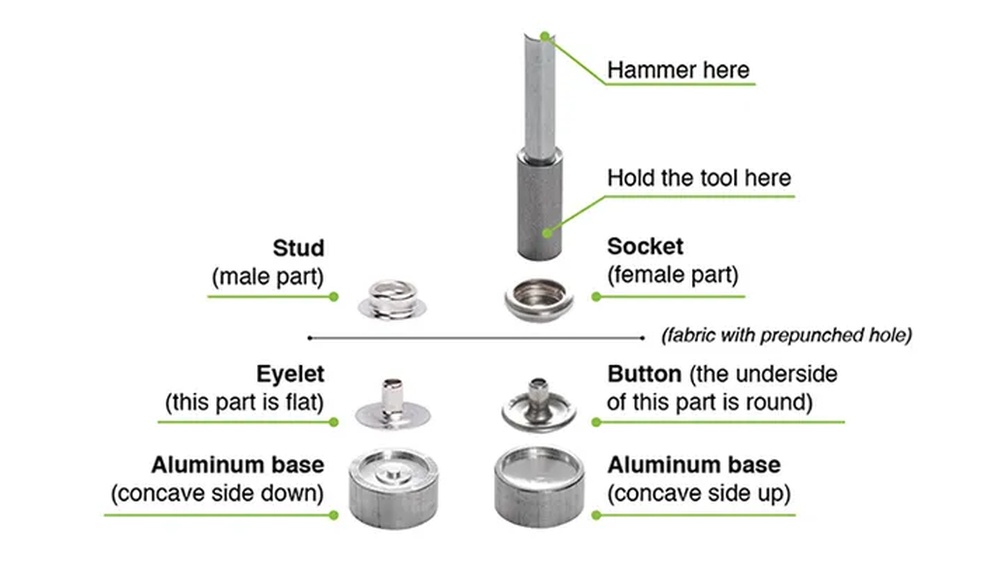
Place the snap socket on the fabric’s top side. Align the stud underneath. Position the snap on the anvil. Tap firmly with a hammer until secure. Ensure even hits to avoid damage. Check snap closure for proper fit.
Which Side Of The Snap Goes On Top?
The female snap (socket) with a hole goes on top or the garment’s right side. The male snap (stud) attaches on the bottom or left side. This alignment ensures the stud fits securely into the socket for a proper snap closure.
How To Attach A Snap Fastener?
Place the female snap (socket) on the fabric’s right side and the male snap (stud) on the opposite side. Align both parts carefully, then press or hammer them together until secure. Use snap pliers or a hammer for firm attachment.
How To Use No-sew Snaps?
Press no-sew snaps firmly onto fabric where needed. Align snap parts correctly, then snap them together by hand or with pliers. Ensure a tight fit for secure closure without sewing.
Conclusion
Applying snap fasteners with a hammer is simple and effective. Follow the steps carefully to avoid mistakes. Place the snap parts correctly before hammering. Use firm but controlled hits to secure snaps tightly. Check the snap’s fit and function after installation.
Practice helps improve your speed and precision. This method works well for many fabrics and projects. Snap fasteners add convenience and style to your items. Try this technique to finish your sewing tasks confidently.