Have you ever come across something that connects two things but only ever touches one? It sounds puzzling, right?
This little mystery might seem simple at first, but once you uncover the answer, you’ll see how clever and surprising it really is. Keep reading, and you’ll discover a fascinating fact that will change the way you look at everyday objects around you.
Ready to solve this riddle? Let’s dive in!
Riddles That Challenge
Riddles that challenge push our minds to think beyond the obvious. They twist simple ideas into puzzles that tease our brains. These riddles invite us to pause, think, and see things differently. They sharpen our focus and spark curiosity in unexpected ways.
Why Puzzles Fascinate Us
Puzzles tap into our natural love for problem-solving. They offer a small challenge that feels rewarding to solve. Our brains enjoy spotting patterns and making connections. Solving a riddle gives a sense of achievement and joy. It also encourages creative thinking and patience.
The Role Of Wordplay
Wordplay adds layers to riddles, making them more fun and tricky. It plays with meanings, sounds, and spellings of words. This creates confusion but also clues to the answer. Wordplay forces us to think about language in new ways. It makes riddles clever and memorable, holding our attention longer.
Breaking Down The Riddle
The riddle “What fastens two but only touches one?” invites curiosity. It challenges us to think beyond the obvious. Breaking it down helps us understand the puzzle clearly. Let’s explore the clues and key parts step by step.
Understanding each piece of the riddle brings us closer to the answer. Careful analysis reveals hidden meaning. This method makes solving riddles easier and more fun.
Analyzing The Clues
The riddle mentions fastening two things. It also says only one is touched. This difference is important. Fastening means joining or holding together. Touching means direct contact. The object must connect two parts but only touch one side. This hint narrows down the possibilities.
Identifying Key Elements
Focus on words like “fastens,” “two,” and “touches one.” These guide our thinking. The object is likely small and simple. It must link two parts but physically touch only one. Think about everyday items with this feature. This step helps us guess the answer logically.
Common Answers Explored
Many riddles make us think hard, and this one is no different. “What fastens two but only touches one?” invites curiosity and guessing. People often try different answers based on everyday objects.
Exploring common answers helps understand why some fit better than others. It also shows how simple objects can surprise us with their unique roles.
The Button Example
A button is a popular answer to this riddle. It fastens two pieces of fabric together, like on a shirt or pants. The button only touches one fabric piece directly. The other fabric holds the buttonhole, which the button passes through.
This means the button connects two parts but only touches one side. It works as a bridge between the two fabrics. This simple object perfectly fits the riddle’s clue.
Other Possible Objects
Other objects can also fit this idea. A zipper connects two sides of a jacket. The slider moves along one side, fastening both. Yet, it only touches the slider’s path on one edge.
Another example is a key locking a door. The key fastens the lock, connecting the door and frame. It only touches the lock mechanism inside the door, not the frame directly.
These examples show how everyday items can match the riddle’s challenge. Each fastens two parts but only touches one part directly. It reveals how simple things solve tricky questions.
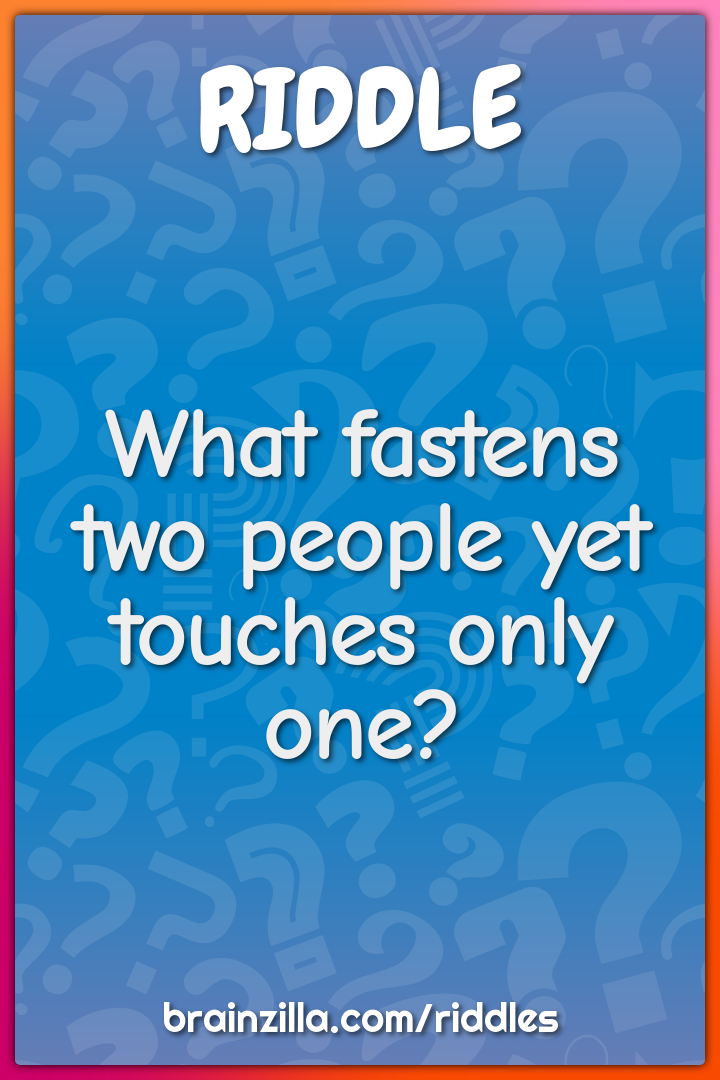
Credit: www.brainzilla.com
Why This Riddle Works
This riddle captures attention because it is simple yet tricky. It makes you pause and think deeply. The answer is not obvious, which makes it interesting. The puzzle plays with words in a clever way. It challenges your brain without being too hard.
Understanding why this riddle works helps us see how language can create puzzles. It shows how small details can change meaning. This makes the riddle enjoyable and thought-provoking.
The Power Of Ambiguity
The riddle uses ambiguity to confuse and engage. One phrase can have multiple meanings. This forces you to guess and rethink your ideas. Ambiguity creates a gap between what you expect and what is true. It tricks your brain into thinking differently.
Ambiguity makes the riddle feel like a mystery. It hides the answer in plain sight. This keeps you curious and focused on solving it.
Engaging Critical Thinking
This riddle demands critical thinking and problem-solving. It pushes you to analyze each word carefully. You must consider how things connect and interact. It encourages looking beyond the obvious.
Critical thinking helps you break down the riddle step by step. This skill is useful in many areas of life. The riddle trains your mind to think clearly and creatively.
Creating Your Own Riddles
Creating your own riddles is a fun way to challenge your mind and entertain others. It lets you use your imagination and think in new ways. Anyone can try it with some simple steps. You can make puzzles that surprise and delight your friends.
Start small. Think about everyday things around you. Then, twist their usual meaning. This makes riddles interesting and clever.
Tips For Crafting Puzzles
Keep your riddles short and clear. Use simple words that everyone knows. Avoid tricky phrases that confuse readers. Your goal is to make people think, not to frustrate them.
Use questions that make people picture something in their mind. Give hints but don’t give away the answer. Balance is key. Test your riddles on friends to see if they work well.
Incorporating Everyday Objects
Look around your home or school. Objects like keys, locks, or shoes can inspire riddles. These items are familiar to everyone. Using them helps people connect with your puzzle quickly.
Describe the object in a new way. Focus on what it does or how it feels. This makes your riddle fresh and fun. You might write about something that “fastens two but only touches one.”
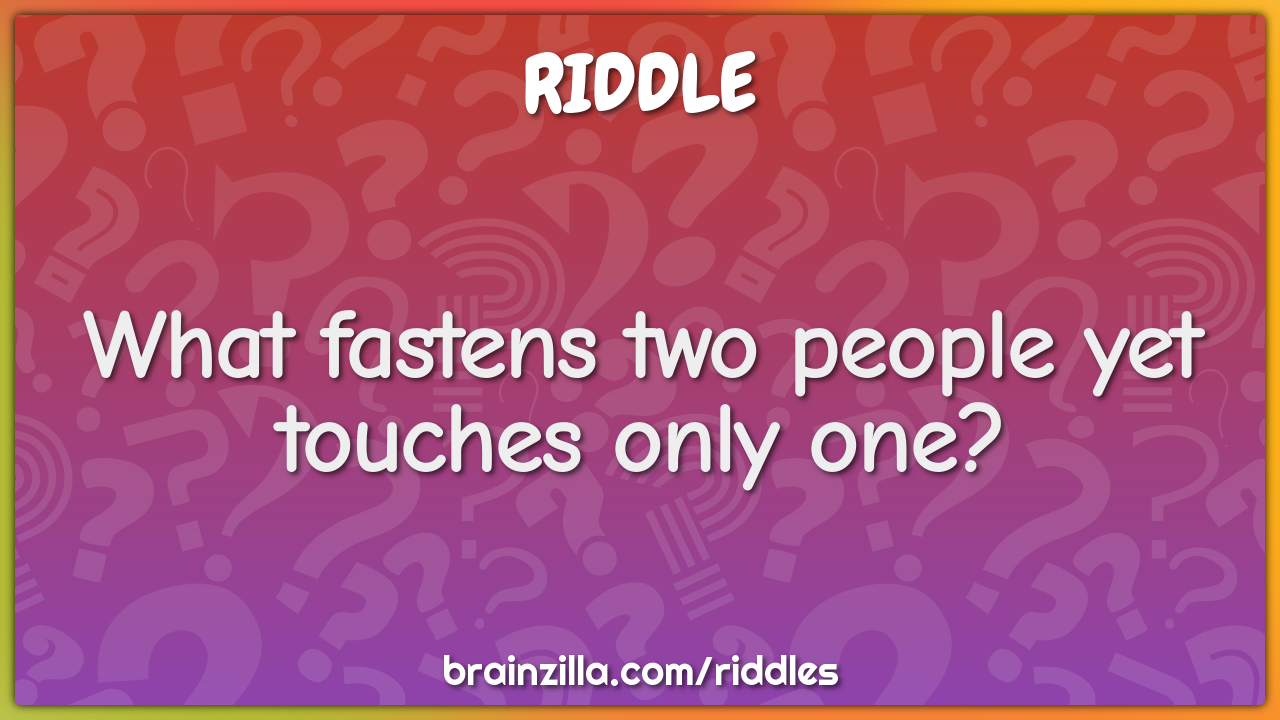
Credit: www.brainzilla.com

Credit: www.ahapuzzles.com
Frequently Asked Questions
What Fastens Two Objects But Touches Only One?
A hinge fastens two objects, like a door and frame. It only physically touches the door, allowing movement and support.
How Does A Hinge Work Without Touching Both Sides?
A hinge attaches to one surface but connects to another through a pivot. It enables rotation without direct contact.
Why Does A Hinge Only Touch One Part Physically?
The hinge’s pin and plates attach firmly to one piece. The other part moves freely, so it isn’t directly touched.
Can A Hinge Fasten Two Items Securely?
Yes, hinges securely fasten two items while allowing movement. They provide stability and flexibility in doors and lids.
Conclusion
This riddle teaches us to think beyond the obvious. It shows how something small can connect two things yet touch only one. Such puzzles sharpen our mind and make thinking fun. Keep asking questions and exploring ideas. Simple things often hold the most interesting secrets.
Stay curious and enjoy discovering new answers every day.