Have you ever wondered what really happens when you flip a light switch? It seems simple, but behind that small flick lies a fascinating process that powers your home’s lighting.
Understanding how a light switch works can save you time, help with basic repairs, and even inspire you to learn more about electrical systems. You’ll discover a clear, easy-to-follow diagram that breaks down each part of a light switch. By the end, you’ll see exactly how your everyday action controls the flow of electricity to brighten your space.
Keep reading, and you’ll never look at a light switch the same way again!
:strip_icc()/illustration-light-wiring-68fbf7c0-bcacb28c3bdc4eed8bda3204ffee82c4.jpg)
Credit: www.bhg.com
Basic Components
Understanding the basic components of a light switch helps you see how it works. A light switch controls the flow of electricity to a light fixture. It acts like a gate, opening or closing the path for electricity. Knowing the parts inside a switch and how they connect makes it easier to grasp its function.
Switch Types
There are several switch types used in homes. The most common is the single-pole switch, which controls one light. Another type is the three-way switch, allowing control of a light from two places. Toggle, rocker, and push-button are common styles you see on walls.
Wiring Essentials
Wires connect the switch to the power source and light fixture. The hot wire carries electricity to the switch. The load wire sends electricity from the switch to the light. A ground wire provides safety by directing electricity away from faults.
Power Source
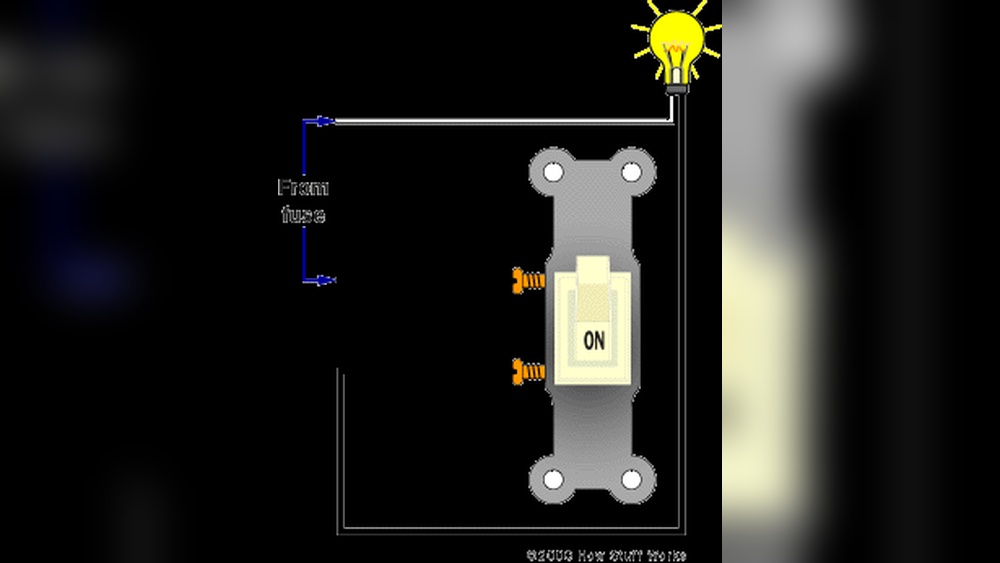
The power source supplies electricity to the switch. It usually comes from the main electrical panel. Electricity flows through the hot wire to the switch. When the switch is on, electricity reaches the light fixture. This completes the circuit and turns the light on.

Credit: www.youtube.com
Circuit Flow
The circuit flow in a light switch controls how electricity moves to power a light. Understanding this flow helps explain how the switch turns a light on or off. The flow depends on the path the electric current takes, the role of the switch, and how the load connects.
Current Path
Electricity flows from the power source through wires. It travels along a path called a circuit. The current moves through the switch and reaches the light bulb. If the circuit is complete, electricity flows and the light shines.
Role Of The Switch
The switch acts like a gate in the circuit. When the switch is on, it closes the gate. This lets electricity pass through the circuit. When the switch is off, it opens the gate. This stops electricity from flowing and the light turns off.
Load Connection
The load is the part of the circuit that uses electricity. In this case, it is the light bulb. The load connects after the switch in the circuit. Electricity flows through the load to make the light glow. The load needs a complete circuit to work properly.
Step-by-step Operation
The step-by-step operation of a light switch shows how electricity flows to power a light bulb. This process helps us understand how a simple action controls the lights in a room. Below, we break down what happens inside the switch during its use.
Switch On Process
When you flip the switch up, the circuit closes. This allows electricity to flow through the wires. The current moves from the power source to the light bulb. The bulb then lights up as electricity passes through it. The switch acts like a gate, opening to let power through.
Switch Off Process
Flipping the switch down opens the circuit. This stops electricity from flowing to the bulb. Without current, the bulb turns off. The switch breaks the path, cutting off power safely. This simple action controls the light easily.
Safety Mechanisms
Light switches include features to keep users safe. They prevent electrical shocks by isolating wires inside the switch. The switch cover protects from touching live parts. Some switches have built-in fuses to stop overloads. These safety parts help prevent accidents at home.
Common Diagrams
Understanding common light switch diagrams helps you learn how switches work. These diagrams show wiring and connections inside switches. They make it easier to install or fix switches safely.
Each type of switch has a unique diagram. These diagrams show how electricity flows through the switch. Let’s explore the most common ones used in homes.
Single-pole Switch
The single-pole switch is the simplest type. It controls one light or a group of lights from a single place. Its diagram shows two terminals connected to the power source and the light fixture. The switch opens or closes the circuit to turn the light on or off.
Three-way Switch
The three-way switch allows control of one light from two places. Its diagram shows two switches connected by traveler wires. These wires carry current between the switches. This setup helps turn lights on or off from different locations, like stairs or hallways.
Dimmer Switch
The dimmer switch controls light brightness. Its diagram includes a special component called a variable resistor or electronic dimmer. This part changes the amount of electricity flowing to the light. You can make lights brighter or dimmer with a dimmer switch.
Troubleshooting Tips
Troubleshooting a light switch can save time and money. Understanding common problems helps you fix issues quickly. This section gives clear tips to identify faults, test the switch, and replace parts if needed. Follow these steps to ensure your light switch works properly again.
Identifying Faults
Start by checking if the light switch feels loose or stuck. Look for visible damage like cracks or burn marks. Listen for any unusual sounds when you flip the switch. Check if the light flickers or does not turn on at all. These signs point to common switch problems.
Testing The Switch
Turn off the power before testing the switch. Use a voltage tester to check if power reaches the switch. Flip the switch on and off while testing for electrical flow. If there is no flow, the switch might be faulty. Testing helps confirm if the problem is with the switch or wiring.
Replacing Components
Remove the switch cover carefully with a screwdriver. Take out the old switch by loosening the terminal screws. Connect the new switch to the same terminals following the wiring diagram. Tighten the screws and replace the cover. Turn the power back on and test the new switch. Replacing parts is simple with proper steps.
:max_bytes(150000):strip_icc()/how-light-switches-work-2175162-2-V1-c86fba8610b14f178ad09d7ef8d3184c.jpg)
Credit: www.thespruce.com
Frequently Asked Questions
How Does A Light Switch Control Electricity Flow?
A light switch opens or closes the electrical circuit. When closed, electricity flows to the light bulb. When open, the flow stops, turning the light off. This simple action controls the light’s operation efficiently.
What Are The Common Types Of Light Switches?
Common types include toggle, rocker, and dimmer switches. Toggle switches flip up or down. Rocker switches press on either side. Dimmer switches adjust light brightness. Each type serves different control needs in homes.
Why Is A Wiring Diagram Important For Light Switches?
A wiring diagram shows how to connect wires correctly. It prevents electrical hazards and ensures proper switch function. Diagrams help both professionals and DIYers install or troubleshoot switches safely and efficiently.
Can A Light Switch Be Installed Without A Diagram?
While possible, installing without a diagram risks incorrect wiring. This may cause switch failure or electrical hazards. Using a diagram ensures proper connections and safe installation, especially for complex setups.
Conclusion
Understanding how a light switch works helps with basic home repairs. The diagram shows how electricity flows to turn lights on or off. This simple device controls power safely and easily. Knowing this can save time and money. Next time you flip a switch, remember the path electricity takes.
It’s a small but important part of everyday life. Keep learning about household basics to feel more confident. Simple knowledge makes tasks less confusing. A light switch is an easy start.