Imagine holding a small rock that weighs just 0.12 kg. It might seem simple, but what happens when this tiny object is fastened and set into motion?
You might be surprised by the science behind it and how it relates to everyday things you encounter. You’ll discover the fascinating details about this small rock, its mass, and why fastening it changes everything. By the end, you’ll see just how something so small can teach you big lessons about physics and motion.
Ready to dive in? Let’s get started!
Credit: www.storyofmathematics.com
Properties Of The Rock
The properties of a small rock tell us a lot about its nature. Each characteristic helps us understand how it behaves and interacts with the environment. This rock, with a mass of 0.12 kg, has specific traits that define it clearly.
Studying these properties gives insight into its weight, size, and feel. These details matter in science and everyday use.
Mass And Size
The rock weighs exactly 0.12 kilograms. This mass shows it is lightweight and easy to handle. Its small size makes it portable and simple to fasten. The compact shape fits well in many places. These features make it practical for various uses.
Material Composition
The rock is made of natural minerals. These minerals give it strength and durability. Its composition affects how it reacts to water and air. Some minerals may make it harder or softer. Knowing the material helps predict its lifespan.
Surface Texture
The rock’s surface feels rough and uneven. This texture comes from natural weathering and mineral grains. The rough surface helps it stay in place when fastened. It also affects how light reflects off it. This makes the rock look natural and real.
Forces Acting On The Rock
The small rock, weighing 0.12 kg, experiences several forces. These forces keep it in place and affect its movement. Understanding these forces helps explain how the rock stays fastened and what happens if it moves.
Gravitational Force
Gravity pulls the rock downward toward the Earth. This force depends on the rock’s mass and gravity’s strength. For a 0.12 kg rock, gravity pulls with about 1.18 newtons of force. This force tries to make the rock fall.
Tension In The Fastening
The fastening holds the rock in place. It creates tension, pulling upward against gravity. This tension force balances the downward pull of gravity. If the tension is too weak, the rock will slip or fall.
Frictional Effects
Friction acts between the rock and the surface it touches. This force resists sliding or movement. Friction helps keep the rock steady when it is fastened. The rougher the surface, the stronger the friction force.
Motion And Equilibrium
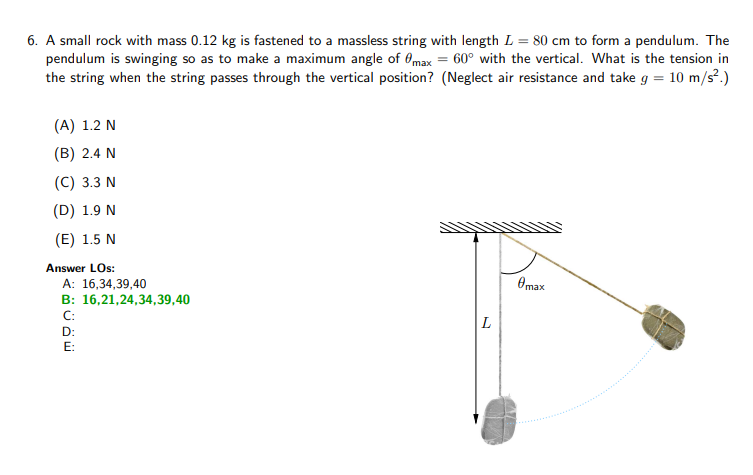
Understanding the motion and equilibrium of a small rock with a mass of 0.12 kg helps explain basic physics concepts. This rock, when fastened, shows how forces and energy interact. Studying its behavior reveals the balance between movement and rest.
Static Equilibrium Conditions
Static equilibrium happens when the rock does not move. The forces acting on it must balance each other out. The sum of all forces equals zero. Also, the total torque around any point is zero. This means the rock stays still and stable.
Potential And Kinetic Energy
The rock has potential energy due to its position. If it moves, this energy changes into kinetic energy. Kinetic energy depends on the rock’s speed and mass. The faster it moves, the more kinetic energy it has. Energy changes show how motion starts or stops.
Impact Of External Forces
External forces can change the rock’s motion or keep it steady. Gravity pulls the rock downwards. Tension from the fastening holds it up. Other forces like wind or a push can cause movement. The rock’s response depends on the size and direction of these forces.
Credit: www.chegg.com
Practical Applications
A small rock with a mass of 0.12 kg may seem simple, but it has many practical uses. Understanding its properties helps engineers and designers create safe and effective structures. The way this rock is fastened plays a big role in many fields. From construction to science, the rock’s mass and secure fastening affect outcomes.
This section explores real-world applications. It shows how small objects like this rock contribute to larger projects. The focus is on engineering, safety, and examples from daily life.
Engineering Considerations
Engineers study how forces act on small objects like this rock. The mass of 0.12 kg affects how much force it can withstand. Proper fastening prevents movement or damage under stress. Material choice for fastening is key. It must hold the rock tightly without breaking. Calculations ensure the fastening can handle real conditions.
Safety Factors
Safety is vital when fastening any object. The rock’s mass influences the safety margin used in design. Extra strength is added to prevent accidents. Engineers plan for unexpected forces like wind or vibration. Regular checks ensure the fastening stays secure over time. This reduces risks in both small and large structures.
Examples In Real Life
Small rocks fastened securely appear in many places. In landscaping, they hold soil or decorate gardens. In science, they serve as weights for experiments. In construction, similar masses test material strength. Fastening methods vary from glue to mechanical clamps. Each use relies on understanding the rock’s mass and secure fastening.
Calculations And Formulas
Understanding the calculations and formulas is key to analyzing the small rock’s behavior. These calculations help us find the forces acting on the rock and the energy involved in its motion. We will look at force, energy, and Newton’s laws to explain the rock’s physical state.
Force Calculations
Force measures how much push or pull acts on the rock. It depends on the rock’s mass and acceleration. The formula to find force is simple:
Force (F) = Mass (m) × Acceleration (a)
For a rock with mass 0.12 kg, if it accelerates at 5 m/s², the force is:
F = 0.12 kg × 5 m/s² = 0.6 Newtons
This force tells us how strongly the rock is pulled or pushed.
Energy Calculations
Energy explains the rock’s ability to do work or move. Kinetic energy shows energy of motion. Use this formula:
Kinetic Energy (KE) = 0.5 × Mass (m) × Velocity² (v²)
If the rock moves at 3 m/s, the kinetic energy is:
KE = 0.5 × 0.12 kg × (3 m/s)² = 0.54 Joules
This energy value helps us understand how much power the rock has while moving.
Using Newton’s Laws
Newton’s laws describe the rock’s motion and forces. The first law states objects stay still or move at constant speed unless acted on by force. The second law links force, mass, and acceleration. The third law says every action has an equal and opposite reaction.
These laws let us predict the rock’s behavior in different conditions. For example, if a force pulls the rock, it will accelerate based on its mass. This helps us calculate motion precisely.

Credit: quizlet.com
Frequently Asked Questions
What Happens When A 0.12 Kg Rock Is Fastened?
When a 0. 12 Kg rock is fastened, it remains securely in place. The fastening prevents movement, ensuring stability and safety. This setup is common in experiments or practical applications involving forces and motion analysis.
How Does Mass Affect A Small Rock’s Motion?
Mass affects a rock’s motion by influencing its inertia. A 0. 12 Kg rock resists changes to its velocity more than lighter objects. Its mass also impacts gravitational force, which affects acceleration and the overall dynamics of the system.
Why Is Fastening Important For A Small Rock?
Fastening a small rock prevents it from moving unintentionally. It ensures controlled conditions in experiments or mechanical setups. This safety measure avoids accidents and allows accurate measurement of forces acting on the rock.
What Forces Act On A Fastened Rock?
A fastened rock experiences gravitational force pulling it down. The fastening applies an equal and opposite force, providing tension or support. These forces balance, keeping the rock stationary unless disturbed by external influences.
Conclusion
This small rock with a mass of 0. 12 kg shows basic physics in action. It helps us understand forces and motion clearly. Studying such examples makes science easier to learn. Simple objects can teach big lessons. Keep exploring and asking questions about how things move.
Every small detail matters in physics. This knowledge builds a strong foundation for more complex topics. Science is all around us, even in small rocks. Stay curious and keep learning step by step.