If you work with fasteners, knowing how to do thread notes can save you time and prevent costly mistakes. Imagine being able to quickly identify the right threads without confusion or guesswork.
This skill makes your projects smoother and your results stronger. You’ll discover simple steps to master thread notes, helping you handle fasteners like a pro. Keep reading to unlock the key to faster, smarter work with threads.

Credit: www.assemblymag.com
Basics Of Thread Notes
Thread notes are essential for identifying fasteners quickly and correctly. They provide key information about the thread size, pitch, and type. Understanding thread notes helps avoid mistakes in selecting or using bolts, screws, and nuts. This section covers the basics you need to know for reading and writing thread notes.
Types Of Thread Notes
Thread notes describe different thread styles and standards. Metric threads use millimeters for pitch and diameter. Unified threads use inches and have a different pitch system. There are coarse and fine threads. Coarse threads are thicker and stronger. Fine threads have more threads per inch and offer better grip.
Some thread notes include special types like tapered or pipe threads. Tapered threads tighten by wedging into the hole. Pipe threads seal against leaks. Knowing the thread type helps pick the right fastener for the job.
Common Terminology
Thread notes use specific terms that are good to know. Diameter is the width of the fastener’s thread. Pitch means the distance between threads. Thread count tells how many threads are on an inch or per millimeter. Thread angle is the angle between thread faces.
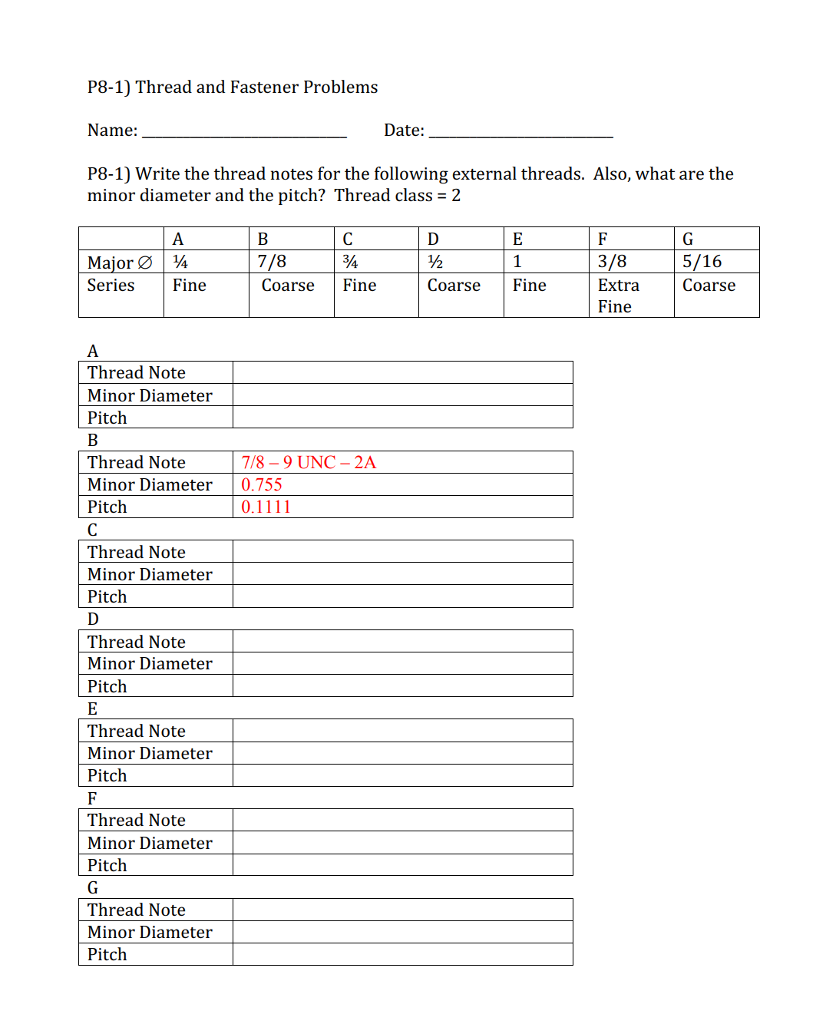
Major diameter is the largest part of the thread. Minor diameter is the smallest part. Lead is the distance a thread moves in one turn. Knowing these terms helps read thread notes clearly and avoid confusion.
Credit: www.chegg.com
Tools Needed For Thread Notes
Thread notes help identify fastener threads clearly and quickly. Using the right tools ensures accurate and neat notes. Proper tools save time and reduce mistakes.
Choosing the correct tools is essential for clear thread notes. These tools help measure and mark threads precisely. Let’s explore the main tools needed for thread notes.
Measuring Instruments
Measuring instruments show thread size and pitch. A thread pitch gauge is the key tool here. It matches the thread pattern for exact measurement. Calipers measure the fastener’s diameter accurately. Both tools help confirm the thread’s details before noting.
Marking Tools
Marking tools create clear, visible notes on fasteners. Fine-tip permanent markers are common for thread notes. They write smoothly and don’t smudge easily. White or bright colors stand out on dark fasteners. A scribe can also mark metal threads precisely. Clear marks make thread notes easy to read and reduce errors.
Preparing Fasteners For Thread Notes
Preparing fasteners for thread notes is an important step. It helps ensure the notes stick well and the fasteners work correctly. Proper preparation avoids mistakes and improves the quality of the work. Start by cleaning and inspecting the fasteners carefully.
Cleaning And Inspection
Remove dirt, oil, and grease from the fasteners. Use a cloth and a mild cleaner for this task. Clean threads thoroughly to prevent any debris from blocking the notes. After cleaning, inspect the fasteners for damage or wear. Look for cracks, rust, or bent threads. Only use fasteners that are in good condition. Damaged fasteners can cause problems later.
Surface Preparation
Prepare the surface for better adhesion of thread notes. Lightly sand the threads with fine-grit sandpaper. This roughens the surface and helps the notes stick better. Wipe away any dust after sanding. Avoid using harsh chemicals that may damage the fastener. Proper surface preparation increases the durability of thread notes.
Step-by-step Thread Noting Process
The thread noting process helps identify fasteners clearly and quickly. It saves time and prevents mistakes during assembly or repair. Following simple steps ensures the thread notes are accurate and useful.
Each step matters, from choosing the right note to applying it properly. Clear thread notes improve communication and maintain safety standards. Let’s explore the process in detail.
Selecting The Correct Thread Note
Choose a thread note that matches the fastener’s size and type. Check the thread pitch, diameter, and length carefully. Use standard abbreviations to keep notes clear and consistent. Avoid unclear or overly long notes.
Refer to industry guidelines or charts for correct thread codes. Write the note legibly to avoid confusion later. This step sets the foundation for accurate thread identification.
Applying The Thread Note Accurately
Place the thread note near the fastener or on its documentation. Use permanent markers or labels that resist wear and tear. Write slowly and clearly to maintain readability. Double-check spelling and numbers before finalizing.
Ensure the note does not cover important markings or obstruct inspections. Keep the note visible and easy to find. Proper application reduces errors and speeds up work.
Common Mistakes To Avoid
Thread notes help keep fastener information clear and accessible. Avoiding common mistakes saves time and prevents errors. Simple errors can cause confusion and rework. Focus on accuracy and clarity in your notes.
Misreading Thread Sizes
Thread sizes look similar but have key differences. Misreading sizes leads to wrong fasteners and poor fits. Double-check the thread pitch and diameter every time. Use a thread gauge for exact measurements. Write down the correct size clearly to avoid mix-ups.
Incorrect Marking Techniques
Marking threads poorly makes notes hard to read. Avoid using faint or smudged markings. Use a permanent marker or label that won’t fade. Place marks where they are visible and won’t rub off. Clear markings save time and reduce mistakes during assembly.

Credit: monsterbolts.com
Advanced Tips For Precision
Advanced tips help improve accuracy in thread notes for fasteners. Precision matters for thread quality and fitting. Small mistakes can cause damage or loose threads. These tips focus on clear visibility and steady technique.
Using Magnification Tools
Magnification tools make small thread details easier to see. A magnifying glass or jeweler’s loupe shows thread grooves clearly. This helps identify thread pitch and direction. Better visibility reduces errors during marking and cutting. Good lighting paired with magnification boosts precision.
Maintaining Consistent Pressure
Apply steady pressure while making thread notes. Uneven pressure can cause irregular thread depth. Hold the fastener and tool firmly but gently. Consistency ensures even thread marks for smooth fitting. Practice helps build muscle memory for pressure control.
Maintaining Thread Notes Over Time
Maintaining thread notes over time ensures fasteners work well and last longer. Threads can wear out or get damaged from use. Keeping them in good shape saves time and money. Regular care helps avoid problems like loose or stuck fasteners.
Inspection And Touch-ups
Check thread notes often for signs of damage or dirt. Use a magnifying glass to see small cracks or wear. Clean threads gently with a soft brush or cloth. If threads look worn, use a thread file or tap to fix them. Touch-ups restore the thread shape and improve fastening.
Protecting Thread Notes From Wear
Apply a light coat of oil or grease to protect threads from rust and friction. Avoid over-tightening fasteners to prevent thread damage. Store fasteners in dry places to reduce corrosion. Use thread protectors or caps when storing or shipping. These steps keep threads safe and extend their life.
Frequently Asked Questions
What Are Thread Notes For Fasteners?
Thread notes describe the size, pitch, and type of a fastener’s threads. They ensure correct matching and installation. Proper thread notes prevent damage and enhance assembly efficiency.
How Do You Read Thread Notes On Fasteners?
Read thread notes by identifying diameter, pitch, and thread form. For example, M8 x 1. 25 means 8mm diameter with 1. 25mm pitch. Knowing this helps select compatible fasteners.
Why Is Thread Pitch Important For Fasteners?
Thread pitch determines the distance between threads and affects fastening strength. Correct pitch ensures proper fit and prevents loosening or stripping during use.
Can Thread Notes Vary By Fastener Type?
Yes, thread notes differ between bolts, screws, and nuts. Each type may use different standards like metric or imperial, so always verify before use.
Conclusion
Thread notes help keep fastener details clear and easy to follow. Write them neatly and include size, pitch, and type. This makes work smoother and avoids mistakes. Use simple symbols and keep notes short. Always check your notes before use.
Clear thread notes save time and reduce errors. Practice often to improve your skill. Good notes mean better results in fastening projects.