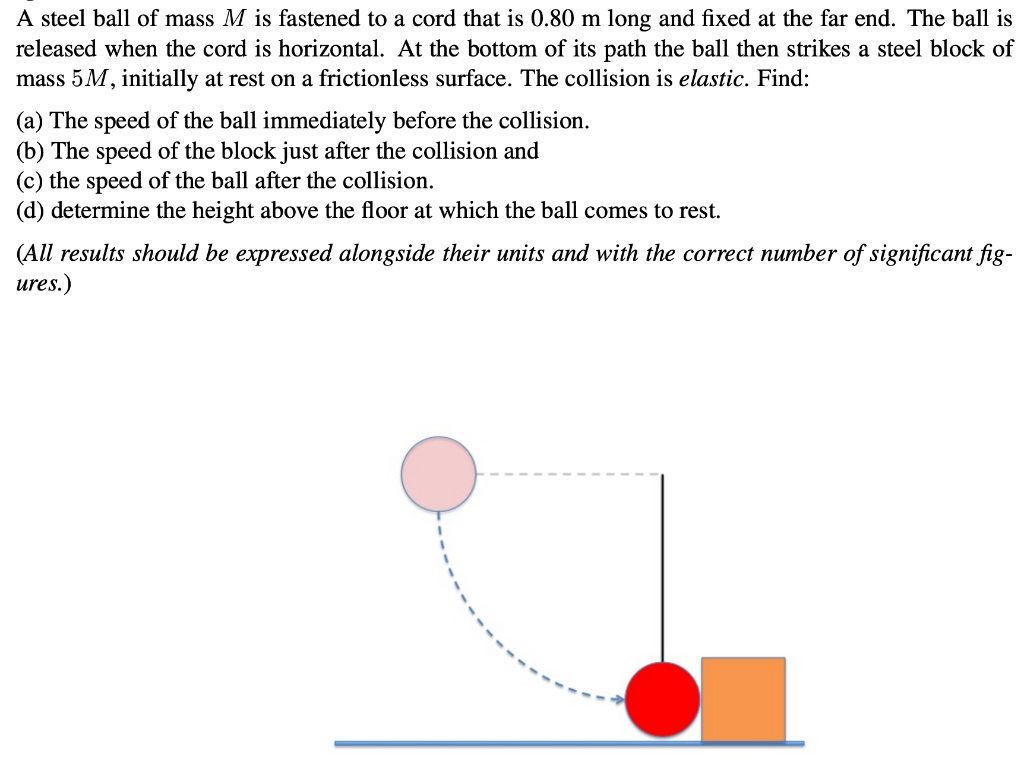
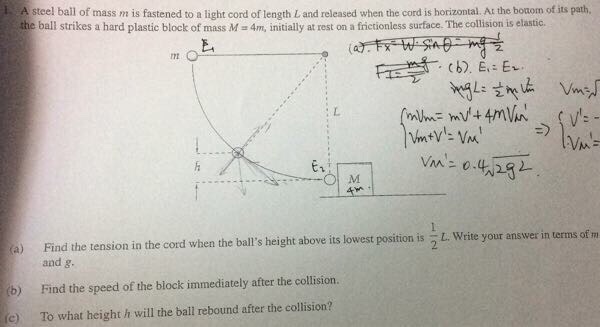
Imagine you have a steel ball of mass M tied to a light cord of length L. You pull it back so the cord is horizontal and then let it go. What happens next?
How fast will the ball be moving at the lowest point of its swing? And what forces act on it at that moment? If you’ve ever wondered about the physics behind swinging objects, this simple setup holds the key to understanding energy, motion, and forces in a way that’s both clear and practical.
You’ll discover how to analyze the ball’s motion step by step, unlocking concepts that can help you solve similar problems with confidence. Ready to dive in and see the steel ball in action? Let’s get started.
Credit: www.chegg.com
Steel Ball Setup
The motion dynamics of a steel ball fastened to a cord reveal fascinating physics. This setup creates a simple pendulum that swings back and forth. The ball’s movement follows a predictable yet intriguing path. Understanding this path helps explain how forces and energy interact during the swing.
Pendulum Swing Path
The steel ball moves along a curved arc, shaped by the cord length. It starts from rest when the cord is horizontal. Gravity pulls the ball downward, causing it to accelerate along the arc. The path is a segment of a circle with radius equal to the cord length. The ball reaches maximum speed at the lowest point of the swing.
The tension in the cord changes throughout the motion. It is greatest at the bottom, where the ball’s speed is highest. At the top of the path, the tension is lowest as the ball momentarily stops before swinging back. This continuous change in tension keeps the ball moving smoothly along its path.
Energy Transformations
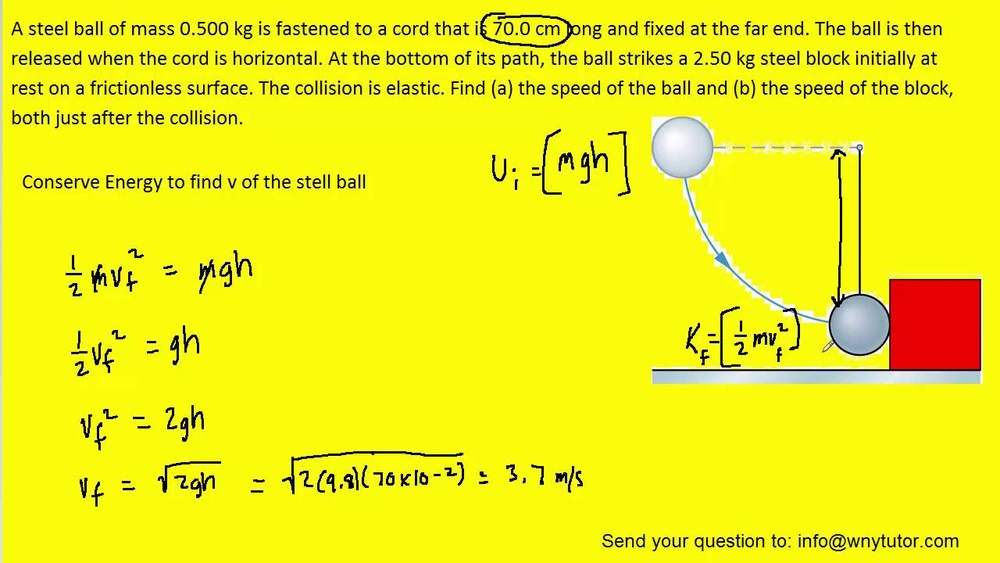
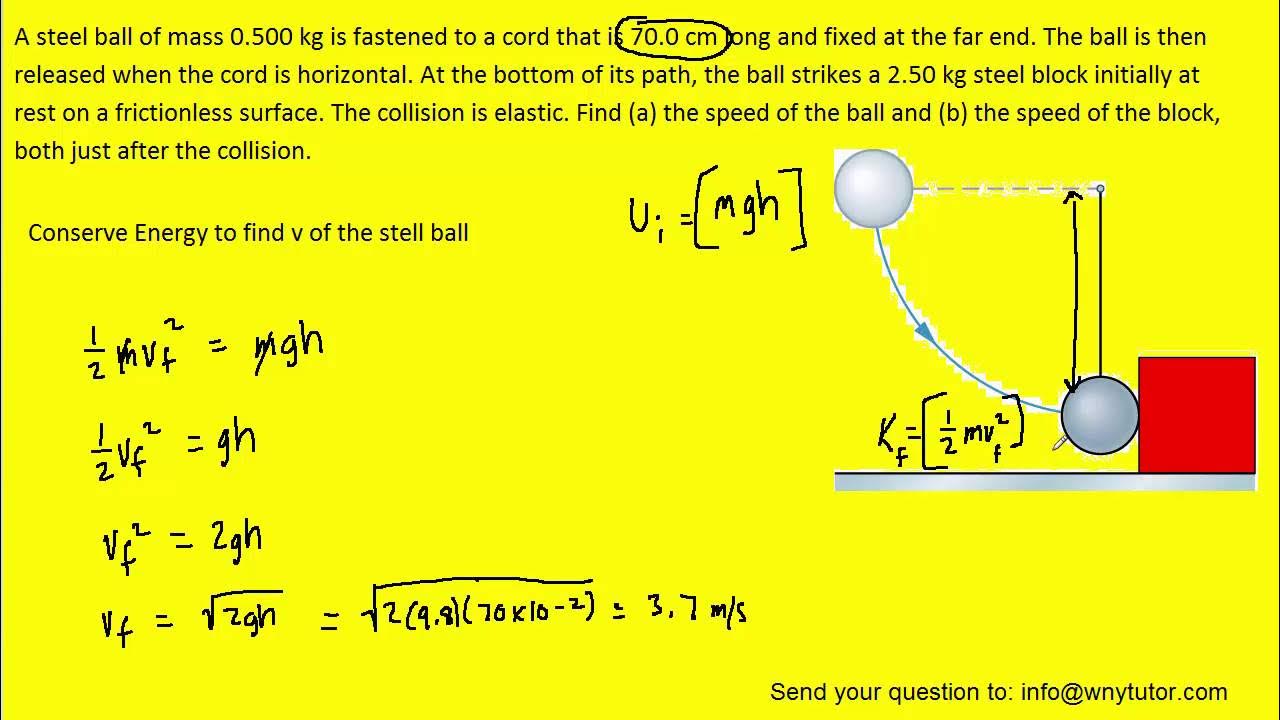
The ball’s energy constantly shifts between potential and kinetic forms. At the start, it holds maximum potential energy due to its height. As the ball swings down, this potential energy converts into kinetic energy. The ball reaches peak kinetic energy at the bottom of the arc.
As the ball rises on the other side, kinetic energy turns back into potential energy. The total mechanical energy remains nearly constant if air resistance and friction are minimal. These energy transformations explain the pendulum’s ongoing motion without external force.
Credit: www.youtube.com
Credit: www.chegg.com
Frequently Asked Questions
What Is The Setup Of The Steel Ball And Cord System?
A steel ball of mass M is attached to a light cord of length L. It is released from a horizontal position to swing like a pendulum.
How Does The Steel Ball Move When Released?
When released, the steel ball swings downward due to gravity. It gains speed and kinetic energy as it approaches the lowest point.
What Forces Act On The Steel Ball During Motion?
Gravity pulls the ball downward, while tension in the cord keeps it moving along a circular path. These forces affect its speed and trajectory.
What Happens When The Ball Reaches The Bottom Of Its Path?
At the lowest point, the ball has maximum kinetic energy and speed. It may strike a hard surface or continue swinging upward if unimpeded.
Conclusion
Understanding the motion of a steel ball on a cord helps explain basic physics concepts. The forces acting on the ball and its energy changes show how motion works in real life. This example makes it easier to grasp ideas like gravity, tension, and momentum.
Such problems build a strong foundation for learning physics step by step. Keep exploring similar examples to improve your understanding and confidence in the subject. Physics can be simple with clear, practical examples like this one.