Have you ever stopped to think about the small device that makes your life easier every day—the zip fastener? Whether it’s your favorite jacket, backpack, or pair of shoes, zippers are everywhere.
But do you know who actually invented this clever tool? Understanding the story behind the zip fastener will change the way you see this simple yet brilliant invention. You’ll discover the surprising history and the people who transformed a basic idea into the zipper we all rely on today.
Keep reading to unlock the fascinating journey of the zip fastener and how it became an essential part of your daily life.

Credit: immago.com
Early Fastening Devices
Before the modern zipper, people used various fastening tools to hold fabrics together. Early devices aimed to make dressing easier and faster. These inventions laid the groundwork for the zip fastener we use today. Understanding these early attempts shows how the zipper evolved over time.
Clasp Locker Origins
The clasp locker was an early fastening device invented in the late 19th century. It used hooks and eyes to join two pieces of fabric. Its main use was for fastening shoes. The clasp locker was bulky and not very smooth in operation. Despite its flaws, it inspired future designs of fasteners.
Elias Howe’s Contribution
Elias Howe, known for inventing the sewing machine, also worked on fasteners. He created a device similar to the clasp locker in 1851. Howe’s design used interlocking teeth but did not become popular. His idea influenced later inventors to improve fastening methods. Howe’s work was an important step toward the zipper’s creation.
Whitcomb L. Judson’s Invention
Whitcomb L. Judson played a key role in the early development of the zip fastener. His work laid the foundation for what we now call the zipper. Judson aimed to create a new type of fastener that could replace buttons and hooks.
His invention was called the “Slide Fastener” or “Clasp Locker.” It used a system of hooks and eyes to join two pieces of fabric. Judson believed this design could simplify fastening in clothing and other goods.
Slide Fastener Patent
In 1893, Judson received a patent for his Slide Fastener. The patent described a device that could quickly close shoes and garments. This early model had metal hooks that interlocked when slid together. Judson’s patent marked the first official step toward the modern zipper.
The Slide Fastener was innovative but had some problems. It was bulky and not always reliable. Yet, the idea of a sliding mechanism to fasten fabric was new and promising.
Initial Applications
Judson first applied his invention to shoe fasteners. Shoes were traditionally closed with laces or buttons, which took time to use. The Slide Fastener offered a quicker alternative. Despite this, it did not gain widespread use immediately.
Manufacturers found the fastener tricky to produce and sometimes unreliable. Judson hoped to expand its use to clothing and bags in the future. His invention sparked interest but needed improvements to become popular.
Gideon Sundback’s Innovations
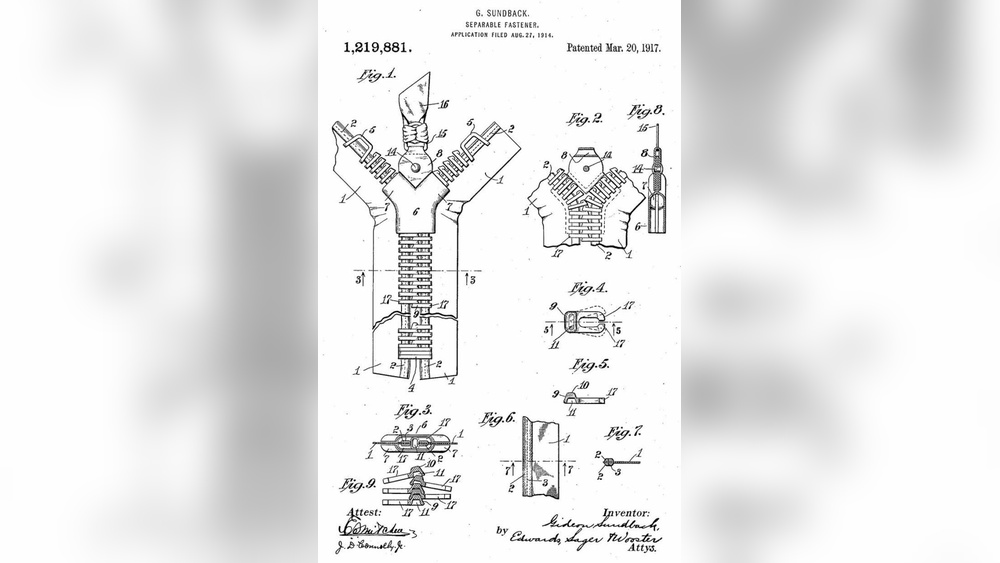
Gideon Sundback played a key role in improving the zipper. His work took early designs and made them reliable and practical. Sundback’s ideas shaped the zipper into the tool we use every day. His innovations focused on better design, stronger connection, and efficient production.
Modern Zipper Design
Sundback created the basic shape of today’s zipper teeth. He made the teeth bigger and more uniform. This helped the zipper close smoothly and stay shut. His design also allowed zippers to be made faster and cheaper.
Teeth Interlocking Mechanism
The teeth Sundback made fit tightly together. They locked in place when pulled by the slider. This prevented the zipper from coming undone easily. His mechanism improved the zipper’s strength and usability for clothes and bags.
Manufacturing Machine
Sundback built a machine to produce zipper teeth and attach them to fabric. This machine could create zippers quickly and in large amounts. It made zippers more available and affordable. His invention helped the zipper become a common item worldwide.
:max_bytes(150000):strip_icc()/001_Sundback_zipper_1917_patent-5c4e508946e0fb0001a8e82d.jpg)
Credit: www.thoughtco.com
Name And Popularization
The invention of the zip fastener involved not just creation but also naming and popularizing it. The journey from a simple fastening device to a household essential took time. Several inventors contributed to its design, but the name “zipper” and its widespread use came later. Understanding how the term arose and how it gained commercial fame reveals much about this common yet clever device.
Origin Of The Term ‘zipper’
The word “zipper” was first used in the early 20th century. It was not the original name for the fastener. Early inventors called it the “slide fastener” or “clasp locker.” The name “zipper” came from the sound the fastener made when closed quickly. This catchy name helped people remember the device easily. The term became popular through advertisements and everyday speech.
B.f. Goodrich And Commercial Use
B.F. Goodrich played a key role in popularizing the zipper. The company used the fastener on a new type of rubber boots. These boots were called “Zipper Boots.” The catchy name helped the product sell well. Goodrich’s marketing showed the zipper was practical and stylish. This commercial use made the fastener a common item in stores. Soon, the zipper appeared on clothes, bags, and other items worldwide.
Zipper’s Impact On Fashion
The zipper changed fashion by making clothes easier to wear. It replaced buttons and hooks, saving time and effort. Designers gained new freedom to create styles with smooth, clean lines. Zippers made clothes fit better and look modern. People liked the quick open and close feature.
Adoption In Clothing
At first, zippers appeared mainly in children’s clothes and boots. Their convenience soon caught attention in adult fashion. Dresses, skirts, and jackets began using zippers for fast closure. This helped clothes fit snugly without bulky fasteners. Zippers allowed new shapes and cuts in garments. Fashion quickly accepted zippers as a useful tool.
Use In Men’s Pants
Men’s pants saw a major change with zippers. Before, buttons were the only option and took longer to use. Zippers made pants easier to wear and remove. They also improved the look of trousers by hiding fasteners. Over time, zippers became the standard in men’s pants worldwide. This small change had a big impact on everyday fashion.
Credit: ykkamericas.com
Zipper Industry Evolution
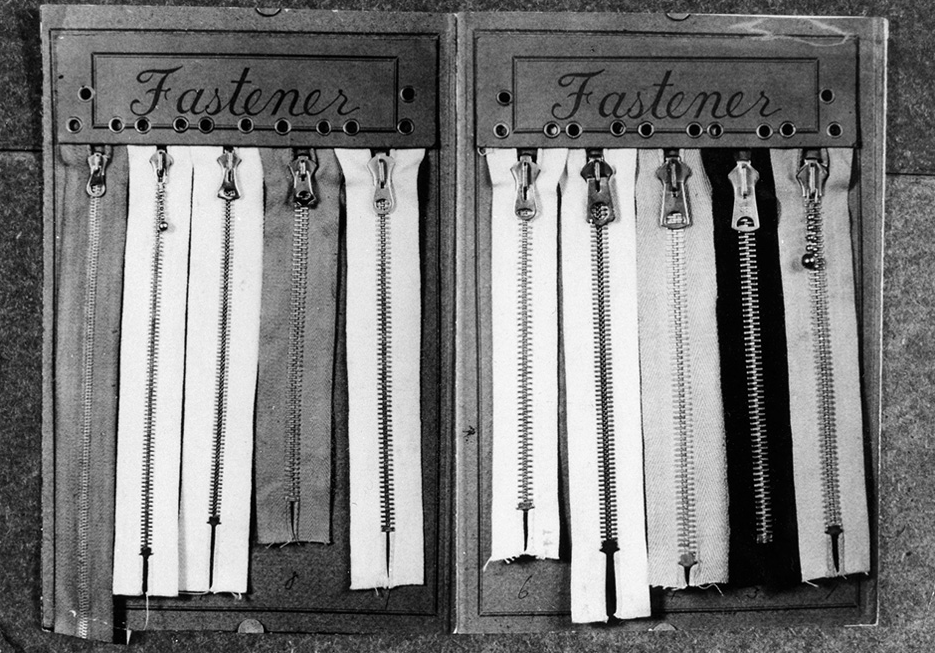
The zipper industry has changed a lot since its invention. Early designs were slow and not very reliable. Over time, new companies improved the zipper’s strength and ease of use. These changes helped zippers become a common part of daily life. Today, zippers appear on clothes, bags, and gear worldwide.
Talon Zipper Emergence
The Talon zipper started in the early 20th century. It was one of the first zippers made with metal teeth. Talon’s design was stronger and smoother than older versions. This helped zippers become popular for clothing and shoes. Talon played a big role in making zippers a trusted fastener.
Ykk’s Role And Influence
YKK, a Japanese company, began making zippers in the 1930s. It focused on quality and precision in every zipper. YKK quickly became the world’s largest zipper maker. The company’s zippers are known for reliability and smooth operation. YKK’s influence shaped how zippers are made and used globally.
Global Contributions
The invention of the zip fastener reflects a blend of ideas from many countries. Different engineers and manufacturers contributed to its evolution. This global effort turned a simple concept into a common item worldwide.
American And Swedish Engineers
Whitcomb L. Judson, an American engineer, created the first version. He called it the “Clasp Locker.” His design used hooks and eyes to close shoes. It was not perfect but showed great promise.
Later, Gideon Sundback, also from America, improved the design. He made the fastener stronger and easier to use. His work helped the zipper become popular in clothing.
In Sweden, engineers worked on similar ideas for fastening. Their contributions helped refine materials and manufacturing techniques. This made zippers more reliable and durable.
International Manufacturing Advances
Manufacturers worldwide played a key role in the zipper’s success. Japan’s YKK company became a leading zipper maker. YKK focused on quality and mass production methods.
European factories also advanced zipper production. They introduced new materials like nylon and plastic teeth. These changes made zippers lighter and more flexible.
Global collaboration between engineers and factories improved design and availability. Today, zippers are found on clothes, bags, and gear everywhere.
Zipper In Modern Society
The zipper has become an essential part of daily life. It offers quick and easy fastening in many products. This simple device saves time and effort. Its presence is so common, many hardly notice it. Zippers shape the way people dress and carry items. Their impact goes beyond clothes to various industries.
Everyday Applications
Zippers appear in clothing like jackets, jeans, and dresses. Bags, backpacks, and luggage use zippers for secure closure. Outdoor gear such as tents and sleeping bags rely on zippers for convenience. Footwear sometimes includes zippers for easier wearing. Even some furniture and upholstery use zippers to cover cushions. The zipper’s role is practical and widespread.
Technological Improvements
Modern zippers are stronger and more durable than before. New materials like plastic and nylon make zippers lightweight and rust-resistant. Waterproof zippers protect gear in wet conditions. Self-locking zippers prevent accidental opening during use. Innovations also focus on ease of use for children and disabled people. These improvements expand the zipper’s usefulness every year.
Frequently Asked Questions
Who Was The Original Inventor Of The Zipper?
Whitcomb L. Judson invented the original zipper, called the “Slide Fastener,” in the early 1890s. Gideon Sundback improved it later.
Did Ykk Invent The Zipper?
YKK did not invent the zipper. Whitcomb L. Judson invented the first version, and Gideon Sundback improved it into the modern zipper. YKK is a leading zipper manufacturer, not the original inventor.
Is The Zipper A Swedish Invention?
The zipper is not a Swedish invention. Gideon Sundback, a Swedish-American engineer, improved it into the modern design.
Who Invented The Zip Used To Fasten Clothes?
Whitcomb L. Judson invented the original zipper, called the “Slide Fastener,” in the early 1900s. Gideon Sundback improved it into the modern zipper.
Conclusion
The invention of the zip fastener changed how we use clothing and bags. Whitcomb L. Judson first created the clasp locker in the early 1900s. Gideon Sundback later improved the design to make the modern zipper. Today, zippers are found everywhere, from jackets to suitcases.
Their simple but effective design makes life easier. Understanding the inventors helps us appreciate this everyday tool. The zipper’s story shows how small ideas can have a big impact.