Have you ever noticed your ceiling fan’s light switch acting up or not working the way it should? Changing a light switch on a ceiling fan might sound tricky, but with the right steps, you can do it yourself quickly and safely.
Imagine saving money on an electrician and fixing the problem in no time. In this guide, you’ll learn exactly how to replace that switch, even if you’re not an expert. Keep reading, and by the end, you’ll feel confident tackling this simple home fix on your own.
Tools And Materials Needed
Changing a light switch on a ceiling fan requires some basic tools and materials. Having the right items ready makes the job easier and safer. This section lists everything needed before starting the work.
Tools Required
A screwdriver is essential, usually a flathead and a Phillips. A voltage tester ensures the power is off. Wire strippers help prepare the wires. Needle-nose pliers are useful for bending wires. A flashlight or headlamp helps to see in dark ceiling spaces. Having electrical tape is also handy for securing wire connections.
Materials Needed
You need a new light switch compatible with your ceiling fan. Electrical wire nuts are necessary to connect wires safely. A small piece of electrical wire might be required if you need to extend connections. Keep a plastic wall plate to cover the switch once installed.
Safety Gear
Safety glasses protect your eyes from dust and debris. Insulated gloves reduce the risk of electric shock. Wear comfortable clothing that covers your arms and legs. Use a sturdy ladder or step stool to reach the fan safely.
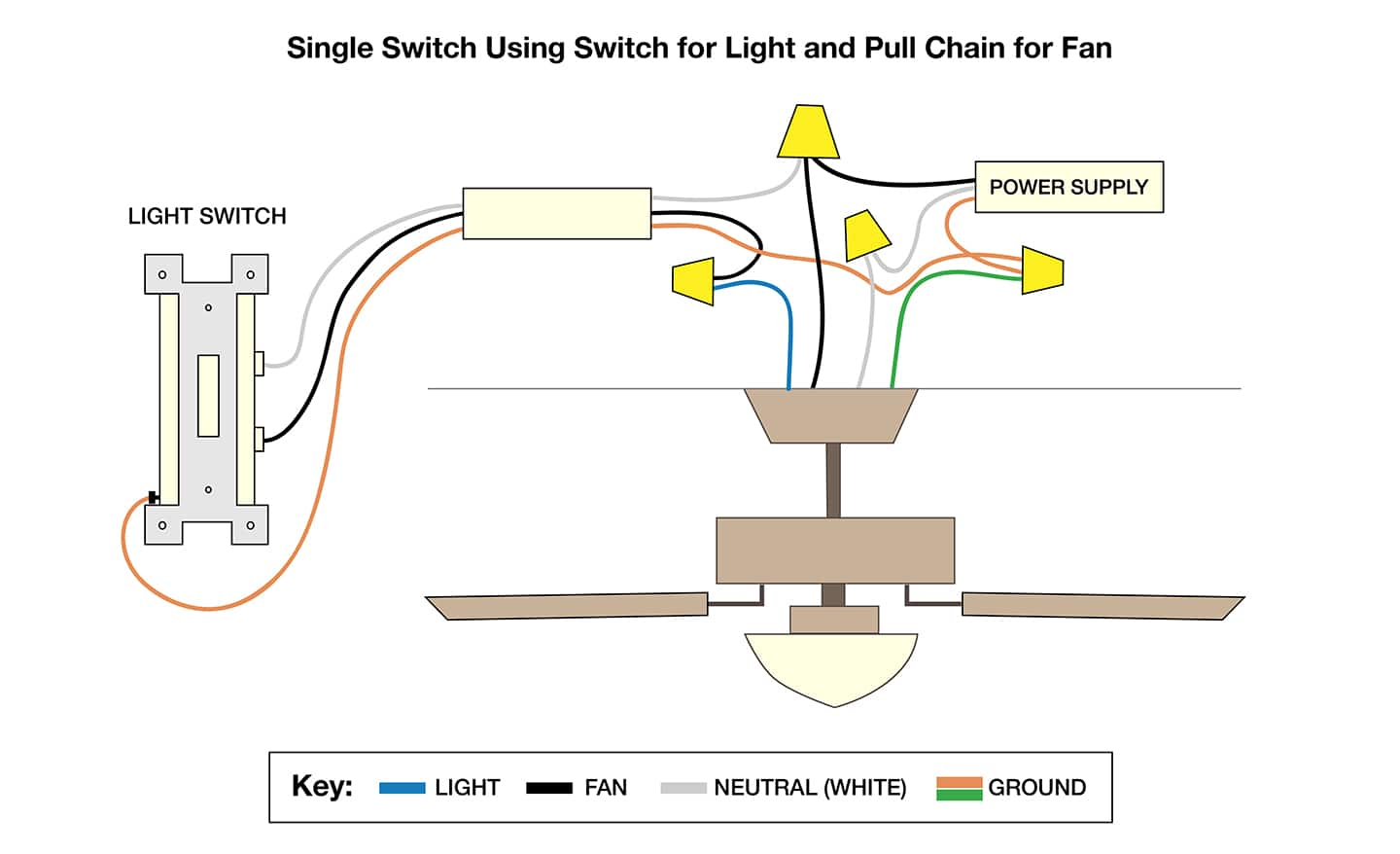
Credit: www.homedepot.com
Safety Precautions
Changing a light switch on a ceiling fan needs care and attention. Safety is the most important part of this task. Taking the right steps can stop accidents and injuries. Before starting, understand the risks and follow clear safety rules. This will help you finish the job safely and confidently.
Turn Off The Power
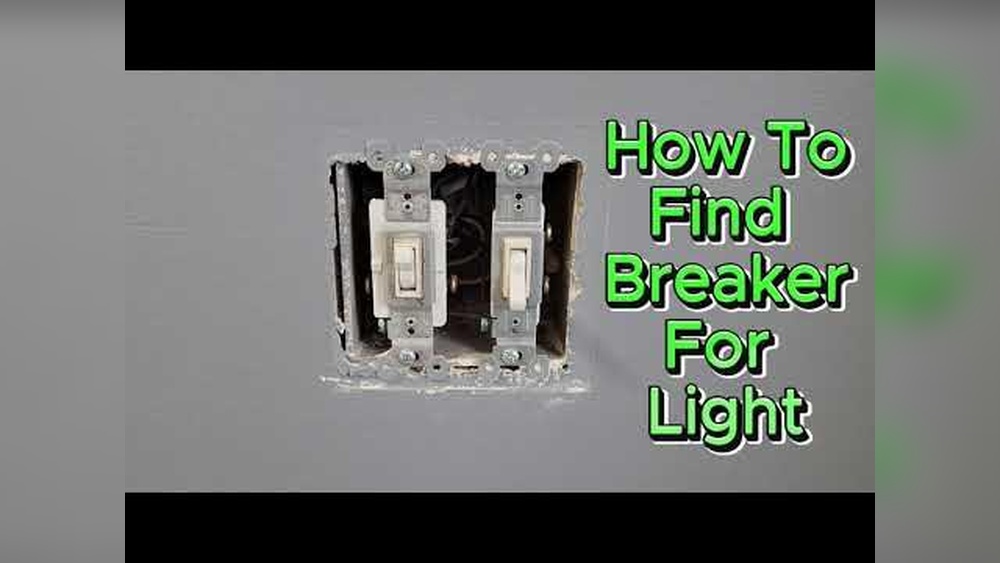
Always switch off the power at the circuit breaker. Do not rely on the wall switch alone. Use a voltage tester to check the wires are dead. This prevents electric shocks during the work.
Use Proper Tools
Choose tools made for electrical work. Insulated screwdrivers and pliers reduce shock risks. Avoid using damaged or worn-out tools. Good tools make the job safer and easier.
Wear Safety Gear
Put on safety gloves to protect your hands. Use safety goggles to guard your eyes from dust or sparks. Wear shoes with rubber soles to avoid electric shocks.
Work In A Well-lit Area
Make sure the room is bright enough to see all parts clearly. Use a portable lamp if needed. Good lighting helps avoid mistakes and injuries.
Follow Instructions Carefully
Read the switch and fan manuals before starting. Follow the steps exactly as shown. Do not guess or skip steps. This reduces the chance of errors.
Turning Off The Power
Turning off the power is the first and most important step before changing a light switch on a ceiling fan. It protects you from electric shocks. Never skip this step to keep yourself safe during the repair.
Always assume the wires are live until you confirm the power is off. This simple habit prevents accidents and injuries.
Locate The Circuit Breaker
Find the main electrical panel in your home. It is usually in the basement, garage, or utility room. Open the panel door and look for the breaker that controls the ceiling fan’s power.
Switch Off The Correct Breaker
Turn off the breaker that powers the ceiling fan and its light. Flip the switch to the “off” position. This stops electricity from flowing to the fan and switch.
Test The Power
Use a voltage tester or a simple lamp to check the power. Touch the tester to the wires or turn on the fan’s light switch. No light or reading means the power is off.
Use Caution Even After Turning Off Power
Sometimes, wires may still carry a small charge. Always handle wires carefully. Avoid touching metal parts with bare hands during the repair process.

Credit: community.smartthings.com
Removing The Existing Light Switch
Start by turning off the power at the circuit breaker to stay safe. Remove the switch cover and unscrew the old switch carefully. Gently pull the switch out to access the wires for the next steps.
Turn Off The Power
Start by switching off the power to the ceiling fan. Use the main circuit breaker to cut electricity. This step keeps you safe from electric shock. Double-check by trying the fan switch or using a voltage tester.
Remove The Switch Cover Plate
Take out the screws holding the switch cover plate. Use a screwdriver and keep the screws safe. Gently pull the plate away from the wall. This exposes the light switch and wiring behind it.
Unscrew The Old Light Switch
Next, remove the screws that hold the switch in place. Pull the switch out carefully, without touching the wires. Keep the switch steady while working to avoid damage.
Disconnect The Wires
Look at how the wires connect to the switch. Loosen the screws or release the wire connectors. Remove the wires gently. Note their position to help with the new switch installation.
Identifying Wiring Connections
Identifying wiring connections is the first step in changing a light switch on a ceiling fan. Knowing which wire does what keeps you safe and makes the job easier. Each wire has a specific role. Recognizing these roles helps avoid mistakes.
Ceiling fans often have multiple wires. These wires control power, fan speed, and light operation. Understanding their colors and positions is key. This knowledge helps you connect the new switch correctly.
Common Wire Colors And Their Functions
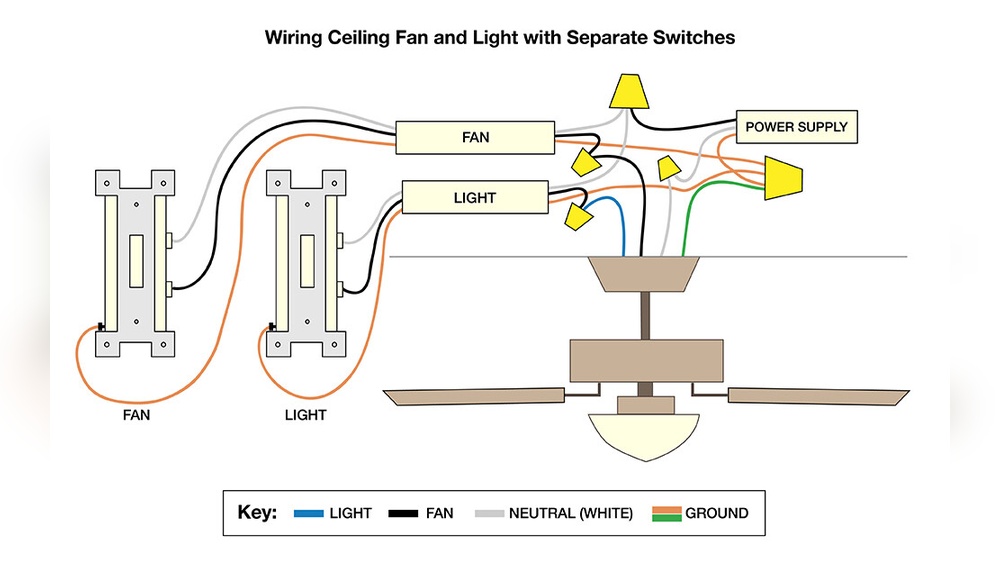
Most ceiling fans use standard wire colors. Black wires usually carry power to the fan motor. Blue wires often supply power to the light kit. White wires serve as the neutral connection. Green or bare wires are for grounding. These colors help identify each wire’s job.
Using A Voltage Tester To Check Wires
A voltage tester confirms which wires have power. Touch the tester to each wire carefully. The tester lights up if the wire is live. Testing wires prevents accidental shocks. Always test before touching wires directly.
Labeling Wires Before Disconnecting
Label wires with tape or markers. Write down where each wire connects. This step saves time when installing the new switch. Clear labels reduce confusion and errors. Take photos for reference if needed.
Installing The New Switch
Installing the new switch on your ceiling fan requires careful steps. This part is important to ensure the fan works correctly. Take your time and follow each step closely.
Turn Off The Power
Start by switching off the power at the circuit breaker. This stops any electrical accidents. Use a voltage tester to confirm the power is off. Safety first.
Connect The Wires
Match the wires from the fan to the new switch wires. Usually, black wires connect to black, white to white, and green or copper to ground. Twist wire ends together and secure with wire nuts.
Secure The Switch
Place the new switch into the switch box. Screw it tightly but do not over-tighten. The switch should sit flush and steady in the box.
Attach The Switch Plate
Put the switch plate over the switch. Screw it in place carefully. This covers the wires and gives a neat finish.
Restore Power And Test
Turn the circuit breaker back on. Test the switch by turning the fan and light on and off. Check for smooth operation and no sparks or noises.
Testing The New Switch
Testing the new switch is a key step after installation. It ensures the switch works correctly and safely. Take time to check every function of the ceiling fan switch. This step helps avoid future problems or hazards.
Turn The Power Back On
First, restore power at the circuit breaker. Do not skip this step. The switch needs power to operate. Be cautious and make sure the area is safe.
Operate The Switch
Flip the switch slowly from off to on. Notice any unusual sounds or smells. The fan should respond immediately. The light should turn on or off without flickering.
Check Fan Speeds And Light Settings
Test all fan speed settings on the switch. Each speed should work smoothly without noise. Check the light function if the switch controls it. Lights should adjust properly without delay.
Look For Loose Connections
Watch for any flickering or power loss. These signs may mean loose wiring. If found, turn off power and tighten connections. Safety is most important during this process.
Final Safety Check
Feel the switch for heat. It should not be warm or hot. Warmth means a problem with wiring or switch. If it gets hot, switch off power immediately. Replace the switch if needed.
Troubleshooting Common Issues
Troubleshooting common issues helps fix problems fast. A ceiling fan light switch may not work right. Simple checks can save time and cost.
This section covers easy steps to find and fix common problems. Follow each step carefully for safety and success.
Check The Power Supply
First, confirm the power is on. Use a tester to check the switch wires. Sometimes, the breaker trips or fuse blows. Reset the breaker if needed. No power means the switch won’t work.
Inspect The Switch Connections
Loose wires cause many problems. Turn off the power. Remove the switch cover. Look for loose or disconnected wires. Tighten screws or reconnect wires firmly. A good connection ensures the switch works well.
Test The Light Switch
Use a multimeter to test the switch. Set it to continuity mode. Press the switch and watch the meter. No change means the switch is faulty. Replace the switch if it does not work.
Check The Ceiling Fan Wiring
Sometimes the fan wiring is the issue. Look inside the fan’s junction box. Find loose or damaged wires. Repair or replace wires as needed. Correct wiring is key for the switch to control the light.
Replace The Light Bulb
A burnt-out bulb can seem like a switch problem. Remove the bulb and test it in another socket. Replace the bulb if it does not light. Use the correct bulb type and wattage for the fan.

Credit: www.youtube.com
Frequently Asked Questions
How Do I Safely Turn Off Power Before Changing A Switch?
Always switch off the circuit breaker controlling the ceiling fan. Use a voltage tester to confirm no power is flowing. This prevents electric shocks and ensures safety while replacing the light switch.
What Tools Are Needed To Change A Ceiling Fan Switch?
You will need a screwdriver, voltage tester, wire stripper, and replacement switch. These tools help you remove the old switch and install the new one correctly and safely.
Can I Replace A Ceiling Fan Switch Myself?
Yes, if you follow safety steps and instructions carefully. Turn off power, use proper tools, and handle wiring cautiously. If unsure, consult a professional electrician to avoid hazards.
How Do I Identify The Switch Wires On A Ceiling Fan?
Look for wires connected to the switch terminals, usually black or red. Use a voltage tester to verify live wires. Label wires before disconnecting to ensure correct reconnection.
Conclusion
Changing a light switch on a ceiling fan is simple and safe. Always turn off the power before starting. Follow each step carefully to avoid mistakes. Use the right tools for an easier job. Take your time and double-check your work.
This small task can improve your home’s lighting control. Enjoy the satisfaction of fixing it yourself. You can do it!