When you think about holding things firmly together—whether it’s assembling furniture, fixing a bike, or building a machine—threaded fasteners play a crucial role. But what exactly is a threaded fastener?
Simply put, it’s a type of hardware designed with spiral grooves, or threads, that allow it to securely join parts by twisting into place. Understanding these fasteners can make a huge difference in how you approach your projects, ensuring your work stays strong and reliable.
Keep reading, and you’ll discover how threaded fasteners work, the different types you’ll encounter, and why choosing the right one matters for your success.
Credit: thors.com
Threaded Fastener Basics
Threaded fasteners are essential tools in construction, manufacturing, and repairs. They join parts by using helical threads to hold components tightly together. Understanding the basics helps in choosing the right fastener for any job. This section explains the key parts and common terms related to threaded fasteners.
Key Components
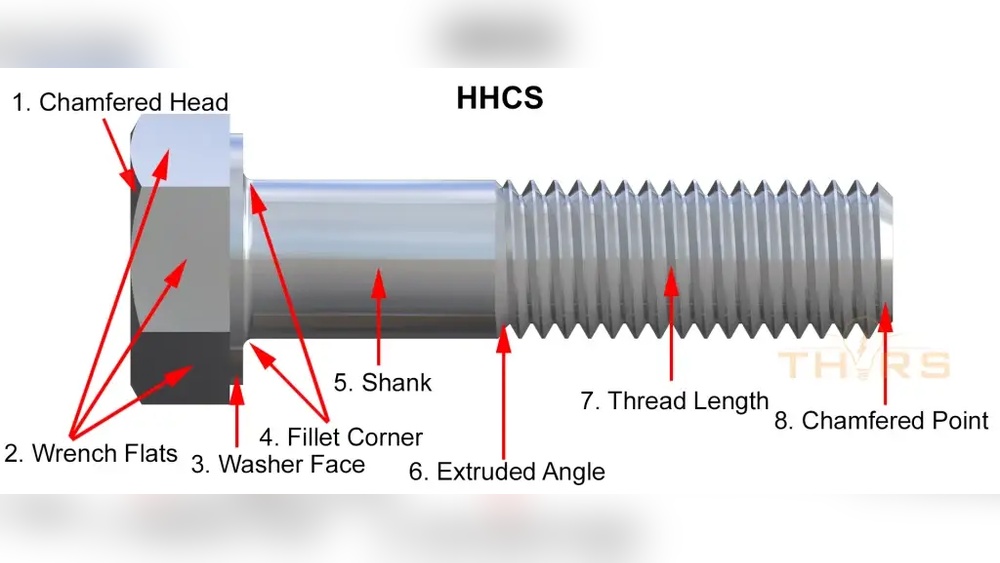
A threaded fastener mainly consists of a head and a shank. The shank contains the helical thread that grips the material. Threads can vary in size, pitch, and shape depending on the application. The head allows the fastener to be turned with a tool like a screwdriver or wrench. Some fasteners also have a point to help start the threading process.
Common Terminology
Knowing the terms makes it easier to understand and use fasteners correctly. “Pitch” refers to the distance between threads. “Major diameter” is the largest diameter of the thread, while “minor diameter” is the smallest. The “lead” is the distance the fastener moves when turned one full turn. Terms like bolt, screw, and nut describe different types of threaded fasteners and their uses.

Credit: forum.digikey.com
Main Types Of Threaded Fasteners
Threaded fasteners are essential components used to join materials tightly. They come in various types, each serving a specific purpose. Understanding the main types helps in choosing the right fastener for your project. Below are the four primary types of threaded fasteners.
Bolts
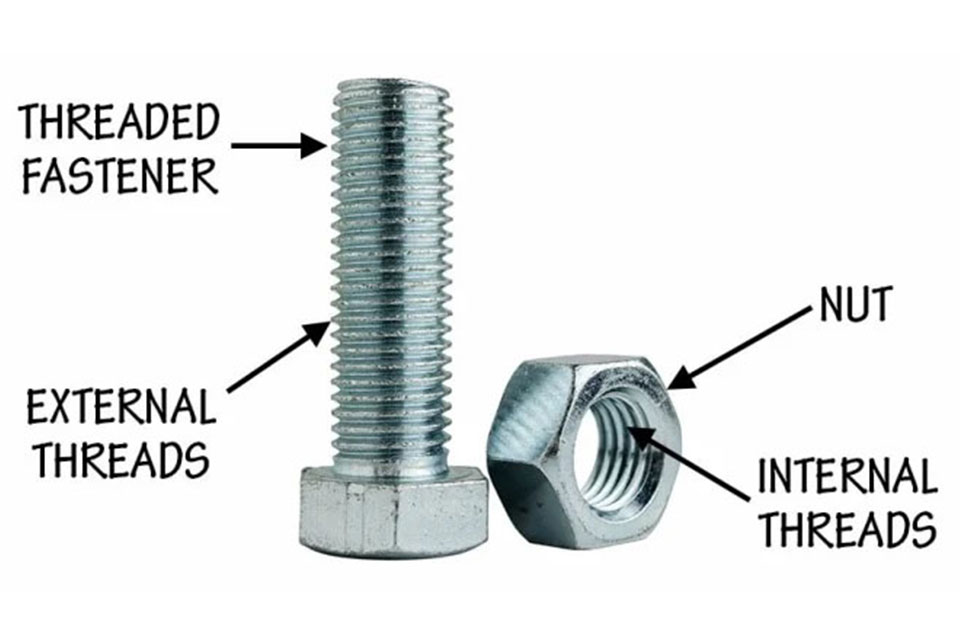
Bolts are strong fasteners with external threads and a head. They require a nut to secure parts together. Bolts are easy to remove and reuse. Common in construction and machinery, bolts provide a firm hold.
Screws
Screws have threads all along the shaft and a head for driving. They can fasten materials without a nut by cutting threads into the material. Screws are versatile and used in woodworking, metal, and plastic.
Studs
Studs are threaded rods with no head. They screw into one part and allow a nut on the other end. Studs offer strong, permanent fastenings. They are common in engine assembly and heavy equipment.
Threaded Rods
Threaded rods are long rods fully threaded along their length. They can be cut to size and used with nuts on both ends. Threaded rods are ideal for tension applications and supporting structures.
Thread Styles And Characteristics
Thread styles and characteristics define how a threaded fastener works. They affect strength, grip, and application. Understanding these details helps choose the right fastener for each job.
Threads come in different shapes and sizes. Each style has unique features that suit various tasks and materials. Let’s explore some key thread styles and their characteristics.
Full Thread Vs Half Thread
Full thread fasteners have threads running along their entire length. They provide maximum grip and hold. These are common in applications requiring strong fastening over the whole shank.
Half thread fasteners have threads only on part of the shank. The unthreaded section, called the shank, offers better shear strength. These fasteners are useful when the fastener must resist bending or shear forces.
Thread Pitch And Angle
Thread pitch is the distance between each thread’s crest. It affects how fast the fastener screws in and holds. Fine pitch threads have smaller spaces and are good for precise adjustments.
Thread angle is the shape of the thread profile. Common angles are 60 degrees for standard threads. The angle influences load distribution and resistance to loosening under vibration.
Standard Thread Types
Common thread types include Unified Thread Standard (UTS), Metric, and Acme. UTS and Metric threads are widely used for general fastening.
Acme threads have a trapezoidal shape for power transmission. They are stronger and resist wear better than standard threads. Choosing the right thread type depends on the application and industry standards.
Materials And Finishes
The choice of materials and finishes for threaded fasteners affects their strength, durability, and resistance to corrosion. Various materials serve different needs and environments. Selecting the right material ensures the fastener performs well and lasts longer.
Steel Variants
Steel is the most common material for threaded fasteners. Carbon steel is strong and cost-effective. Alloy steel offers higher strength and toughness. These steels suit heavy-duty applications. They often require protective finishes to prevent rust.
Stainless Steel
Stainless steel resists corrosion better than regular steel. It contains chromium, which forms a protective layer. It works well in wet or corrosive environments. Stainless steel fasteners maintain appearance and strength over time.
Non-metallic Options
Plastic and nylon fasteners suit light-duty tasks. They resist corrosion and are non-conductive. These fasteners are lightweight and easy to install. They work well in electronics and chemical industries.
Coatings And Platings
Coatings protect fasteners from rust and wear. Zinc plating is common and offers basic corrosion resistance. Other coatings include black oxide and phosphate. Some finishes improve appearance or provide lubrication. Proper coatings extend fastener life significantly.
Drive Types And Head Styles
Threaded fasteners come in many shapes and styles. Their drive types and head styles define how they work and where they fit best. Choosing the right combination ensures strong, secure connections. It also makes installation easier and safer.
Slotted And Phillips
Slotted drives have a single straight line slot. They are one of the oldest and simplest types. Phillips drives have a cross-shaped slot. This design helps the screwdriver stay centered. Both are common in household and light industrial use.
Torx And Hex
Torx drives have a star-shaped pattern. They provide better grip and reduce cam-out, which means less slipping. Hex drives have a six-sided shape. They are popular for heavy-duty and mechanical applications. Both types offer strong torque transfer and durability.
Specialty Drives
Specialty drives include designs like square, tri-wing, and security heads. These drives are for specific needs, such as tamper resistance or unique tools. They help protect fasteners from unauthorized removal and improve safety in sensitive areas.
Head Shapes
Fastener heads come in many shapes, each for a different use. Flat heads sit flush with the surface, giving a clean look. Pan heads are rounded and provide a larger surface area. Hex heads allow easy tightening with a wrench. Button and round heads add style and smooth edges. Selecting the right head shape fits the project and tool type perfectly.
Applications And Uses
Threaded fasteners have many practical uses across different industries. They secure parts firmly and allow easy assembly or disassembly. Their versatility makes them essential in everyday objects and complex machinery.
Construction
In construction, threaded fasteners join steel beams and wooden frames. They provide strong support for buildings and bridges. Fasteners like bolts and screws hold materials tightly under pressure. Workers rely on them to keep structures safe and stable.
Automotive
Cars use threaded fasteners to hold engines, wheels, and body parts. Fasteners keep vital components aligned and secure during motion. Mechanics remove and replace these fasteners for repairs and maintenance. Threaded fasteners ensure vehicles perform safely on the road.
Electronics
Small threaded fasteners attach circuit boards inside devices. They hold delicate parts in place without damage. Fasteners allow easy access for upgrades or fixes. Without these tiny components, electronics would be harder to assemble and maintain.
Aerospace
Aerospace uses high-strength fasteners to join aircraft parts. They withstand extreme pressure, temperature, and vibrations. Fasteners keep wings, engines, and panels tightly connected. Safety and reliability depend on these critical components.
Threaded Fasteners Vs Non-threaded
Threaded fasteners and non-threaded fasteners both hold parts together. They do this in very different ways. Each type fits specific needs in construction and repair. Understanding their differences helps pick the right fastener for a job.
Differences In Design
Threaded fasteners have helical ridges called threads. These threads allow the fastener to screw into materials or nuts. This creates a strong, adjustable hold. Non-threaded fasteners lack these ridges. They hold parts by friction, compression, or deformation. Examples include pins, rivets, and clips. These fasteners often fit tightly in holes or slots.
Advantages And Limitations
Threaded fasteners offer easy removal and reuse. They provide adjustable tension and strong grip. Their drawback is they need matching threaded parts or nuts. Non-threaded fasteners provide excellent shear strength. They resist sideways forces well. These fasteners are usually permanent or hard to remove. Their design does not allow for easy adjustment.
When To Choose Each
Choose threaded fasteners for parts that need frequent assembly or disassembly. They work well in mechanical and structural applications. Use non-threaded fasteners when a permanent or heavy-duty hold is required. They are ideal for shear loads and vibration resistance. Selecting the right fastener improves safety and efficiency in projects.
Installation And Maintenance Tips
Proper installation and regular maintenance keep threaded fasteners working well. These steps help avoid damage and extend fastener life. Follow simple tips for best results.
Proper Torque Application
Use the correct torque value for each fastener type. Too much torque can strip threads or break the fastener. Too little torque can cause loosening and failure. A torque wrench ensures accurate tightening. Always follow manufacturer torque specifications.
Avoiding Common Failures
Inspect threads for dirt and damage before installation. Clean or replace damaged fasteners to prevent failure. Avoid over-tightening and cross-threading. Use thread lubricants if recommended to reduce friction and wear. Select the right fastener material for your environment to prevent corrosion.
Inspection And Replacement
Check fasteners regularly for signs of wear or loosening. Look for rust, cracks, or deformed threads. Replace fasteners that show damage or wear. Keep spare fasteners on hand to ensure quick replacement. Regular inspections prevent unexpected breakdowns and keep assemblies safe.
Credit: mockbee.com
Frequently Asked Questions
What Is The Most Common Type Of Threaded Fastener?
The most common type of threaded fastener is the screw. Screws secure materials by twisting into a threaded hole or surface. They offer strong holding power and easy installation.
What Is An Example Of A Threaded Fastener?
An example of a threaded fastener is a bolt. Bolts have external threads and secure objects with nuts or threaded holes.
What Is Another Name For A Threaded Fastener?
Another name for a threaded fastener is a bolt. Bolts have heads and usually pair with nuts to secure objects.
What Is A Non-threaded Fastener?
A non-threaded fastener secures parts without helical threads, using friction, compression, or deformation. Examples include pins, rivets, and retaining rings. These fasteners provide strong, stable joints in various applications like automotive and aerospace industries.
Conclusion
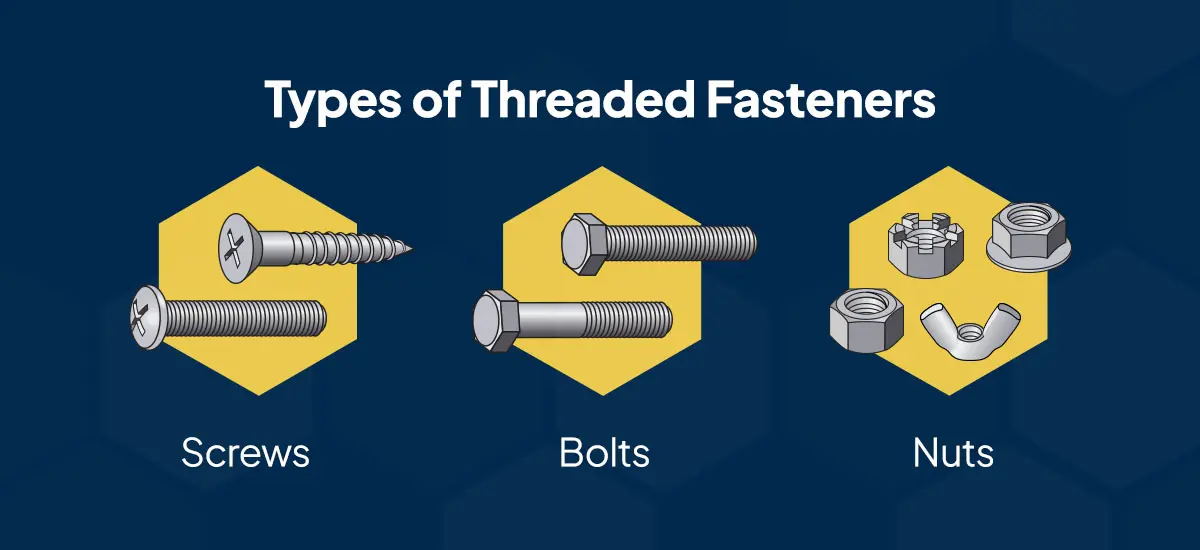
Threaded fasteners hold parts tightly and securely. They come in many shapes and sizes. Screws, bolts, and nuts are common examples. Their threads create a strong grip between materials. Understanding these fasteners helps in choosing the right one. Proper use ensures safety and durability.
Simple yet essential in construction and repairs. Knowing what a threaded fastener is makes work easier. It saves time and prevents damage. Always pick the correct fastener for your project.

