Have you ever wanted to control your ceiling fan and light with just one switch? It can make your daily routine simpler and your room more comfortable.
But wiring a ceiling fan to a light switch might seem tricky if you’re not an expert. Don’t worry—you’re in the right place. This guide will walk you through easy, clear steps so you can do it yourself safely and quickly.
By the end, you’ll have full control over your fan and light without reaching for multiple switches. Ready to make your home smarter and more convenient? Let’s get started!
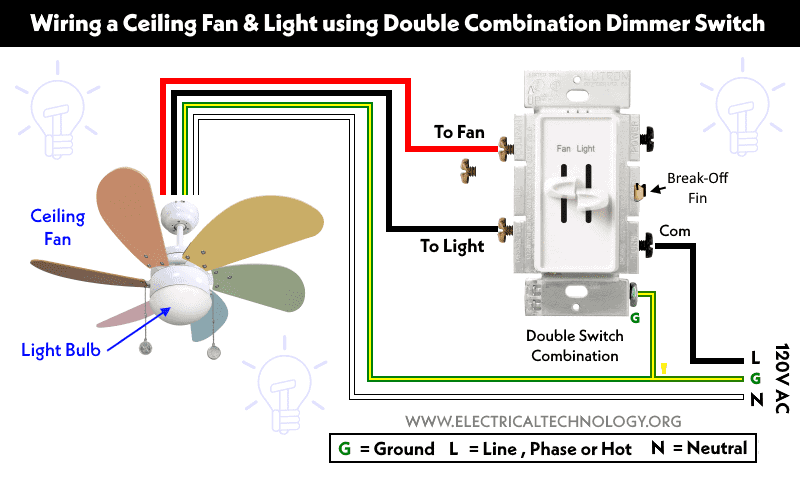
Credit: www.electricaltechnology.org
Tools And Materials Needed
Connecting a ceiling fan to a light switch needs the right tools and materials. Having them ready makes the job easier and safer. Below are the essentials for this task.
Basic Tools
A screwdriver set is essential for removing and attaching screws. Use both flathead and Phillips screwdrivers. Wire strippers help remove insulation from wires cleanly. Needle-nose pliers assist in bending and twisting wires. A voltage tester confirms power is off before starting work.
Materials Required
Use electrical wire suitable for ceiling fans, usually 14/3 or 12/3 gauge. Wire nuts secure wire connections safely. Electrical tape adds extra protection to wire joints. A new switch designed for fan and light control is necessary. Mounting brackets and screws hold the fan firmly in place.
Safety Equipment
Wear insulated gloves to protect from electric shocks. Safety goggles shield eyes from dust and debris. A sturdy ladder helps reach the ceiling without strain. Turn off the main power before handling any wiring.

Credit: diy.stackexchange.com
Safety Precautions
Turn off the power at the circuit breaker before starting any wiring work. Use a voltage tester to confirm no electricity flows in the wires. Always follow local electrical codes to ensure a safe connection.
Turn Off Power Before Starting
Always switch off the power at the circuit breaker. This stops any electric shock risk. Use a voltage tester to confirm no power flows to wires. Safety first. Never trust the switch alone.
Use Proper Tools And Equipment
Choose tools made for electrical work. Insulated screwdrivers and wire strippers reduce shock chances. Wear rubber-soled shoes and avoid wet areas. Keep your workspace clean and bright.
Follow Electrical Codes And Instructions
Read product manuals carefully. Follow local electrical codes strictly. These rules keep your home safe and avoid damage. Use the correct wire size and connectors for your fan and switch.
Double Check Wire Connections
Connect wires firmly to avoid loose ends. Loose wires can cause sparks or fires. Match wire colors correctly: usually black for hot, white for neutral, and green or bare for ground. Secure all wire nuts tightly.
Ask For Help If Unsure
Electricity can be dangerous. If you feel unsure, call a licensed electrician. It is better to be safe than sorry. A small mistake can cause big problems.
Identify Wiring Types
Identifying wiring types is the first step in connecting a ceiling fan to a light switch. Knowing the wires helps you make safe and correct connections. It also prevents damage to the fan or light fixture. Take time to understand each wire’s function before starting work.
Different homes may have different wiring setups. Some wires might look similar but serve different purposes. This part guides you through common wiring types found in ceiling fan installations. Recognizing them is key to a smooth wiring process.
Understanding The Hot Wire
The hot wire carries electricity from the power source. It is usually black or red. This wire powers the fan or light switch. Identifying the hot wire helps you know where to connect the switch.
Identifying The Neutral Wire
The neutral wire completes the electrical circuit. It carries current back to the breaker box. This wire is often white or gray. Connecting the neutral wire ensures the circuit works properly.
Locating The Ground Wire
The ground wire protects against electrical shocks. It usually has green insulation or is bare copper. This wire is connected to the metal parts of the fan. Grounding the fan increases safety during operation.
Spotting The Fan And Light Wires
Ceiling fans often have separate wires for the fan and light. The fan wire may be black, and the light wire could be blue. Knowing these wires lets you control fan and light separately. This setup is common in many ceiling fan models.
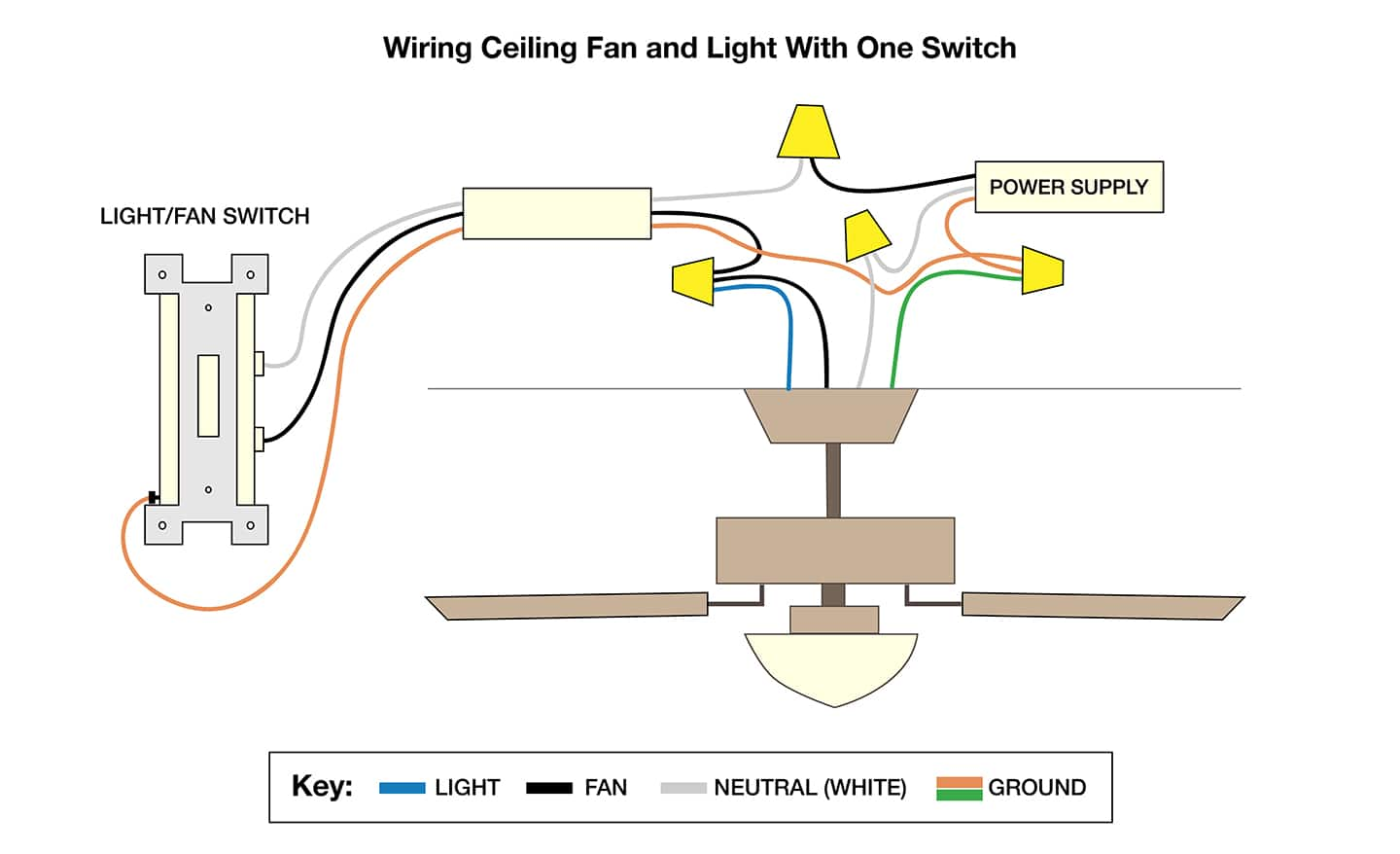
Credit: www.homedepot.com
Turn Off Power Supply
Turning off the power supply is the first and most important step. It keeps you safe from electric shocks. Never skip this step before working on your ceiling fan or light switch.
Electricity can cause serious injury or even death. Always double-check that the power is off. Safety should be your top priority.
Locate The Circuit Breaker
Find your home’s circuit breaker panel. It is usually in the basement, garage, or a utility room. Open the panel to see the switches inside.
Identify The Correct Switch
Look for the switch that controls the power to the ceiling fan or light. It may be labeled. If not, turn off the main breaker to cut power to the whole house.
Turn Off The Power
Flip the switch to the OFF position. This stops the flow of electricity to the area you will work on. Make sure the switch stays in the off position.
Verify Power Is Off
Use a voltage tester or a simple light tester. Check the wires at the ceiling fan or switch box. If the tester shows no power, it is safe to proceed.
Remove Existing Fixtures
Start by turning off the power to the fixture. Carefully remove the old light or fan fixture from the ceiling. Keep wires exposed and ready for the new connection.
Turn Off Power At The Circuit Breaker
Safety is the top priority. Switch off the power at the circuit breaker. This prevents any electric shock while working on the fixture. Use a voltage tester to confirm the power is off before touching wires.
Remove The Light Fixture Cover
Take off the light fixture cover carefully. Most covers twist or lift off easily. Set the cover aside in a safe place to avoid damage.
Unscrew The Fixture Base
Use a screwdriver to remove screws holding the fixture base. Keep the screws safe for later use. Gently lower the fixture base to expose wiring.
Disconnect The Wiring
Identify the wires connected to the fixture. Unscrew or unclip wire connectors. Separate wires carefully and keep track of their positions for the new fan connection.
Remove The Fixture From The Ceiling Box
Once wires are disconnected, lift the fixture away from the ceiling box. Check the box for any damage. Clean the area before installing the ceiling fan.
Connect Ceiling Fan Wires
Connecting ceiling fan wires is a key step in installing your fan. This step links the fan to your home’s electrical system. Proper wire connection ensures the fan and light work safely and smoothly. Careful attention is important to avoid electrical issues. Follow simple steps to connect wires correctly.
Match Wire Colors
Ceiling fans and home wiring use color codes to match wires. Usually, black or red wires control the fan motor. White wires are neutral. Green or bare copper wires are ground wires. Match fan wires to the same color wires from the house. This keeps the electrical flow safe and correct.
Double check wire colors before connecting. Some fans have a blue wire for the light. Connect this wire to the black or red wire from your ceiling box. Always turn off power before handling wires.
Secure Wire Connections
After matching wires, twist them together tightly. Use wire nuts to cover and secure each connection. Wire nuts prevent wires from coming loose or touching other wires. Tug on each wire gently to check if it stays connected.
Wrap electrical tape around wire nuts for extra safety. Make sure no bare wire shows outside the wire nut. Properly secured wires reduce risks of sparks or shorts. This step helps your ceiling fan work safely for years.
Connect Light Switch Wires
Connecting the ceiling fan to the light switch requires careful wiring. This step ensures you control the fan and light easily. Understanding how to connect switch wires is key to a safe and functional setup.
Follow simple steps to identify and attach the wires correctly. This will help avoid common wiring mistakes. Let’s break down the process.
Identify Switch Wires
First, turn off the power at the breaker. Safety comes first. Open the switch box to see the wires inside. Usually, you will find a hot wire, a neutral wire, and a ground wire.
The hot wire often looks black or red. It carries electricity from the breaker. The neutral wire is usually white. It completes the circuit. The ground wire is green or bare copper. It protects you from shocks.
Use a voltage tester to confirm which wire is live. Mark the wires with tape for easy identification. Knowing each wire’s role prevents confusion.
Attach Switch To Circuit
Start by connecting the hot wire to the switch’s input terminal. Tighten the screw securely. Connect the wire that goes to the ceiling fan to the switch’s output terminal.
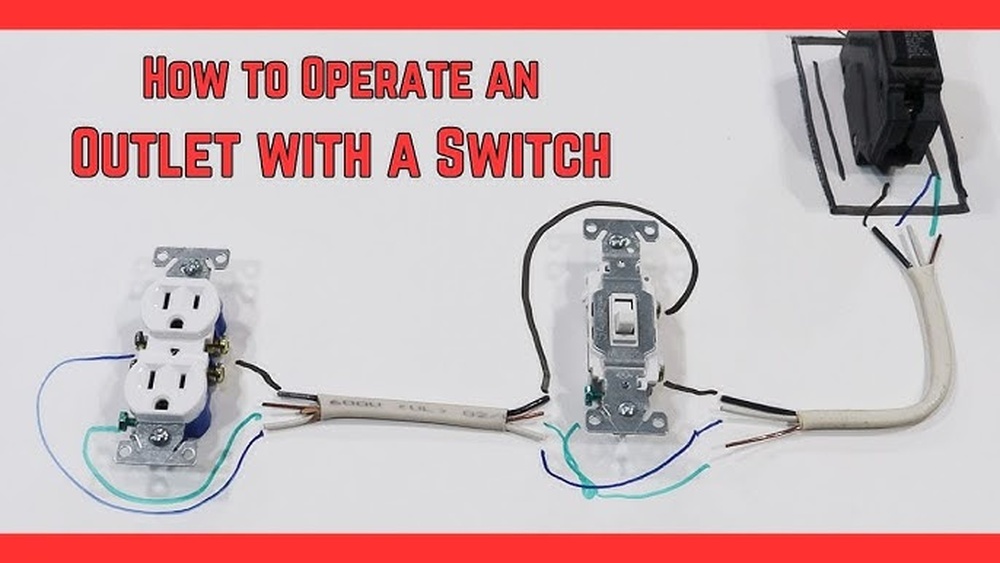
Attach the ground wire to the switch’s green grounding screw. If there is no ground screw, connect the ground wires together with a wire nut. Connect neutral wires together separately in the box.
Make sure all connections are tight and secure. Push the wires gently back into the box. Screw the switch to the box and restore power to test. The fan and light should now work from the switch.
Install Ceiling Fan And Switch
Installing a ceiling fan with a switch lets you control the fan and light easily. This setup improves convenience and helps save energy. Follow clear steps to connect the fan and switch safely.
Tools and safety gear are important before you start. Turn off power at the breaker to avoid shocks. Prepare your workspace and gather all parts.
Prepare The Ceiling Fan And Wiring
Unpack the ceiling fan and check all parts. Identify the fan wires: usually black for the fan, blue for the light, white for neutral, and green or copper for ground. Make sure the ceiling box is strong enough to hold the fan’s weight.
Remove the old fixture if present. Check the wiring in the ceiling box. Strip the wire ends about half an inch for easy connection.
Mount The Ceiling Fan Bracket
Attach the mounting bracket to the ceiling box with screws. The bracket holds the fan steady. Use a level to keep it straight. Tighten all screws securely to avoid wobbling.
Hang the fan motor temporarily on the bracket hook. This step frees your hands for wiring.
Connect The Fan Wires To Ceiling Wires
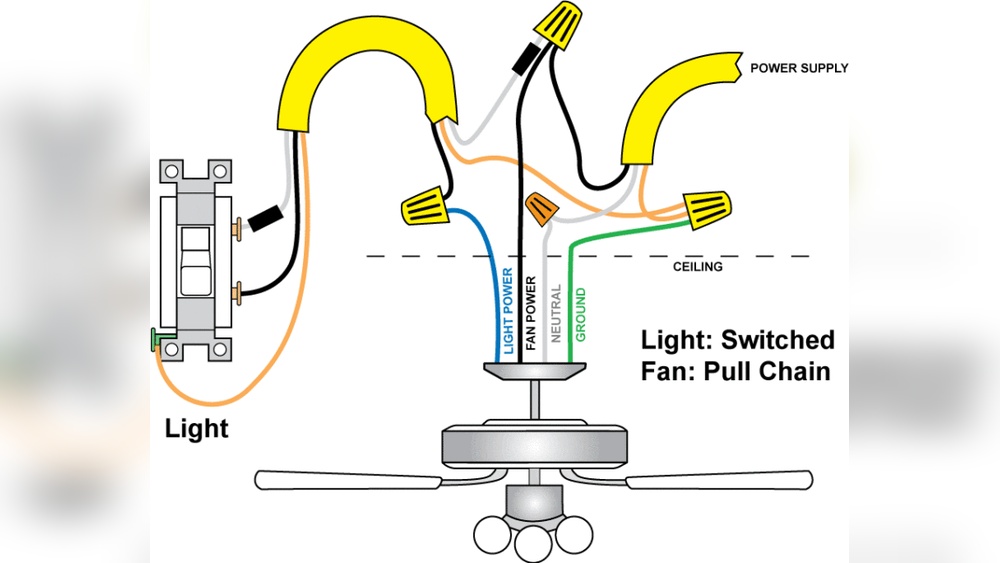
Match the fan wires to ceiling wires by color. Connect black fan wire to black ceiling wire for fan power. Connect blue fan wire to black or red ceiling wire for light power. Connect white wires together as neutral. Attach green or copper wires for grounding.
Use wire nuts to secure connections. Wrap connections with electrical tape for safety. Tuck wires neatly into the ceiling box.
Install The Wall Switch
Turn off power at the breaker. Remove the old switch plate and switch. Identify the switch wires: usually black or red for live, white for neutral, and ground wire.
Connect the new switch wires to the home wiring. Attach ground wire to the green screw. Secure the switch in the wall box. Replace the switch plate.
Test The Ceiling Fan And Switch
Turn power back on. Test the wall switch for fan and light control. Check if the fan spins and the light works separately. Adjust wiring if needed. Secure all covers once testing is successful.
Restore Power And Test
Restoring power and testing your ceiling fan and light switch is the final step. This step confirms everything works safely and correctly. Follow each instruction carefully to avoid any issues.
Turn The Circuit Breaker Back On
Locate your home’s electrical panel. Find the breaker labeled for the ceiling fan or room. Flip the breaker switch to the ON position. This restores electricity to the fan and light.
Test The Ceiling Fan And Light
Go to the switch controlling the ceiling fan and light. Turn the switch ON and OFF slowly. Check if the fan spins smoothly and the light turns on. If both work, wiring is correct.
Check For Any Unusual Signs
Listen for strange noises from the fan. Look for flickering or dim light bulbs. Feel for any warmth around the switch or fan base. Stop and turn off power if you notice any problems.
Troubleshooting Tips
Troubleshooting is key when connecting a ceiling fan to a light switch. It helps find and fix common problems fast. Knowing what to check saves time and effort. This guide gives simple tips for common issues.
Check The Power Supply
Ensure the circuit breaker is on. Test the switch with a voltage tester. No power means the fan won’t work. Fix power issues before continuing.
Verify Wire Connections
Look at all wire nuts and connections. Loose or wrong wires cause failures. Match wires by color: black to black, white to white. Secure all connections tightly.
Test The Light Switch
Use a multimeter to check the switch. A faulty switch can stop the fan or light. Replace any switch that does not work properly.
Inspect The Ceiling Fan Wiring
Open the fan’s canopy to check wires. Look for loose or disconnected wires. Make sure the fan’s wires match the switch wires correctly.
Examine The Remote Control
If the fan uses a remote, check batteries. Reset the remote and fan receiver. Remote problems can block fan or light control.
Look For Obstructions Or Damage
Check the fan blades for obstacles. Inspect the fan motor for damage. Obstructions or damage can stop the fan from working well.
Frequently Asked Questions
How Do I Wire A Ceiling Fan To A Light Switch?
To wire a ceiling fan to a light switch, connect the fan’s black wire to the switch’s load wire. Connect the white wires together and the ground wires to the grounding screw. This setup allows independent control of the fan and light.
Can I Control Ceiling Fan And Light Separately?
Yes, by using a dual switch or remote control, you can operate the ceiling fan and light independently. This requires separate wiring for the fan and light components to different switches or a compatible remote.
What Tools Are Needed To Connect Fan To Switch?
You’ll need a screwdriver, wire stripper, voltage tester, electrical tape, and wire nuts. These tools help safely strip, connect, and secure the wires when connecting the ceiling fan to the light switch.
Is It Safe To Install Ceiling Fan Switch Myself?
Yes, if you follow safety guidelines and turn off the power at the breaker. Use a voltage tester to confirm no power, and follow wiring instructions carefully to avoid electrical hazards.
Conclusion
Connecting a ceiling fan to a light switch is simpler than it seems. Follow the steps carefully and take safety measures. Use the right tools and check wiring twice. This setup lets you control the fan and light separately. It saves energy and adds convenience.
Always turn off power before starting any work. A little patience helps avoid mistakes. Now, you can enjoy both light and air with one switch. Simple and useful.