You might find yourself locked out or needing to remove a deadbolt lock quickly. Knowing how to drill a deadbolt lock can save you time, money, and frustration.
It’s a handy skill that anyone can learn with the right steps. You’ll discover simple, clear instructions to help you get the job done safely and effectively. Ready to take control and unlock the solution? Keep reading—you’re just moments away from mastering a practical, valuable technique.
Tools Needed
Gathering the right tools is important before you start drilling a deadbolt lock. Having proper equipment makes the job safer and easier. Below are the main tools you will need for this task.
Drill Types
A power drill is necessary for drilling a deadbolt lock. Corded drills provide steady power and do not run out of battery. Cordless drills offer mobility and are easier to handle in tight spaces. Choose a drill with variable speed control for better precision.
Drill Bits
Use strong drill bits made for metal. Cobalt or titanium-coated bits work well on lock components. Start with a small bit to create a pilot hole. Then use larger bits to widen the hole slowly. Sharp bits reduce effort and prevent damage to the door.
Safety Gear
Protect your eyes with safety goggles to avoid flying metal shards. Wear gloves to protect your hands from sharp edges. Ear protection helps reduce noise from drilling. Dress in long sleeves to protect your skin from sparks and debris.

Credit: www.youtube.com
Safety Precautions
Drilling a deadbolt lock requires careful attention to safety. This task involves power tools and metal parts. Taking proper safety steps protects you from injury and damage. It also ensures the job goes smoothly without trouble.
Protective Measures
Wear safety goggles to protect your eyes from metal shards. Gloves help prevent cuts and improve grip on tools. Use ear protection to guard against loud noise from drilling. Keep your work area clean to avoid slips and falls. Always hold the drill firmly and keep fingers clear of the bit.
Legal Considerations
Drilling a lock without permission can break the law. Only drill locks on property you own or have permission to work on. Check local laws about lock removal and alteration. Keep proof of ownership or permission handy if needed. Respect others’ property and privacy at all times.
Identifying The Lock Type
Knowing the type of deadbolt lock is important before drilling. Different locks have different designs and parts. This knowledge helps you drill safely and correctly. Take time to check the lock closely. Spotting the right type makes the process easier and avoids damage.
Deadbolt Variations
Deadbolts come in several types. The most common are single-cylinder and double-cylinder deadbolts. Single-cylinder locks have a keyhole on the outside and a thumb turn inside. Double-cylinder locks require a key on both sides. There are also electronic deadbolts that use keypads or cards.
Each type needs a different drilling approach. Knowing the variation helps you choose the right tools. It also prevents mistakes that can ruin the lock.
Lock Components
Understanding the parts of a deadbolt is crucial. Main components include the cylinder, bolt, strike plate, and faceplate. The cylinder contains the keyhole and pins. The bolt is the metal piece that locks into the door frame. The strike plate holds the bolt in place.
Recognizing these parts helps you find where to drill. Avoid drilling into the bolt or strike plate. Focus on the cylinder area for easier access. Clear knowledge of lock parts makes drilling safer and more effective.

Credit: www.parkavenuelocks.com
Preparing The Lock
Preparing the lock is the first step to drill a deadbolt safely and effectively. This stage helps you work more precisely and avoid damage to the door. Proper preparation makes the process smoother and faster.
Remove Hardware
Start by taking off the lock’s external parts. Unscrew the faceplate and remove the doorknob or handle. Keep screws and pieces in a safe place. This clears the area for drilling and prevents scratches.
Mark Drill Points
Use a pencil to mark exact drill points on the lock. Check the lock’s manual or measure the lock cylinder. Mark the center of the cylinder and the bolt area. Clear marks help you drill in the right spots with accuracy.
Drilling Process
The drilling process is the key step to open a deadbolt lock by force. It needs care and the right tools. This process focuses on breaking the lock cylinder to unlock the door.
Following each step carefully increases the chance of success. Safety is important. Wear protective glasses and gloves before starting.
Start Drilling
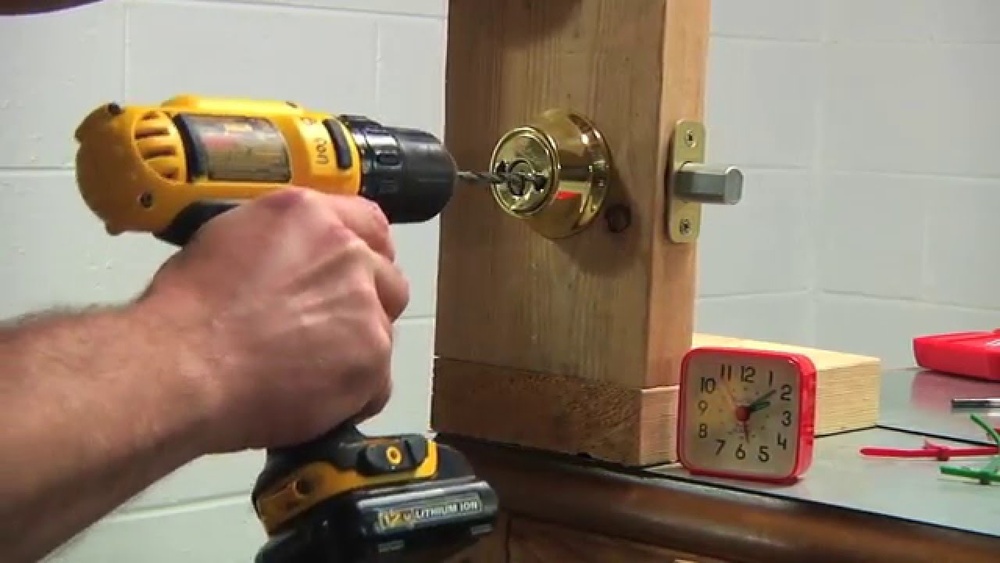
Choose a drill with a strong, sharp bit. A 1/8 inch titanium bit works well. Position the drill at the center of the lock cylinder. Hold it steady and drill slowly. Start with low speed to avoid slipping.
Drill Through Cylinder
Keep drilling straight into the lock cylinder. Apply steady pressure but do not force it. The drill bit will cut through pins inside the lock. Drill deep enough to break the cylinder, usually about 1 to 2 inches.
Clear Debris
Stop drilling and remove the drill bit. Use a small brush or compressed air to clear metal shavings. Clean the area around the hole. Removing debris helps you see progress and prevents damage.

Credit: www.familyhandyman.com
Opening The Lock
Opening a deadbolt lock by drilling requires careful steps after the drilling is done. This part focuses on how to open the lock once you have weakened its mechanism. The goal is to turn the lock and remove the cylinder without damaging the door or lock parts.
Turn The Lock
After drilling, insert a flathead screwdriver or similar tool into the lock. Apply gentle pressure to turn the lock cylinder. The drilling should have broken the pins inside, allowing the cylinder to move freely.
Turn slowly. Do not force it too hard to avoid breaking the tool inside. Once the cylinder turns, the deadbolt will retract. This opens the door from the locked position.
Remove Lock Cylinder
With the lock turned, use pliers to grip the lock cylinder. Pull it straight out from the door. The cylinder should come out easily if the pins are drilled correctly.
Removing the cylinder clears the way to replace the lock or fix the door. Keep the parts safe if you plan to reuse them. This step finishes the process of opening the drilled deadbolt lock.
After Drilling Steps
After drilling a deadbolt lock, there are important steps to follow. These steps keep your door safe and working well. Proper actions after drilling help avoid future problems and improve security. Focus on repairing or replacing the lock and securing the door properly.
Replace Or Repair Lock
Check the lock for damage after drilling. If the lock is broken, replace it with a new one. Choose a strong, high-quality deadbolt for better safety. If the lock is only slightly damaged, try to repair it. Tighten any loose screws and clean the lock parts. Test the lock to make sure it works smoothly. A reliable lock stops intruders and protects your home.
Secure The Door
Make sure the door fits well in the frame. Adjust the strike plate if needed for a tight fit. Use long screws to fix the strike plate firmly to the door frame. This adds strength and prevents forced entry. Check the door hinges and tighten loose screws. Add a door reinforcement plate for extra protection. A secure door keeps your home safe and gives peace of mind.
Frequently Asked Questions
How Do You Safely Drill A Deadbolt Lock?
To safely drill a deadbolt lock, wear protective gear and use a drill bit designed for metal. Drill at the lock cylinder’s center with steady pressure to avoid damage to the door. Always follow safety guidelines to prevent injury or damage.
What Tools Are Needed To Drill A Deadbolt Lock?
You need a power drill, metal drill bits, safety goggles, gloves, and a screwdriver. A center punch can help mark the drilling spot. Having the right tools ensures efficient and safe drilling of the deadbolt lock.
Can Drilling A Deadbolt Damage The Door?
Yes, improper drilling can damage the door or lock mechanism. Use the correct drill bit size and steady pressure to minimize risk. Drilling carefully helps preserve the door’s integrity and prevents costly repairs.
Is Drilling A Deadbolt Lock Legal?
Drilling a deadbolt lock is legal only on locks you own or have permission to alter. Unauthorized drilling may be illegal and considered breaking and entering. Always ensure you have proper authorization before drilling.
Conclusion
Drilling a deadbolt lock needs care and the right tools. Follow each step slowly and safely. Always wear eye protection to avoid injury. Choose the correct drill bit for your lock type. Remember, this method works best for emergencies or lock replacement.
Avoid damaging your door or lock unnecessarily. Practice patience and focus during the process. With these tips, you can handle drilling confidently. Stay safe and protect your home.