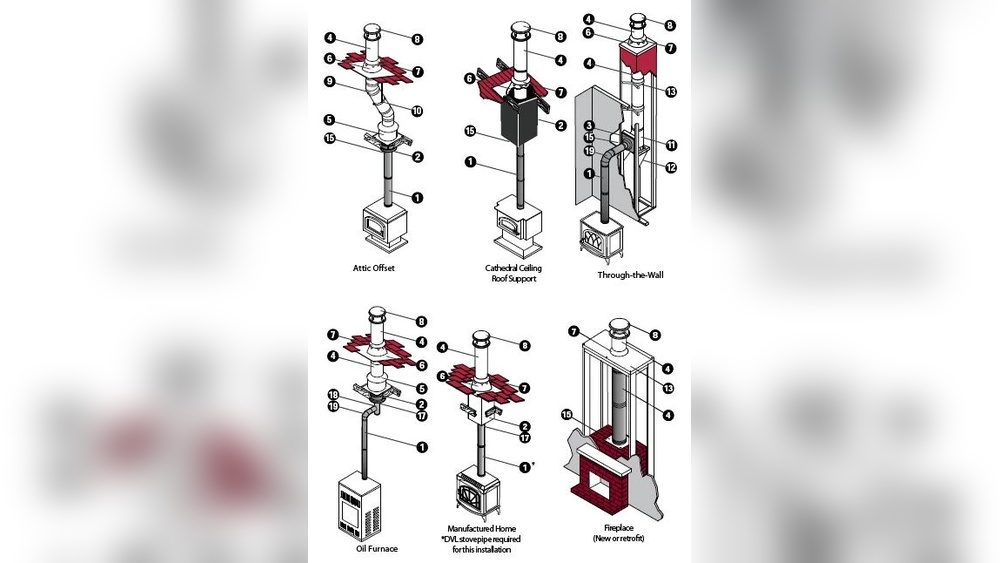
If you have a wood stove or a fireplace, you know how important it is to have your stove pipe connected safely and correctly. Hooking your stove pipe to a triple wall flue might seem tricky, but with the right steps, you can do it yourself and ensure your home stays warm and safe.
In this guide, you’ll discover simple, clear instructions that make the process easy to follow. By the end, you’ll feel confident handling your stove pipe setup like a pro. Ready to get started and protect your home while improving your heating system?
Keep reading—you won’t want to miss these crucial tips.
Choosing The Right Materials
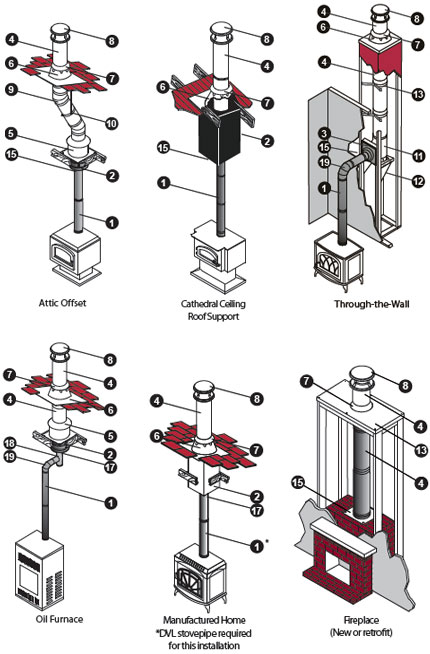
Choosing the right materials is key to safely and effectively hooking a stove pipe to a triple wall flue. The materials must handle high heat and fit together well. Using the correct parts avoids leaks and fire hazards. This section explains the types of stove pipes, features of triple wall flues, and compatibility tips.
Types Of Stove Pipes
Stove pipes come in single-wall and double-wall types. Single-wall pipes are simple metal tubes. They get very hot and need space from walls and ceilings. Double-wall pipes have insulation between two metal layers. They stay cooler outside and are safer indoors. Choose pipes that match your stove’s heat output and installation needs.
Features Of Triple Wall Flues
Triple wall flues have three layers of metal with insulation inside. This design keeps the outside surface cool and prevents creosote buildup. They are ideal for venting through walls or roofs. These flues resist corrosion and heat damage. Their strong build helps maintain safe chimney temperatures over time.
Compatibility Considerations
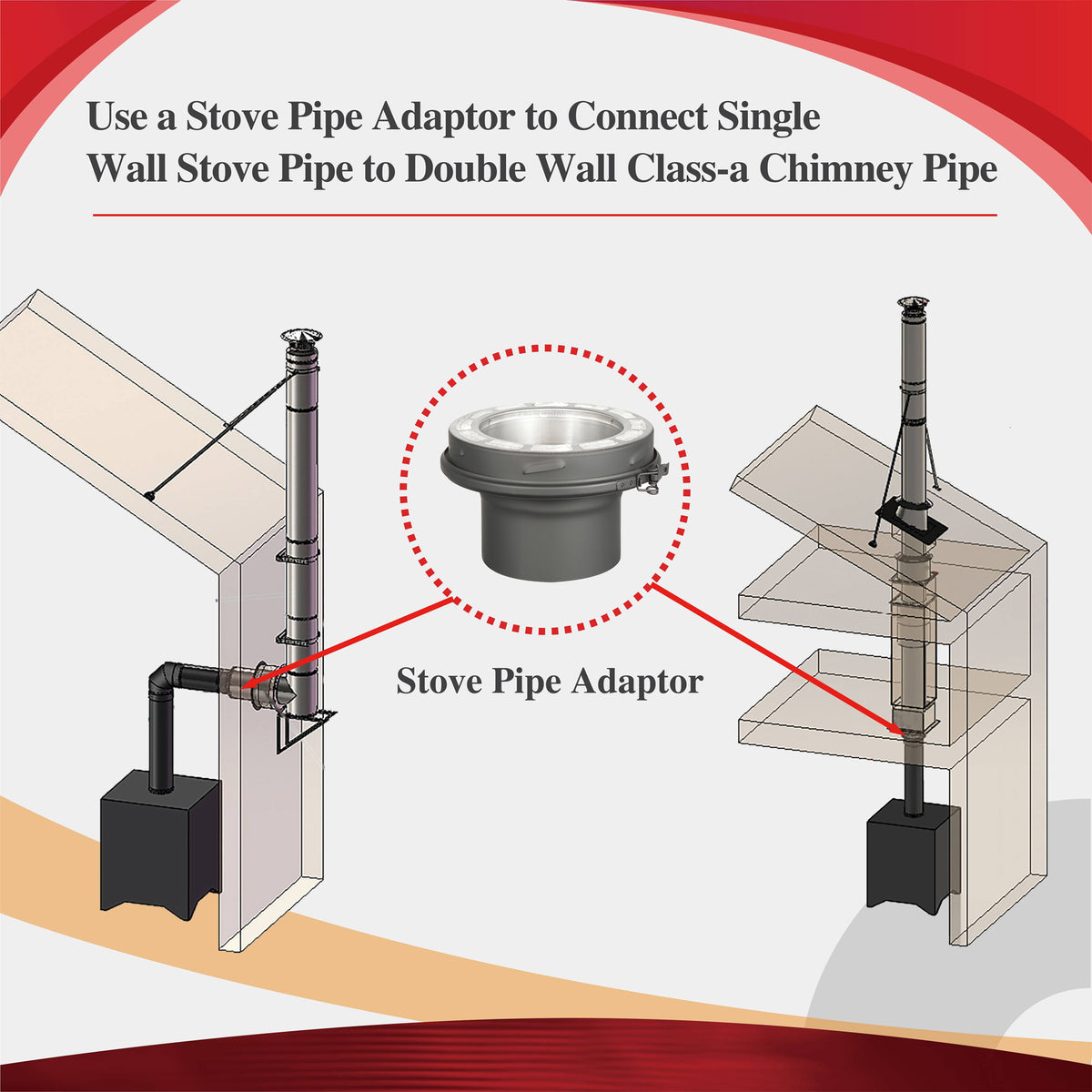
Check pipe diameter and connection style before joining stove pipes to triple wall flues. Pipes must fit snugly to avoid smoke leaks. Use adapters if diameters differ. Look for matching materials like stainless steel to prevent rust. Follow manufacturer guidelines for secure, safe connections. Proper compatibility reduces maintenance and improves stove efficiency.
Credit: duravent.com
Safety Precautions
Safety is the top priority when hooking a stove pipe to a triple wall flue. This process involves heat and combustible materials. Taking the right precautions keeps your home and family safe. Follow these safety tips carefully to prevent accidents and ensure proper installation.
Clearance Requirements
Maintain enough space between the stove pipe and any walls or ceilings. Triple wall flues need clear air gaps to avoid heat buildup. Check local building codes for exact clearance distances. Keep flammable materials like curtains and furniture far away. Proper clearance stops fires and allows safe heat flow.
Protective Gear
Wear gloves to protect your hands from sharp edges and heat. Use safety glasses to shield your eyes from dust and debris. Long sleeves help prevent burns or scrapes. Choose sturdy footwear to avoid slips or injuries. Protective gear makes the work safer and easier.
Fire Safety Tips
Inspect the stove pipe and flue for damage before installation. Use fire-resistant sealant on all joints to prevent leaks. Avoid overloading the stove with fuel to reduce excessive heat. Install smoke and carbon monoxide detectors near the stove area. Keep a fire extinguisher close by during and after installation.
Tools Needed For Installation
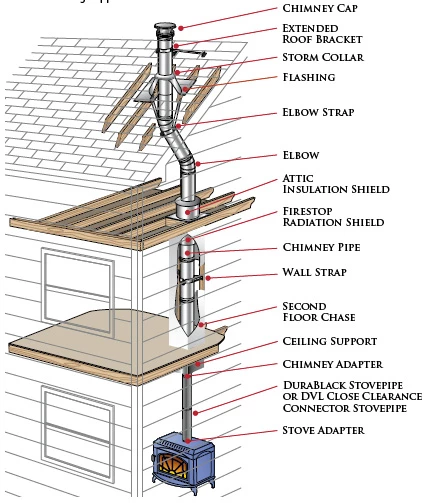
Installing a stove pipe to a triple wall flue requires the right tools. Using proper tools makes the job safer and easier. Prepare all tools before starting to avoid interruptions. Below are the essential tools needed for a smooth installation.
Basic Tools List
- Measuring tape – for accurate length and fit
- Marker or pencil – to mark cut points
- Hacksaw or metal cutting saw – to cut pipes cleanly
- Screwdriver – to tighten screws and clamps
- Drill with metal bits – for drilling holes in flue
- Level – to ensure pipes are straight
- Work gloves – to protect hands from sharp edges
- Safety glasses – to shield eyes during cutting
Specialized Equipment
- Flue pipe crimper – to secure pipe ends tightly
- Sheet metal screws – for firm connections
- High-temperature silicone sealant – for sealing joints
- Flue brush – to clean inside pipes before installation
- Pipe supports or brackets – to hold pipes in place
Credit: www.efireplacestore.com
Preparing The Stove Pipe
Preparing the stove pipe is a key step before connecting it to a triple wall flue. Proper preparation ensures safety and efficiency. It also helps the stove pipe fit well and work correctly.
Measuring And Cutting
Measure the stove pipe length carefully. Use a tape measure for accuracy. Mark the pipe where you need to cut. Use a metal saw to make a clean cut. Cut straight to avoid gaps. A well-cut pipe fits tightly with the flue.
Cleaning And Inspecting
Clean the stove pipe inside and outside. Remove dust, rust, and debris. Check the pipe for dents or holes. Damaged pipes can cause leaks and smoke problems. Replace any pipe parts that look weak or broken. Clean pipes improve airflow and safety.
Connecting Stove Pipe To Flue
Connecting the stove pipe to the triple wall flue is a key step in stove installation. It ensures the smoke moves safely out of your home. Proper connection keeps your stove working well and prevents leaks.
This section explains how to join the stove pipe to the flue. Follow these steps to create a safe and secure connection.
Aligning The Pipes
Start by placing the stove pipe and the flue pipe close together. Check that both pipe ends match in size. Make sure they line up straight without gaps or bends. Proper alignment helps smoke flow smoothly and reduces fire risk.
Securing With Clamps And Screws
Use metal clamps to hold the pipes tightly together. Position the clamp around the joint where the pipes meet. Tighten the clamp using a screwdriver. Add screws through the pipe edges for extra hold. This prevents pipes from moving or separating over time.
Sealing Joints Properly
Apply high-temperature sealant around the pipe joint. Spread it evenly to cover all gaps. This stops smoke and gases from leaking into your home. Let the sealant dry before using the stove. Proper sealing improves safety and stove efficiency.
Testing The Connection
Testing the connection between the stove pipe and the triple wall flue is a key step. It makes sure the setup is safe and works well. Careful testing helps avoid smoke leaks and poor performance. This step protects your home and family from harmful gases.
Checking For Leaks
Start by looking closely at the joints. Use a flashlight to see any gaps or cracks. Apply a soap and water solution around the connection. Watch for bubbles that show air leaks. Seal any leaks with high-temperature sealant. Recheck after sealing to confirm no more bubbles appear.
Ensuring Proper Draft
Light a small fire in the stove. Observe the smoke rising through the flue. Smoke should flow smoothly upward without backdraft. A poor draft can cause smoke to enter the room. Adjust the connection or flue height if draft is weak. Make sure fresh air reaches the stove for good combustion.
Maintenance Tips
Proper maintenance keeps your stove pipe and triple wall flue safe and efficient. Regular care helps prevent blockages and damage. It also extends the life of your heating system. Follow simple steps to maintain your setup properly.
Regular Cleaning
Clean the stove pipe and flue at least once a year. Remove soot and creosote buildup to avoid fire risks. Use a chimney brush that fits your pipe size. Clear any debris blocking the airflow. Cleaning improves heat flow and reduces smoke inside your home.
Inspecting For Damage
Check the stove pipe and flue for cracks or rust regularly. Look for loose connections or gaps in the joints. Damaged parts can cause dangerous leaks. Replace worn sections quickly to keep your system safe. Regular inspections stop small problems from becoming big ones.
Credit: allfuelhst.com
Frequently Asked Questions
How Do I Connect A Stove Pipe To A Triple Wall Flue?
To connect, first ensure both pipes fit snugly. Use a compatible adapter and secure with screws or clamps. Seal joints with high-temperature silicone to prevent leaks and ensure safety.
What Tools Are Needed To Hook Stove Pipe Properly?
You need a drill, screwdriver, measuring tape, pipe wrench, and high-temp sealant. These tools help ensure a secure and airtight connection between the stove pipe and triple wall flue.
Can I Use Any Stove Pipe With A Triple Wall Flue?
No, use stove pipes specifically designed to fit triple wall flues. Incorrect pipes may cause leaks, poor draft, or safety hazards. Always check compatibility before installation.
Why Is Sealing Joints Important In Stove Pipe Installation?
Sealing prevents smoke and harmful gases from escaping. It also improves draft efficiency and reduces fire risks. Use high-temperature silicone sealant designed for stove pipes.
Conclusion
Hooking a stove pipe to a triple wall flue is simple with the right steps. Always measure carefully and use proper tools. Secure all connections tightly to prevent leaks and ensure safety. Regular checks keep your system working well. This setup helps your stove vent smoke safely outside.
Take your time and follow instructions closely. Safety and efficiency go hand in hand. Now you can enjoy your stove with confidence.


