Are you wondering how many fluorescent lights you can safely connect to just one switch? Whether you’re setting up lighting in your home, office, or workshop, knowing the right number is key to keeping things efficient and safe.
Too many lights on one switch can cause flickering, tripped breakers, or even damage to your wiring. But how do you find the perfect balance? Keep reading to discover simple tips and expert advice that will help you make the best choice for your lighting setup.
Your space—and your peace of mind—depends on it.
Fluorescent Light Basics
Fluorescent lights are common in homes and offices. They save energy and last longer than traditional bulbs. Understanding their basics helps decide how many lights one switch can handle. Knowing types and power use is important for safety and efficiency.
Types Of Fluorescent Lights
There are several types of fluorescent lights. The most common are tube lights, compact fluorescent lamps (CFLs), and circular tubes. Tube lights come in various sizes like T5, T8, and T12. Each size has a different length and brightness. CFLs are smaller and fit in regular light sockets. Circular tubes offer even light and are often used in ceiling fixtures.
Typical Wattage And Current
Fluorescent lights use less power than incandescent bulbs. Tube lights usually range from 14 to 40 watts. CFLs can use between 9 and 26 watts. Current depends on the wattage and the supply voltage. Most fluorescent lights run on 120 or 220 volts. The current for one light is generally low, but many lights add up. Knowing total wattage and current helps avoid overloading the switch and wiring.

Credit: www.youtube.com
Switch Ratings And Limits
Switch ratings and limits tell us how many fluorescent lights one switch can safely control. Each switch has a maximum electrical load it can handle. Exceeding this limit can cause the switch to overheat or fail. Knowing these ratings helps avoid electrical problems and keeps your lighting system safe.
Common Switch Ratings
Most household light switches are rated for 15 or 20 amps. The voltage rating is usually 120 volts in the US. Some switches have ratings printed on their backs or packaging. These ratings indicate the maximum current and voltage the switch can handle. For fluorescent lights, the total wattage matters too. For example, a 15-amp switch can handle about 1800 watts at 120 volts.
Why Switch Ratings Matter
Ignoring switch ratings risks electrical hazards. Overloading a switch can cause it to heat up. This may lead to switch failure or fire. Proper ratings ensure the switch works well for the lights connected. It also extends the life of the switch and wiring. Always check ratings before adding more fluorescent lights to one switch.
Calculating Maximum Lights Per Switch
Knowing how many fluorescent lights a single switch can handle is important for safety and function. Overloading a switch can cause it to fail or create a fire hazard. Calculating the maximum number of lights helps you avoid these risks. This section explains how to do that step by step.
Estimating Total Load
First, find the wattage of each fluorescent light. This number is usually on the bulb or its packaging. Multiply the wattage by the number of lights you want to use on one switch. This gives the total power load.
Next, check the switch’s maximum wattage rating. It is often listed on the switch or in its manual. Ensure the total load does not exceed this rating. If the load is too high, reduce the number of lights or use a higher-rated switch.
Considering Inrush Current
Fluorescent lights have a higher current when they turn on. This is called inrush current. It can be several times the normal running current. Make sure the switch can handle this surge without damage.
Inrush current can cause the switch to wear out faster. Choose switches designed for lighting loads. These switches can handle short bursts of high current safely. Factor this in when planning your lighting setup.

Credit: www.wazipoint.com
Safety And Electrical Codes
Safety is very important when installing fluorescent lights on one switch. Following electrical codes protects your home and prevents accidents. These rules help avoid overloads and wiring problems. Understanding these codes ensures your lighting setup is safe and reliable. Below are key points about national and local safety rules.
National Electrical Code Guidelines
The National Electrical Code (NEC) sets rules for wiring and electrical devices. It limits how many lights one switch can handle. These limits prevent too much current from flowing through wires. NEC requires circuits to have specific breakers to stop overloads. Fluorescent lights also need correct wiring to avoid short circuits. Always use wiring and breakers that match NEC standards. This keeps your installation safe and reduces fire risks.
Local Regulations To Check
Local rules may have extra safety requirements beyond the NEC. These rules can change by city or state. Some places limit the number of lights on one switch more strictly. Others may require inspections after installation. Check with local building departments before starting work. Following local codes avoids fines and ensures legal compliance. Local electricians can help understand these rules. They keep your project safe and code-friendly.
Practical Examples
Understanding how many fluorescent lights can be controlled by one switch helps plan lighting better. Different settings need different approaches. Here are practical examples for both homes and businesses.
Residential Setup
In a home, one switch usually controls 3 to 6 fluorescent lights. It depends on the wiring and the switch’s rating. Using too many lights on one switch can cause flickering or damage. Most household switches support up to 600 watts. Each fluorescent light uses about 32 watts. So, a simple math shows about 6 lights are safe.
Home lighting often focuses on comfort and energy use. Grouping lights by room areas helps. For example, a kitchen might have two switches. One for the main ceiling lights and one for under-cabinet lights. This setup saves energy and offers better control.
Commercial Setup
In offices or stores, switches can control more lights. A single commercial switch might handle up to 10 or 12 fluorescent fixtures. These switches are designed to manage higher power. Businesses group lights by zones, like aisles or workstations. This helps to light only the needed areas.
Commercial lighting also considers safety rules. Electric codes limit how much load a switch can carry. Overloading a switch can cause overheating and fire risks. Professionals often install multiple switches or use special controls for large areas. This keeps systems safe and efficient.
Tips For Installation
Installing fluorescent lights on one switch needs care. Proper setup ensures safety and good performance. Follow simple tips to avoid common problems and make your lighting system last longer.
Understanding the right switch and wiring methods helps keep your installation smooth. These tips guide you through choosing the correct switch and wiring safely.
Choosing The Right Switch
Pick a switch that can handle the total wattage of your lights. Check the switch rating on the package before buying. Use switches designed for fluorescent lighting. They manage the electrical load better and prevent damage. Avoid using switches meant for lower power devices.
Consider a switch with a good quality rating. It lasts longer and works without flickers. If you want dimming options, choose a dimmer made for fluorescent bulbs. This choice saves energy and improves light control.
Wiring Best Practices
Turn off the power at the breaker before starting any wiring work. Use the right gauge wire for your lighting load. Thicker wires reduce the risk of overheating. Connect wires firmly to avoid loose contacts.
Keep wires organized and use wire nuts or connectors. Label wires to avoid confusion later. Follow local electrical codes for safety. Test your setup with a voltage tester before closing the switch box.
Troubleshooting Common Issues
Fluorescent lights often face issues that affect their performance. Troubleshooting common problems helps keep your lights working well. Knowing how to handle these issues saves time and money. Below are two frequent problems and easy ways to fix them.
Flickering Lights
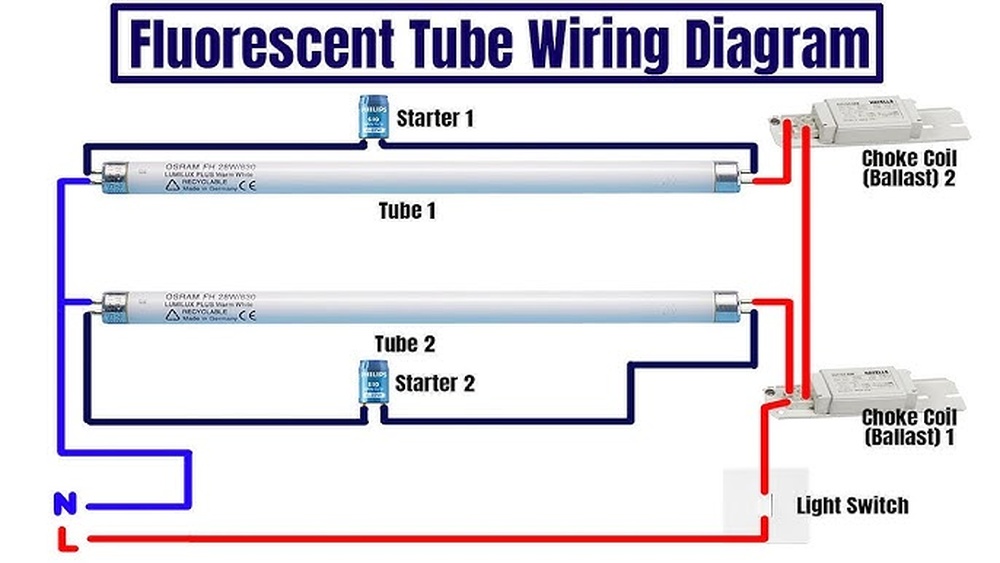
Flickering is a common problem with fluorescent lights. It may happen because of a loose bulb or bad starter. Check if the bulb fits tightly in the socket. Replace the starter if it looks worn out. Sometimes, flickering means the ballast is failing. A faulty ballast needs professional replacement. Make sure the switch and wiring are secure. Loose wiring can cause unstable power flow and flickering.
Switch Overheating
Overheating switches signal electrical problems. Too many fluorescent lights on one switch can cause heat build-up. This happens when the switch carries more current than it can handle. Using a switch rated for the correct load prevents overheating. Turn off power before inspecting the switch. Look for signs of burning or melting. Replace any damaged switches immediately. Overheating switches can lead to fire hazards. Proper electrical setup keeps your lighting safe and stable.

Credit: www.electricaltechnology.org
Frequently Asked Questions
How Many Fluorescent Lights Can One Switch Handle?
A single switch can typically control up to 10-12 fluorescent lights. The exact number depends on the switch’s amperage rating and the total wattage of the lights connected. Always check the switch specifications and circuit capacity before installation.
Does The Type Of Fluorescent Light Affect Switch Capacity?
Yes, the type and wattage of fluorescent lights affect how many can be on one switch. Higher wattage lights draw more current, reducing the number you can safely connect to a single switch. Consider energy ratings for accurate planning.
Can Too Many Lights On One Switch Cause Electrical Issues?
Connecting too many fluorescent lights on one switch can overload the circuit. This leads to overheating, tripped breakers, or switch failure. To avoid hazards, calculate total wattage and ensure it matches the switch and circuit limits.
Is It Safe To Control Multiple Rooms With One Fluorescent Light Switch?
Controlling multiple rooms with one switch is not recommended. It can cause uneven lighting and complicate wiring. Separate switches provide better control and safety, ensuring each room’s lighting needs are met efficiently.
Conclusion
Choosing the right number of fluorescent lights on one switch matters. Too many lights can cause flickering or overload the circuit. Check the wattage and circuit limits before installation. Balance safety and brightness for a comfortable space. Simple planning helps avoid electrical issues and saves energy.
Keep these tips in mind for efficient lighting control. Your room will feel bright and safe with the right setup.