Are you working with steel and wondering how to securely fasten it without damaging the material? Choosing the right fastening system can make all the difference in your project’s strength and durability.
When it comes to driving steel pins or threaded studs into tough surfaces like steel or masonry, not every tool will get the job done efficiently. You need a method that offers power, precision, and reliability. Keep reading to discover which fastening system professionals trust to drive steel fasteners firmly and safely—and why this choice could be the game-changer for your next build.
Powder-actuated Tools
Powder-actuated tools are powerful fastening devices used to drive fasteners into hard materials. These tools use a controlled explosive charge to push steel pins or studs deep into steel or masonry. They offer strong, secure connections where traditional fastening methods might fail. Their efficiency and strength make them popular in construction and industrial work.
How They Work
A powder-actuated tool works like a small gun. It uses a cartridge filled with powder, similar to a firearm. When triggered, the powder ignites and creates gas pressure. This pressure drives the fastener into the material with great force. The tool is designed to control the explosion safely, focusing energy on the fastener.
Types Of Fasteners Used
Fasteners for powder-actuated tools include steel pins and threaded studs. Steel pins are smooth and used for light to medium fastening. Threaded studs have threads to hold materials firmly, even under stress. Both types are made from hardened steel to withstand the driving force and hold securely.
Applications In Steel And Masonry
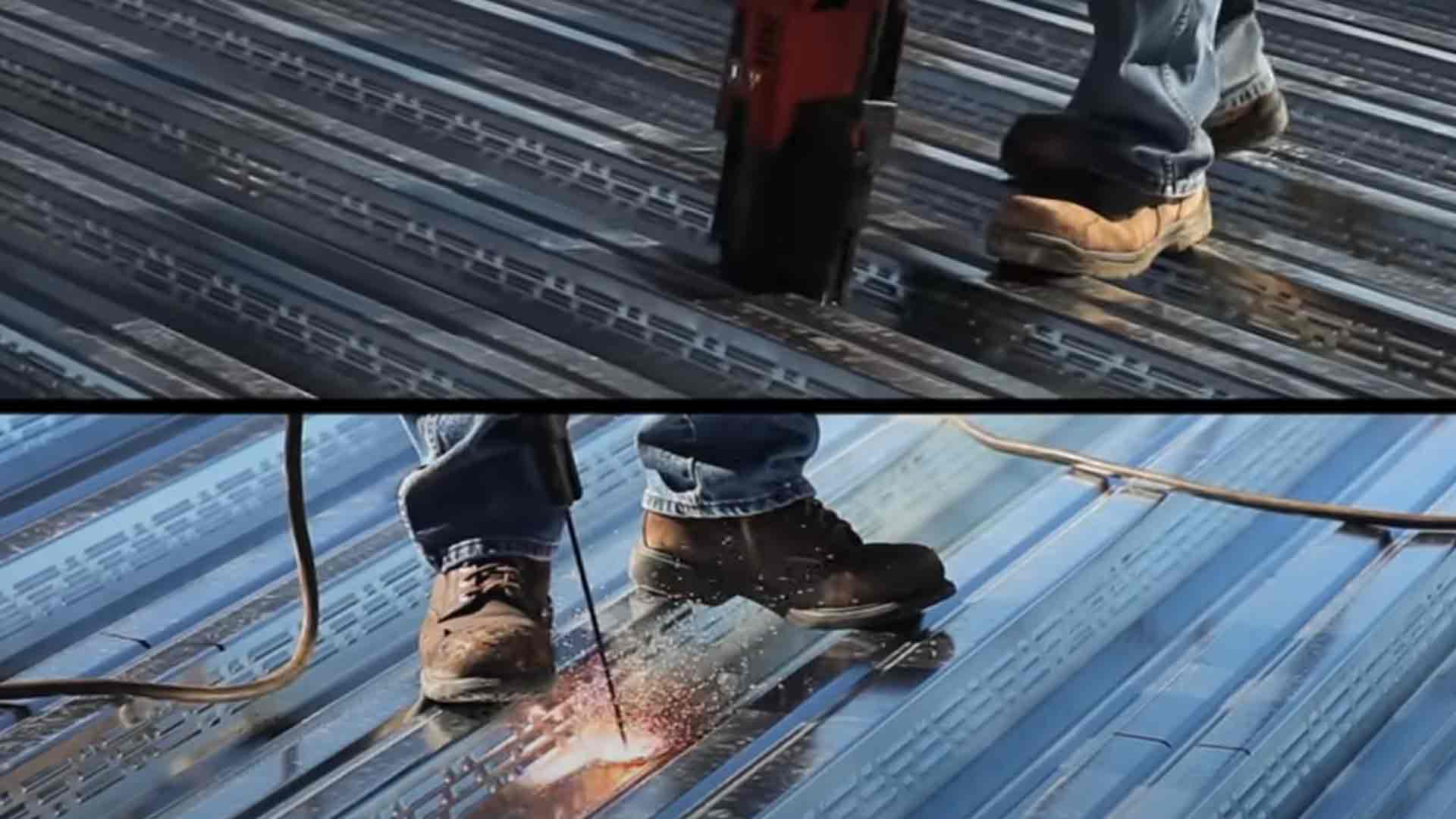
Powder-actuated tools work well for fastening steel to concrete or steel to steel. They are common in installing metal framing, attaching steel plates, and securing electrical boxes to masonry walls. The tools save time and provide strong, lasting holds in tough materials. This makes them essential in many building and manufacturing projects.

Credit: www.diyhomecenter.com
Comparing Fastening Systems
Choosing the right fastening system for steel is crucial for strong and lasting results. Each tool offers unique benefits and suits specific tasks. Understanding how these systems work helps pick the best one for driving steel fasteners.
Pneumatic Screw Nailers
Pneumatic screw nailers use compressed air to drive screws quickly. They work well for wood and light metal applications. These tools offer speed but lack the power for hard steel. They require clean air and regular maintenance. Not ideal for driving steel pins or studs deeply.
Air Impact Wrenches
Air impact wrenches deliver high torque to tighten or loosen bolts. They do not drive nails or pins into steel. These wrenches are great for assembly work involving nuts and bolts. Heavy-duty but not designed for penetrating steel surfaces. Best used for fastening threaded parts.
Mini Hammer Drills
Mini hammer drills combine rotary and hammering action for drilling holes. They can drill into metal but do not drive fasteners. Useful for preparing holes before inserting screws or anchors. Compact and versatile for small-scale jobs. Not suitable for direct fastening of steel pins or studs.
Advantages Of Powder-actuated Tools
Powder-actuated tools offer several benefits for driving steel fasteners into hard materials. They combine power and precision to complete tough tasks quickly. These tools use controlled explosive charges to push fasteners deep into surfaces like steel and concrete. Their design helps improve work quality while saving time and effort.
Efficiency And Speed
Powder-actuated tools work fast compared to traditional methods. Each fastener installs in seconds with minimal effort. This speed helps finish projects sooner and reduces labor costs. The tool requires less physical strength, allowing workers to maintain steady progress.
Strength Of Fastening
Fasteners driven by powder-actuated tools hold very strong. The explosive force ensures deep, secure embedding into steel or concrete. This creates a reliable bond that resists loosening and vibration. Such fastening strength suits structural and heavy-duty applications well.
Suitability For Hard Materials
These tools excel at fastening into tough surfaces like steel and masonry. They can penetrate materials that regular nails or screws cannot. This makes powder-actuated tools ideal for industrial and construction jobs involving hard, dense materials.
Safety Considerations
Safety is the top priority when using fastening systems to drive steel. These tools involve powerful forces that can cause injury without proper care. Understanding safety measures helps prevent accidents and ensures efficient work. Following safety guidelines protects operators and those nearby.
Training Requirements
Operators must receive proper training before using fastening tools. Training covers tool handling, maintenance, and emergency procedures. Certified instruction ensures users understand risks and correct tool use. Regular refresher courses keep skills sharp and knowledge up to date.
Protective Gear
Wearing protective gear reduces injury risks from flying debris or tool misfires. Safety glasses protect eyes from sparks and particles. Hearing protection guards against loud noise from powder-actuated tools. Gloves shield hands from sharp edges and tool heat.
Safe Operating Practices
Always inspect tools before use to ensure proper function. Use the correct fastener and charge for the material. Keep hands clear of the fastening area during operation. Work in well-lit spaces to see clearly. Follow manufacturer guidelines to avoid misuse and accidents.
Selecting The Right Fastening System
Selecting the right fastening system is essential for driving steel effectively. The choice depends on several key factors. Each factor ensures the fastener performs well and lasts long. Consider these points carefully to match the fastening system to your needs.
Material Compatibility
Different fastening systems suit different materials. Steel requires a system that can handle its hardness. Some fasteners may damage or fail with steel. Choose a fastening system designed for steel to ensure a strong hold. Powder-actuated tools, for example, work well with steel and masonry. Always check if the fastener matches the steel’s thickness and type.
Project Requirements
Every project has unique needs. Consider the environment where steel will be used. Some systems offer quick installation, while others provide extra strength. Evaluate the load and stress on the fastened steel. Projects needing high durability may require heavy-duty systems. Also, think about the speed of work and available tools. Match the fastening system to these demands for best results.
Cost And Maintenance
Cost matters in choosing a fastening system. Some systems are cheaper but may need frequent upkeep. Others cost more initially but last longer without repair. Calculate the total cost, including installation and maintenance. A reliable system reduces future expenses and downtime. Choose a fastening system that fits your budget and maintenance capacity.
Credit: blog.metaldeck.com
Maintenance And Troubleshooting
Proper maintenance and troubleshooting are key to keeping fastening systems effective and safe. Regular care prevents breakdowns and extends the tool’s life. Quick identification of issues saves time and reduces repair costs.
Routine Care
Clean the tool after each use to remove dust and debris. Check the fastener magazine for jams or damage. Lubricate moving parts with recommended oil to reduce wear. Store the tool in a dry place to avoid rust. Inspect safety features regularly to ensure proper function.
Common Issues
Jammed fasteners can stop the tool from working properly. Misfires may occur if the charge is weak or the tool is dirty. Worn seals can cause air or powder leaks. Loose screws affect the tool’s alignment. Battery or power supply problems can interrupt operation.
Repair Tips
Clear jams carefully using the correct tools. Replace worn or damaged seals and springs promptly. Tighten any loose screws or bolts to restore stability. Use only manufacturer-approved parts for replacements. Test the tool after repairs to confirm normal function.

Credit: www.ebay.com
Frequently Asked Questions
What Fastening System Is Used To Drive Steel Pins?
A powder-actuated tool drives steel pins by using a small explosive charge. It efficiently fastens pins into steel and masonry.
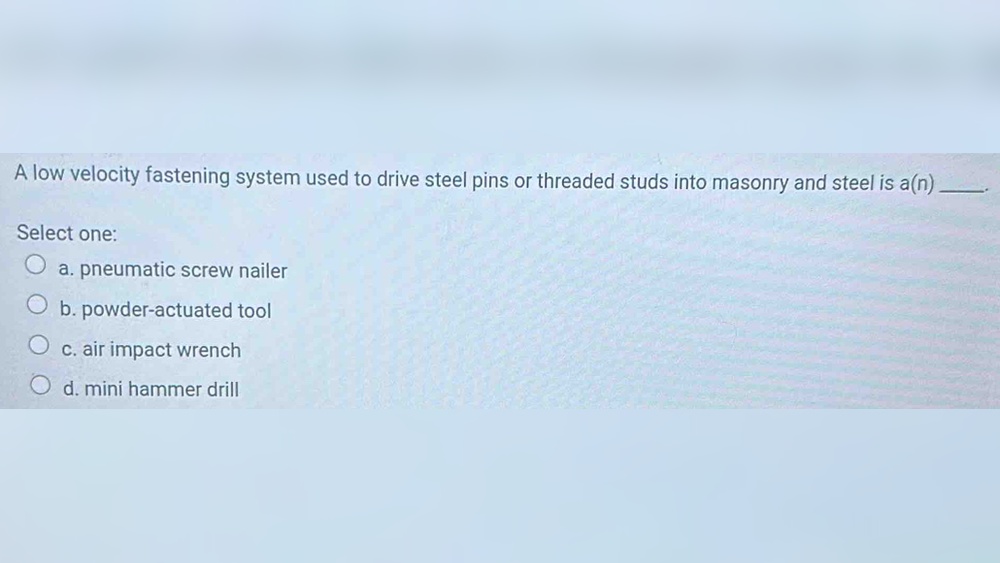
Which Is A Low Velocity Fastening System Used To Drive Steel Pins Or Threaded?
A powder-actuated tool is a low-velocity fastening system used to drive steel pins or threaded studs into masonry and steel efficiently.
What Tools Drive Steel Pins?
A powder-actuated tool drives steel pins by using a small explosive charge. It efficiently fastens pins into steel, masonry, or concrete.
What Tool Would Be Used To Drive Steel Pins Or Threaded Steel Studs Directly Into Masonry?
A powder-actuated tool drives steel pins or threaded studs directly into masonry. It uses a controlled explosive charge for strong fastening.
Conclusion
Choosing the right fastening system ensures strong and lasting steel connections. Powder-actuated tools drive steel pins and studs into hard materials quickly. They use a small explosive charge for effective fastening in steel and masonry. Other tools may not work well for these tough surfaces.
Understanding the powder-actuated tool’s role helps in selecting the best method. This system combines power with precision for reliable results. It remains a top choice for steel fastening needs in construction and manufacturing.