When you think about building or fixing something, the small things often make the biggest difference. Fasteners are those tiny heroes that hold everything together, from your furniture to your car.
But do you know there are many different types of fasteners, each designed for a special job? Understanding these can save you time, money, and frustration on your next project. Ready to discover which fasteners suit your needs best? Keep reading, and you’ll never look at screws and bolts the same way again.

Credit: abalegal.eu
Common Fastener Types
Fasteners hold things together. They are essential in construction, repair, and everyday projects. Many types exist, but some are more common. These fasteners suit different tasks and materials. Understanding basic types helps choose the right one.
Screws
Screws have a threaded shaft. They twist into materials like wood or metal. Screws hold tight and resist pulling out. Different heads fit various screwdrivers. They come in many sizes and shapes.
Nuts
Nuts are small blocks with a hole inside. The hole is threaded to match bolts. Nuts fasten onto bolts to secure objects. They often pair with washers for strength. Hexagonal nuts are the most popular.
Bolts
Bolts have a smooth shaft with threads at the end. They pass through holes in materials. Bolts need nuts to hold parts firmly. They come in many lengths and diameters. Bolts provide strong, reliable fastening.
Washers
Washers are thin, flat discs with a hole. They sit between the nut or bolt and the surface. Washers spread the load to prevent damage. They also stop loosening from vibration. Different washers serve different purposes.
Specialized Fasteners
Specialized fasteners serve unique purposes in construction, manufacturing, and repairs. These fasteners provide strong, lasting connections in specific situations. They differ from regular screws or bolts by their design and function. Understanding these fasteners helps choose the right type for a project.
Rivets
Rivets join materials by inserting a metal pin through holes. The pin’s end is then deformed to hold parts tightly. They work well for metal sheets and materials that cannot be welded. Rivets are durable and resist vibrations and loosening.
Pins
Pins act as simple fasteners to hold parts together. They are easy to insert and remove without tools. Common types include cotter pins, split pins, and dowel pins. Pins provide temporary or permanent connections depending on use.
Clips
Clips fasten parts by gripping or snapping into place. They are common in automotive and electronic assemblies. Clips allow quick assembly and disassembly without damaging parts. They come in many shapes and sizes for different tasks.
Anchors
Anchors fasten objects to walls or concrete. They expand or grip tightly inside a drilled hole. Anchors provide strong support for heavy loads like shelves or fixtures. Different types include plastic, metal, and toggle anchors.
Material-based Fasteners
Fasteners come in many materials, each suited to different needs. Material choice affects strength, durability, and cost. Understanding these types helps pick the right fastener for any project. Here, we explore metal, plastic, and composite fasteners.
Metal Fasteners
Metal fasteners are strong and reliable. They include screws, bolts, nuts, and nails made from steel, stainless steel, brass, or aluminum. Steel fasteners resist heavy loads and heat well. Stainless steel fights rust, perfect for outdoor use. Brass offers corrosion resistance and looks good. Aluminum fasteners are light and resist corrosion but are not as strong as steel. Metal fasteners suit construction, machinery, and automotive jobs.
Plastic Fasteners
Plastic fasteners are light and resist corrosion. They come in nylon, polypropylene, and other plastics. These fasteners do not conduct electricity. They are ideal for electronics and lightweight assemblies. Plastic fasteners are less strong than metal but cheaper. They resist chemicals and moisture well. Use plastic fasteners in areas where metal may rust or cause damage.
Composite Fasteners
Composite fasteners mix materials like metal and plastic. They combine strength with light weight and corrosion resistance. These fasteners suit special uses in aerospace and automotive fields. Composite fasteners handle tough conditions better than plastic alone. They can reduce weight without losing durability. These fasteners are often more expensive but offer unique benefits.

Credit: www.nikofasteners.com
Fastener Head Styles
Fastener head styles play a key role in choosing the right fastener. The head affects how the fastener sits on or in the material. It also impacts the tool needed for installation and the final look of the project. Different head styles serve different purposes and fit different applications.
Flat Head
Flat head fasteners have a flat top and a tapered underside. They sit flush with the surface after installation. This style is ideal when a smooth surface is needed. It prevents snagging or catching on objects.
Pan Head
Pan head fasteners have a rounded top and a flat underside. They sit on the surface without sinking in. This head style offers a larger bearing surface. It is good for holding thin materials firmly.
Round Head
Round head fasteners have a domed top and a flat underside. They rise above the surface, making them easy to spot. This style is strong and often used in heavy-duty applications. It also provides a classic look.
Hex Head
Hex head fasteners have six sides for wrench use. They provide strong grip and torque. This style is common in construction and machinery. It allows easy tightening and loosening with tools.
Drive Types
Fasteners connect parts and hold objects together. Drive types define the shape of the screw head slot. They affect how you use tools and apply force. Choosing the right drive type improves work speed and safety.
Slotted
Slotted drives have a single straight groove. They work with flathead screwdrivers. These are the oldest and simplest type. Slotted screws can slip easily, so they need careful handling. They fit basic household tasks well.
Phillips
Phillips drives have a cross-shaped slot. This design helps the screwdriver grip tightly. It reduces slipping and cam-out. Most electronics and furniture use Phillips screws. They make screwing faster and more secure.
Torx
Torx drives have a star-shaped pattern with six points. This design offers excellent torque transfer. Torx screws resist stripping better than Phillips. They are common in cars and electronics. Using Torx helps avoid damage to the screw head.
Allen
Allen drives have a hexagonal hole inside the screw head. These need an Allen wrench or hex key. Allen screws provide strong grip and control. They appear often in furniture and machinery. The design prevents slipping and makes tight fastening easier.
Applications And Uses
Fasteners hold things together in many ways. They are small but very important parts. Different types of fasteners fit different jobs. Each industry uses them to join materials safely and firmly. Understanding their applications helps choose the right fastener for each task.
Construction
Construction uses fasteners to build strong structures. Nails, screws, and bolts join wood, metal, and concrete. They hold walls, roofs, and floors in place. Fasteners must be strong and durable here. They keep buildings safe and stable for years.
Automotive
Cars rely on fasteners to hold parts together. Bolts and screws secure engines, wheels, and seats. They resist vibration and heat inside vehicles. Fasteners here must be precise and reliable. They keep vehicles safe to drive every day.
Electronics
Small fasteners connect parts inside electronics. Screws and clips hold circuit boards and cases. They protect delicate components from damage. Fasteners in electronics are tiny but strong. They keep devices working properly and safely.
Furniture
Furniture uses fasteners to join wood and metal pieces. Screws, nails, and dowels create sturdy chairs and tables. They help furniture last longer and stay firm. Fasteners in furniture also allow easy assembly and repair.
Choosing The Right Fastener
Choosing the right fastener is important for any project. The wrong fastener can cause problems like weak joints or damage. Understanding key factors helps pick the best option. This makes your work stronger and lasts longer.
Load Requirements
Fasteners must hold the weight and force in your project. Some need to carry heavy loads, while others support light parts. Choose a fastener that matches how much weight it must handle. This prevents failures and keeps everything secure.
Environmental Factors
Fasteners face different conditions like moisture, heat, or chemicals. Outdoor projects need rust-resistant fasteners. High heat areas require special metals. Match the fastener to the environment to avoid corrosion and damage.
Material Compatibility
Fasteners must work well with the materials you join. Metal, wood, and plastic all need different types. Using the wrong fastener can cause cracks or weak spots. Pick one made for your material to ensure a strong bond.
Installation Methods
Consider how you will install the fastener. Some need tools like drills or wrenches. Others just snap or screw in by hand. Choose a fastener that fits your skills and tools. This makes installation faster and easier.
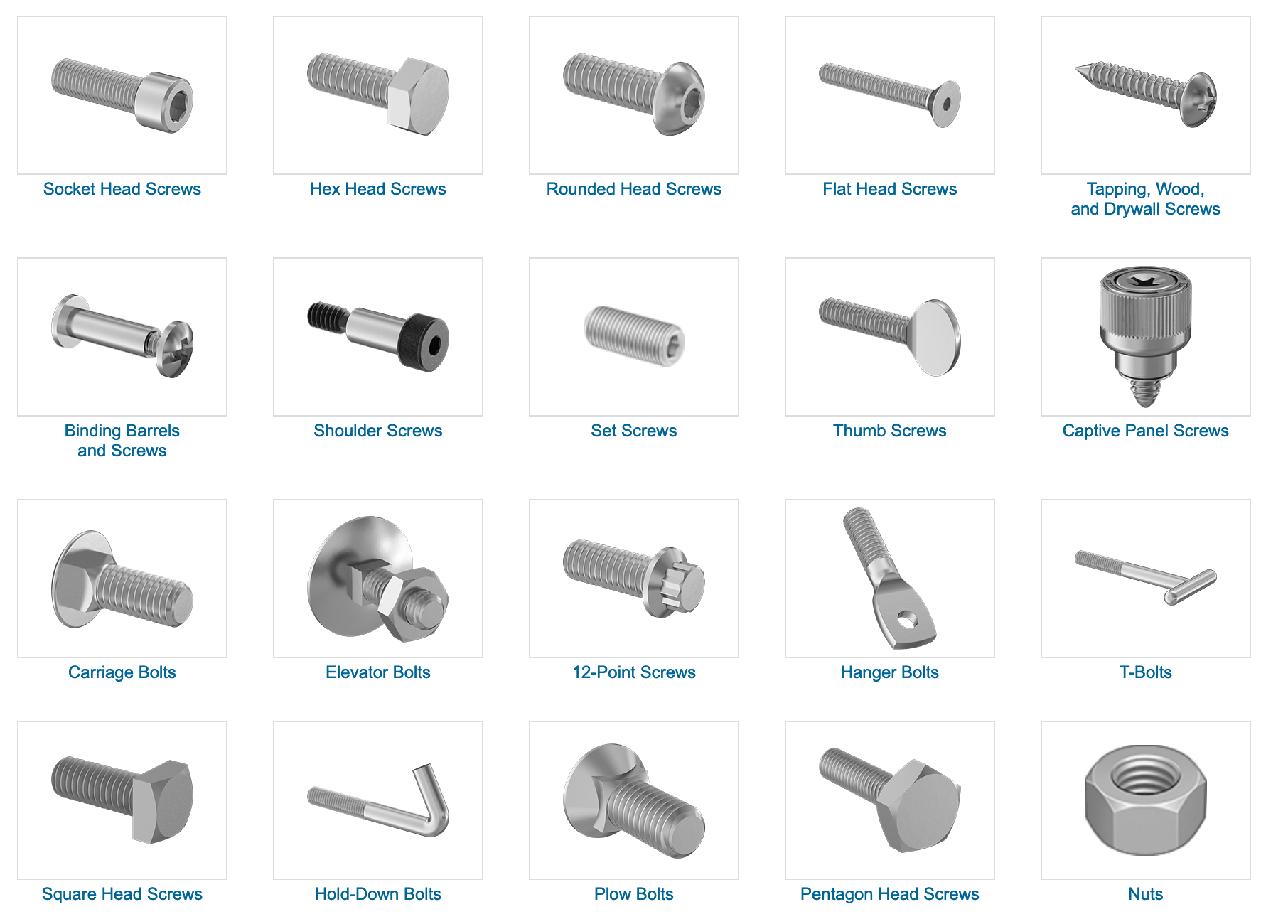
Credit: www.fusiondesigninc.com
Frequently Asked Questions
What Are The Most Common Types Of Fasteners?
Common fasteners include screws, bolts, nuts, washers, and rivets. Each serves unique purposes in joining materials securely and efficiently.
How Do Screws Differ From Bolts?
Screws are threaded fasteners used alone, while bolts require nuts for secure fastening. Screws often create their own threads.
What Is The Purpose Of Washers In Fasteners?
Washers distribute load evenly and prevent damage to surfaces. They also reduce loosening caused by vibration or movement.
When Should Rivets Be Used Instead Of Screws?
Rivets provide permanent, strong joints ideal for metal sheets. They are used where disassembly isn’t required or possible.
Conclusion
Fasteners come in many types, each serving a unique purpose. Screws, bolts, nuts, and nails all help join materials securely. Choosing the right fastener makes projects stronger and safer. Understanding their uses saves time and effort. Keep these basics in mind for your next task.
Simple tools, big results.