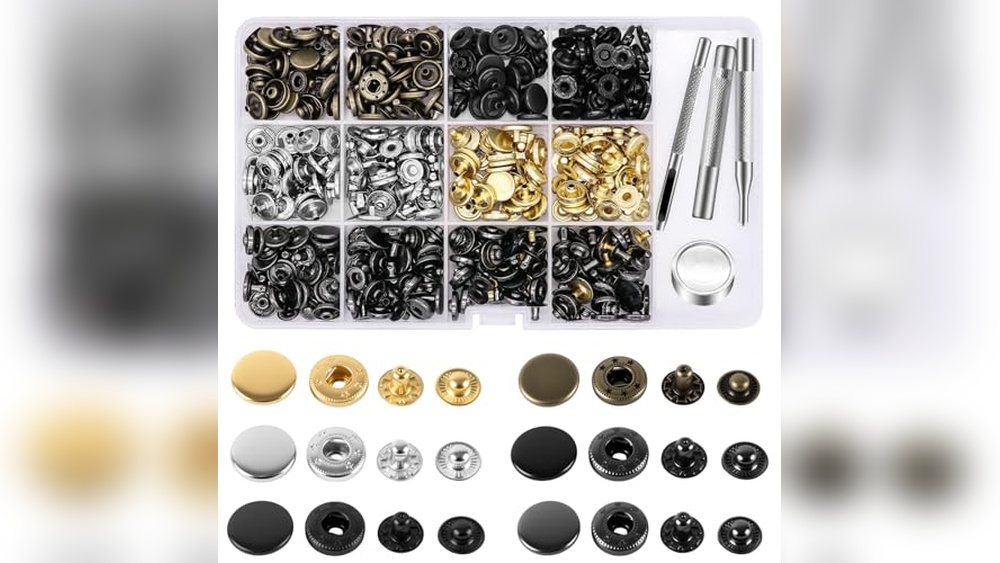
Are you curious about how things stay together, whether it’s your favorite pair of shoes, a sturdy piece of furniture, or even the gadgets you use every day? Understanding the different types of fastening can give you the power to fix, build, or improve just about anything.
You’ll discover the key fastening methods that hold the world in place. Knowing these can save you time, money, and frustration. Ready to unlock the secrets behind strong, reliable connections? Keep reading to learn what fastening really means and how you can use it effectively.
Mechanical Fasteners
Mechanical fasteners are devices used to join two or more objects tightly. They create a strong bond that can be easily assembled or taken apart. These fasteners are common in construction, machinery, and everyday items. Their variety allows different needs and materials to be matched perfectly.
Bolts And Nuts
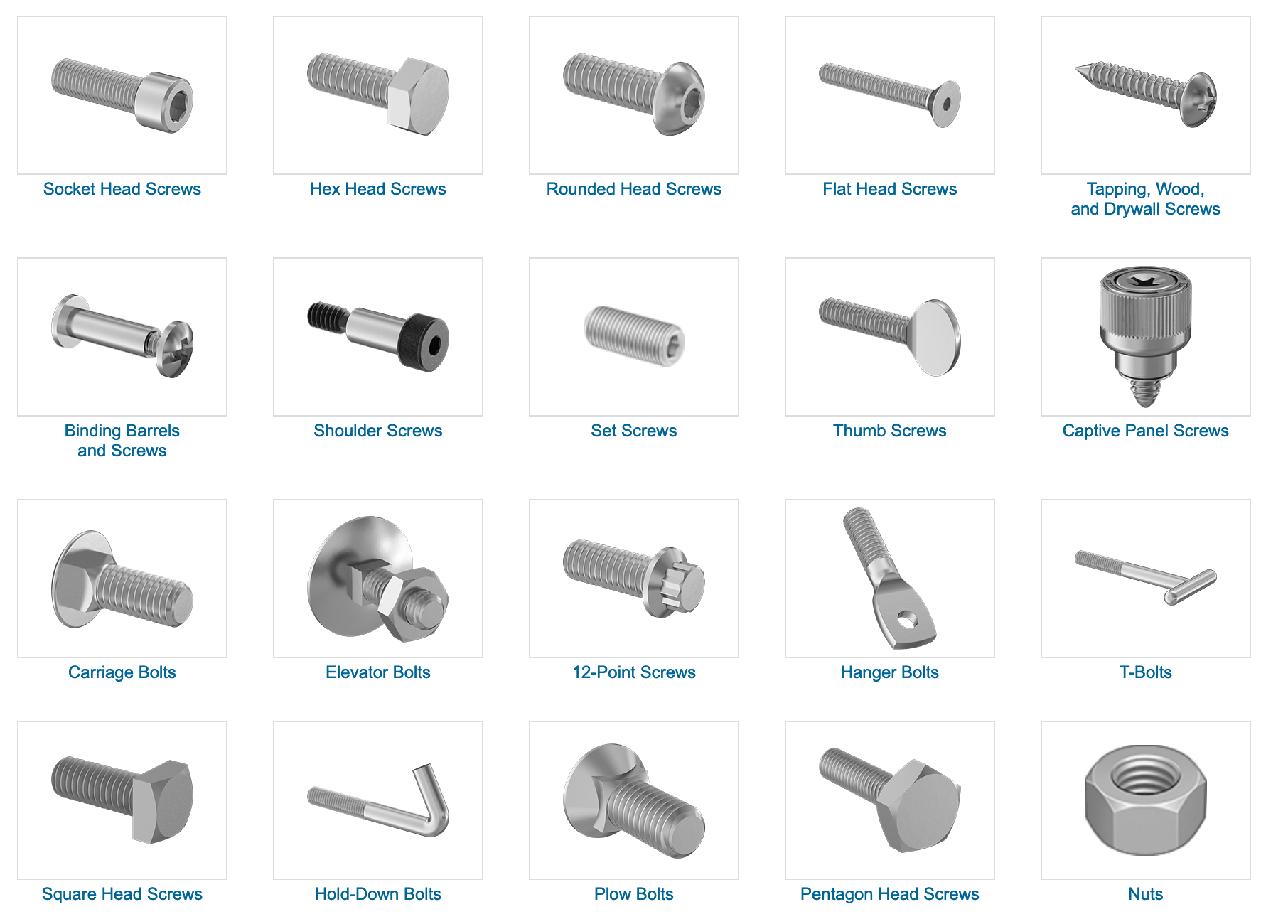
Bolts are metal rods with threads that fit into nuts. Nuts are hexagonal pieces with matching threads. Together, they hold parts firmly. Bolts pass through aligned holes and are tightened by turning the nut. This fastening is strong and reliable. It works well for heavy objects and structural parts.
Screws
Screws are similar to bolts but do not need a nut. They have sharp threads that cut into materials. Screws hold parts by embedding in wood, metal, or plastic. They come in many shapes and sizes. Screws are easy to use with a screwdriver or drill. They provide good grip and stability.
Rivets
Rivets join parts by being pushed through holes and then deformed. The deformation locks the rivet in place. They are permanent fasteners and cannot be removed easily. Rivets are common in metal work like aircraft and bridges. They create a strong, vibration-resistant bond. Rivets work well where welding is not possible.
Pins And Clips
Pins and clips hold parts together without threads. Pins are straight rods inserted through holes. Clips snap into place to lock parts quickly. These fasteners are easy to remove and reuse. They hold moving parts or parts needing frequent assembly. Pins and clips offer simple, effective fastening solutions.
Adhesive Fastening
Adhesive fastening uses glue-like substances to join materials. It creates strong bonds without drilling or welding. This method works well with different materials like metal, plastic, and wood. Adhesive fastening offers clean, smooth joints that keep surfaces intact. It also spreads stress evenly across the bond, reducing weak points.
Types Of Adhesives
There are several types of adhesives used in fastening. Epoxy adhesives are strong and resist heat well. Acrylic adhesives dry quickly and bond many materials. Polyurethane adhesives are flexible and work with wood and plastic. Silicone adhesives resist water and remain flexible after drying. Each type suits different materials and uses.
Applications Of Adhesive Bonding
Adhesive bonding is common in many industries. It joins parts in automotive manufacturing for smooth finishes. Electronics use adhesives to secure tiny components without damage. In construction, adhesives attach panels and insulation materials. Furniture makers use adhesives to bond wood and fabric. Even the aerospace industry relies on adhesives for lightweight parts.
Advantages And Limitations
Adhesives avoid damage to materials caused by drilling or welding. They create neat, invisible joints that improve appearance. Adhesive bonds spread forces evenly, increasing durability. Some adhesives resist water, heat, and chemicals well. Yet, adhesive fastening can take longer to set. It may not hold under very high stress. Surface preparation is crucial for strong bonds.
Welding Techniques
Welding is a common fastening method that joins two metal pieces. It uses heat to melt the parts and fuse them together. Various welding techniques exist, each suited for different tasks and materials. Understanding these methods helps in choosing the right one for your project.
Arc Welding
Arc welding uses an electric arc to melt metals at the joint. The heat comes from an electrical current passing through an electrode. This technique works well for heavy metal parts. It is strong and creates a permanent bond. Arc welding is popular in construction and repair work.
Spot Welding
Spot welding joins metals by applying pressure and heat to small areas. It uses electrical current to create heat at the contact points. This method is fast and ideal for thin sheets of metal. Spot welding is common in the automotive industry. It forms small, strong welds without needing filler material.
Tig And Mig Welding
TIG welding uses a tungsten electrode to create the arc. It is precise and good for thin metals or detailed work. TIG welding produces clean and strong welds but takes skill to perform well.
MIG welding uses a wire fed through a gun as both electrode and filler. It is easier to learn and faster than TIG welding. MIG welding suits thicker metals and large projects. Both techniques offer flexibility in metal joining tasks.
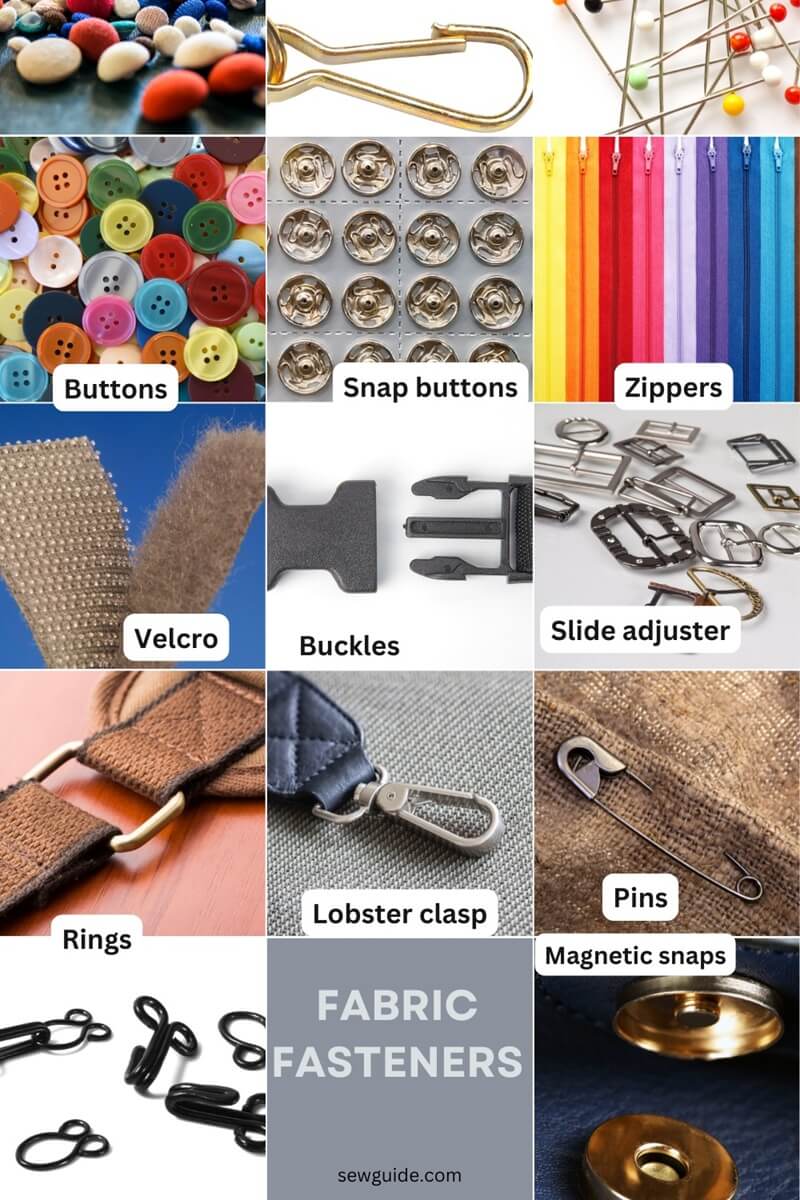
Credit: sewguide.com
Soldering And Brazing
Soldering and brazing are two common fastening methods used to join metals. Both use heat and a filler material to create strong bonds. These techniques do not melt the base metals but rely on the filler to hold parts together. Understanding their differences helps in choosing the right method for each project.
Differences Between Soldering And Brazing
Soldering uses lower heat, typically below 450°C (842°F). Brazing requires higher heat, above 450°C. Solder joints are usually weaker than brazed joints. Brazing creates stronger, more durable bonds. Soldering is often used for delicate electronics. Brazing suits heavier metalwork and plumbing.
Common Uses
Soldering is common in electrical work and small metal parts. It joins wires, circuit boards, and jewelry. Brazing works well for plumbing, HVAC systems, and automotive parts. It can join different metals with strong, leak-proof connections. Both methods avoid melting the base metals.
Material Compatibility
Soldering works best with metals like copper, silver, and gold. It also suits thin metal sheets and wires. Brazing joins a wider range of metals, including steel and brass. It can bond dissimilar metals without weakening the joint. Choosing the right filler metal is key for both methods.
Magnetic Fastening
Magnetic fastening uses magnets to hold objects together. It offers a quick and easy way to connect parts without tools or screws. This type of fastening works by attracting metal pieces with strong magnetic force. Magnetic fastening is popular in many fields because it saves time and effort.
Magnetic Clasps
Magnetic clasps are common in jewelry and accessories. They allow easy opening and closing of necklaces and bracelets. These clasps use small but strong magnets to keep items secure. Users can fasten or unfasten the clasp with one hand. They provide a neat look without bulky hooks or buckles.
Applications In Industry
Industries use magnetic fastening for quick assembly and disassembly. Electronics often use magnetic connectors for charging and data transfer. Automotive parts use magnetic fasteners for easy repairs and adjustments. Furniture manufacturers use them to attach panels or covers. Magnetic fastening reduces wear and tear on parts.
Benefits And Drawbacks
Magnetic fastening is fast and simple to use. It does not damage surfaces like screws or nails. Magnets hold firmly but allow easy removal. Some magnets lose strength over time or with dirt buildup. They may not hold well on non-metal surfaces. Strong magnets can interfere with electronic devices nearby.
Credit: www.fusiondesigninc.com
Snap Fits And Interlocking Joints
Snap fits and interlocking joints are popular methods for joining parts without using screws or adhesives. They create strong connections by snapping or locking pieces together. These methods save time and reduce costs in many industries.
Snap fits use flexible features that bend during assembly and then snap back to hold parts firmly. Interlocking joints rely on shapes that fit tightly to prevent movement. Both offer easy assembly and disassembly options.
Types Of Snap Fits
There are several common types of snap fits. Cantilever snap fits have a flexible arm that bends and snaps into place. Annular snap fits use circular features to snap around a mating part. Torsional snap fits twist slightly to lock pieces together. Each type suits different shapes and forces.
Design Considerations
Designing snap fits requires careful planning. Material flexibility is key for proper bending and snapping. The locking feature must hold securely without breaking. Allow enough space for parts to snap together easily. Consider wear and repeated use to avoid failure over time.
Common Uses
Snap fits and interlocking joints are found in many products. Electronics cases often use snap fits for quick assembly. Toys and small appliances use interlocking joints for sturdy connections. Automotive parts also benefit from these fastenings for easy repairs and assembly.
Choosing The Right Fastening Method
Choosing the right fastening method is key to a strong and lasting connection. Not all fasteners suit every project. The choice depends on several important factors. Understanding these helps avoid weak joints and costly repairs. Consider the materials, the forces involved, and the environment. Each factor guides the selection of the best fastening option.
Material Factors
Materials affect the choice of fastener. Soft materials may need different fasteners than hard ones. Wood, metal, and plastic all behave differently. Choose fasteners that grip well without damaging the material. Some fasteners suit thin materials, others thicker ones. The material’s strength and flexibility matter too.
Load And Stress Considerations
Fasteners must handle the forces on the joint. Heavy loads require strong, durable fasteners. Vibrations or shocks need fasteners that stay tight. Consider the direction of the force: pull, shear, or torque. Choose fasteners that resist the expected stresses. Safety depends on this careful selection.
Environmental Conditions
Fasteners face different environments. Some get wet, others stay dry. Rust and corrosion can weaken fasteners. Choose corrosion-resistant materials for damp or outdoor use. Temperature changes may expand or contract materials. Fasteners must tolerate these changes without failing.
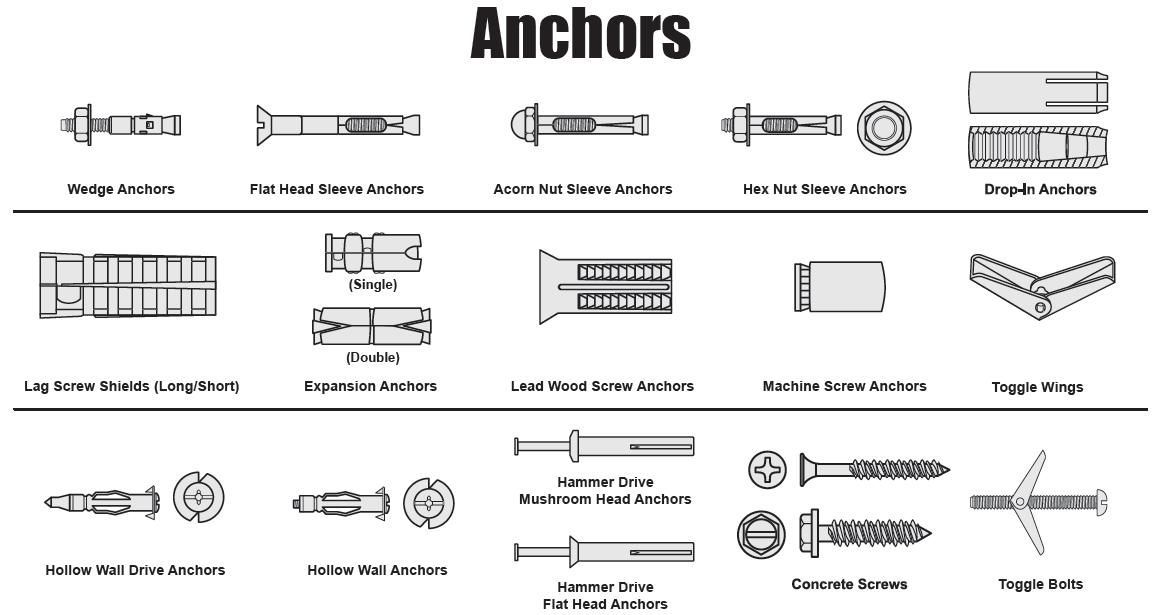
Credit: www.americanfastener.com
Frequently Asked Questions
What Are The Common Types Of Fastening Methods?
Common fastening types include screws, bolts, nuts, rivets, nails, and adhesives. Each method suits specific materials and applications for secure joining.
How Do Mechanical Fasteners Differ From Adhesive Fasteners?
Mechanical fasteners use physical components like screws or bolts. Adhesive fasteners rely on bonding agents to join surfaces without hardware.
Which Fastening Type Is Best For Heavy-duty Applications?
Bolts and nuts are ideal for heavy-duty fastening. They provide strong, removable connections suitable for structural and industrial uses.
What Materials Are Used In Different Fastening Types?
Fasteners use metals like steel, aluminum, and brass. Adhesives vary from epoxies to glues, depending on material compatibility and strength.
Conclusion
Fastening types help join materials securely and easily. Each type suits different needs and projects. Screws, nails, bolts, and adhesives all have unique uses. Choosing the right fastening saves time and effort. It also improves safety and durability. Understanding these options helps you pick the best one.
Keep these basics in mind for your next task. Simple tools can create strong, lasting connections. Explore fastening types to work smarter and better.