Are you worried that your filing cabinet might tip over and cause damage or injury? Anchoring your filing cabinet to the wall is a simple step that can keep your space safe and organized.
You’ll learn easy, clear instructions to secure your cabinet quickly—no special tools or skills needed. Keep reading to protect your office or home from accidents and give yourself peace of mind. Your safety and convenience are just a few steps away!
Credit: www.lowes.com
Reasons To Anchor Filing Cabinets
Filing cabinets hold important documents and heavy items. Securing these cabinets to the wall keeps your office safe and organized. Anchoring prevents accidents and protects your files. Understanding why you should anchor filing cabinets helps you see its value clearly.
Safety and stability are key reasons. Loose cabinets can tip over and cause injuries. Wall anchoring adds strength and keeps everything in place. It also helps save space and keeps your work area neat.
Risks Of Unsecured Cabinets
Unsecured filing cabinets can easily tip over. This risk grows when drawers open or children are nearby. Falling cabinets can cause serious injuries and damage property. Files and items inside may also scatter and get lost. Shifting furniture can create a messy and unsafe workspace. Without anchoring, cabinets can move during cleaning or minor impacts. The risk of accidents increases significantly.
Benefits Of Wall Anchoring
Anchoring filing cabinets provides strong stability. It stops cabinets from tipping or sliding. This improves safety for everyone in the room. Anchored cabinets stay in place during busy workdays. They protect your important documents from damage. Wall anchoring also saves floor space by keeping cabinets aligned. It helps maintain a clean, organized, and professional office look. Simple to install, it offers long-term peace of mind.
Credit: www.homedepot.com
Tools And Materials Needed
Anchoring a filing cabinet to the wall keeps it stable and safe. You need the right tools and materials for a secure job. This section covers what you need before starting.
Essential Tools
Gather these basic tools to anchor your filing cabinet properly:
- Drill with drill bits
- Screwdriver
- Stud finder
- Measuring tape
- Level
- Pencil or marker
- Wrench or pliers
These tools help you find studs, measure, and fix anchors tightly. Having them ready saves time and ensures safety.
Choosing The Right Anchors
Select anchors based on your wall type and cabinet weight. Drywall anchors work for light loads. Use toggle bolts or molly bolts for heavier cabinets.
For concrete or brick walls, use masonry anchors or sleeve anchors. Match anchor size with the screws and holes in the cabinet.
Correct anchors prevent the cabinet from pulling away or falling. Always check the weight capacity before purchasing anchors.
Preparing The Filing Cabinet
Preparing the filing cabinet is the first step to secure it properly to the wall. This step ensures safety and stability. Taking time here makes the anchoring process easier and safer.
Start by clearing the cabinet. You need full access to work without obstacles. A clean cabinet also prevents damage during the process.
Emptying And Cleaning
Remove all files, folders, and items from the cabinet drawers. Emptying the cabinet reduces weight and risk of tipping. Wipe down the cabinet’s surface with a damp cloth. Clean surfaces help the anchor stick better and prevent dust from causing issues. Let the cabinet dry completely before moving on.
Locating Anchor Points
Look inside and outside the cabinet for strong points to attach anchors. These points are often near the top or back edges. Check for metal frames or solid wood spots. Avoid thin or weak areas that might break under pressure. Mark the spots clearly with a pencil. Measuring twice helps place anchors correctly the first time.
Finding Wall Studs
Finding wall studs is key to safely anchoring your filing cabinet. Studs provide strong support behind drywall. Screwing into studs prevents cabinets from tipping or falling. It makes the installation secure and long-lasting.
Using A Stud Finder
A stud finder is a simple tool to locate wall studs. Turn it on and move it along the wall. The device beeps or lights up when it detects a stud. Mark the spot with a pencil. Check for several studs to position your cabinet well. Stud finders work best on drywall and plaster walls.
Alternative Methods
No stud finder? No problem. Tap the wall with a small hammer. Listen for a solid sound. A hollow sound means no stud there. Another way is to measure from a corner. Studs are usually placed every 16 or 24 inches. Look for electrical outlets or switches. They often attach to studs. Use a thin nail to test spots gently. If it meets resistance, you found a stud.
Anchoring Methods
Anchoring a filing cabinet to the wall keeps it stable and safe. It prevents tipping accidents and protects your important documents. Several methods work well for this task. Choose one based on your wall type and cabinet design. Here are two common and effective anchoring methods.
Using Brackets And Screws
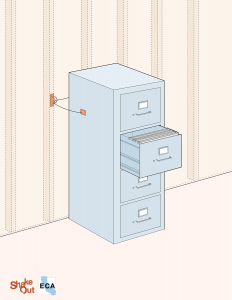
Brackets and screws offer a strong, reliable hold. Attach metal brackets to the top or back of the cabinet. Then, use screws to fix the brackets firmly into wall studs. This method requires a drill and a stud finder. It works best on solid walls like wood or drywall with studs. Tighten screws securely to prevent movement. Check that the cabinet stands straight and stable.
Wall Straps And Safety Cables
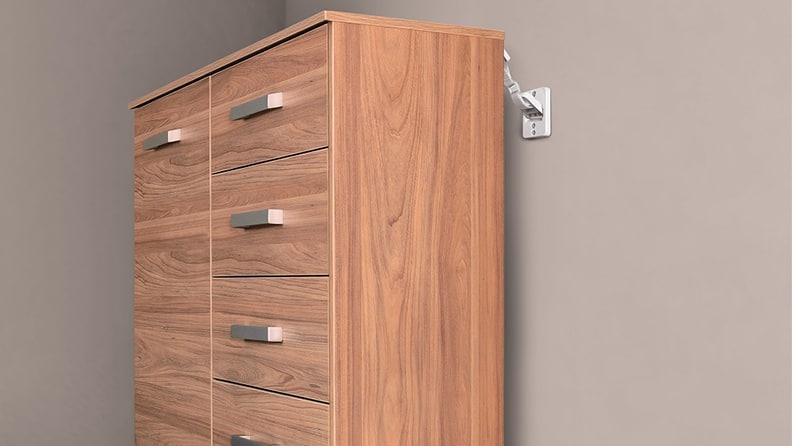
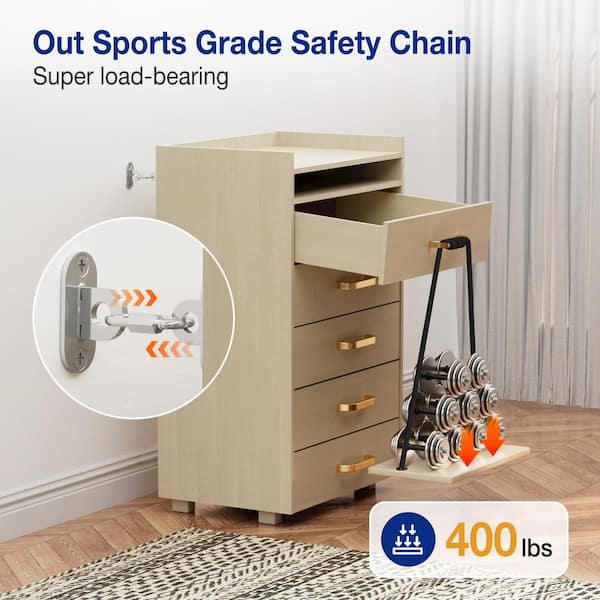
Wall straps and safety cables provide flexible support. Secure one end of the strap or cable to the cabinet. Fasten the other end to a wall stud or anchor. These straps help stop the cabinet from tipping forward. They are easy to install and adjust. Straps work well for both metal and wooden cabinets. Make sure the straps are tight and strong for safety.
Credit: www.earthquakecountry.org
Step-by-step Anchoring Process
Anchoring a filing cabinet to the wall keeps it safe and steady. This step-by-step process helps you secure the cabinet quickly and easily. Follow each step carefully for the best results. Prepare your tools and materials before starting.
Marking And Drilling
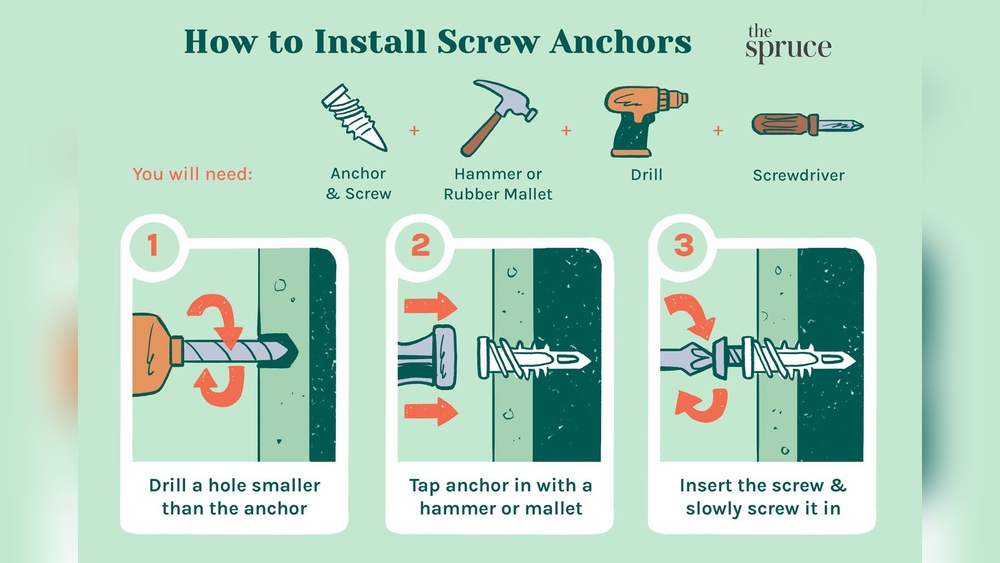
First, place the cabinet where you want it. Use a pencil to mark the wall through the cabinet’s anchor holes. Check the marks to ensure they are level. Select a drill bit that fits your wall anchors. Drill holes at the marked spots carefully. Avoid drilling too deep or wide.
Securing The Cabinet
Insert the wall anchors into the drilled holes. Align the cabinet’s anchor holes with the wall anchors. Use screws to attach the cabinet firmly to the wall. Tighten the screws but do not over-tighten. Over-tightening can damage the wall or cabinet.
Testing Stability
Gently shake the cabinet to check its stability. It should not move or wobble. If it does, tighten the screws again. Confirm all screws are secure and the cabinet feels stable. Proper anchoring prevents tipping and accidents.
Tips For Different Wall Types
Anchoring a filing cabinet to a wall keeps it steady and safe. Different walls need different tools and steps. Understanding your wall type helps you anchor your cabinet correctly. This section explains tips for common wall types to guide you.
Anchoring On Drywall
Drywall is soft and needs special anchors. Use wall studs for strong support. Find studs using a stud finder or knock to hear a solid sound.
Mark the stud spots before drilling. Use screws that fit the cabinet holes. If no stud is found, use heavy-duty drywall anchors. These spread the weight and prevent damage.
Drill pilot holes smaller than the screws. This avoids cracking the drywall. Tighten screws firmly but do not over-tighten. Over-tightening can damage the wall.
Handling Concrete Or Brick Walls
Concrete and brick are hard but need special tools. Use a hammer drill with a masonry bit to make holes. Regular drills will not work well.
Insert plastic or metal anchors into the holes. These hold screws securely in the hard surface. Use screws that fit the anchors.
Wear safety glasses when drilling. Dust from brick or concrete can irritate your eyes. Tighten screws until the cabinet feels stable.
Maintenance And Safety Checks
Keeping your filing cabinet anchored to the wall is not enough. You must check it often. Regular maintenance helps prevent accidents and keeps your cabinet sturdy. Safety checks ensure the anchor stays strong and the cabinet does not tip over. This section explains how to do those checks and adjustments.
Regular Inspection
Look at the anchor points every month. Check for any signs of rust or damage. Make sure the screws are not loose or missing. Look at the wall around the anchor. Cracks or holes can weaken the hold. If you find any problems, fix them right away. A small issue can cause the cabinet to fall.
Adjusting And Tightening
Use a screwdriver or wrench to tighten all bolts and screws. Do this at least twice a year. If the cabinet moves or feels loose, tighten the anchors immediately. Do not force the screws too much. Tighten them just enough to hold the cabinet firmly. Loose anchors can cause accidents. Keep the filing cabinet safe for everyone.
Frequently Asked Questions
How Do I Anchor A Filing Cabinet To Drywall?
Use wall anchors or toggle bolts to secure the cabinet. Locate studs if possible for better stability. Drill pilot holes and fasten brackets firmly to both the wall and cabinet to prevent tipping or movement.
What Tools Are Needed To Anchor Filing Cabinets?
You will need a drill, screwdriver, wall anchors or toggle bolts, a stud finder, measuring tape, and brackets. These tools ensure a secure and precise installation of the filing cabinet to the wall.
Can I Anchor A Filing Cabinet To Concrete Walls?
Yes, use masonry anchors or concrete screws designed for concrete walls. Drill holes with a masonry bit, insert anchors, and secure the cabinet brackets tightly to ensure strong support.
Why Should I Anchor My Filing Cabinet To The Wall?
Anchoring prevents tipping accidents, especially in homes or offices with children. It enhances safety by stabilizing the cabinet and protects valuable documents from damage or loss due to falls.
Conclusion
Anchoring your filing cabinet to the wall keeps it steady and safe. It prevents tipping and helps protect your important documents. Use the right tools and follow steps carefully. A secure cabinet improves your workspace and avoids accidents. Take your time and check your work.
This simple task adds safety and peace of mind to your office.