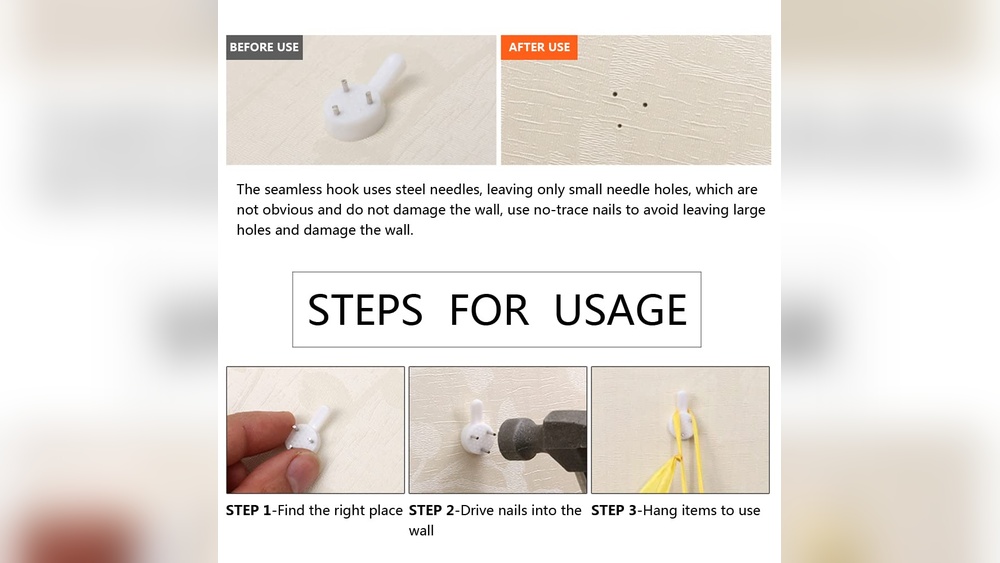
Are you tired of holes and marks ruining your walls every time you hang something? Non trace wall hooks are the simple solution you’ve been looking for.
They let you hang pictures, keys, and decorations without leaving a single mark behind. You’ll discover how to use these clever hooks the right way, so your walls stay clean and your space stays stylish. Keep reading to learn the secrets that will make your walls look perfect—every time.
Benefits Of Non Trace Wall Hooks
Non trace wall hooks offer many benefits for decorating and organizing spaces. These hooks help keep walls safe. They also make it easy to change your decor without worry.
Using non trace wall hooks saves time and effort. They fit many uses around the home or office. Here are key benefits to consider.
No Damage To Walls
Non trace wall hooks do not leave holes or marks. They use special adhesives or suction to hold items. This protects paint, wallpaper, and surfaces from harm. Walls stay clean and smooth after removing hooks.
Easy To Remove
These hooks come off without tools or mess. Simply peel them away slowly for safe removal. No sticky residue or crumbling paint remains. This makes redecorating or moving easy and stress-free.
Versatile Applications
Non trace wall hooks work on many surfaces. Use them on tile, glass, wood, or painted walls. Hang pictures, keys, towels, or decorations with ease. Their strong hold supports various items safely.

Credit: www.youtube.com
Choosing The Right Hook
Choosing the right non trace wall hook is important for a neat and secure hold. The correct hook keeps your walls safe and your items in place. Consider several key factors before making a choice. These help you pick the best hook for your needs.
Weight Capacity Considerations
Check how much weight the hook can hold. Heavy items need hooks with strong weight limits. Using a weak hook for heavy objects can cause damage. Choose hooks rated for the weight of your items. This ensures safety and prevents falls.
Surface Compatibility
Match the hook to your wall surface. Different hooks work on drywall, tile, glass, or wood. Some hooks use adhesives that may not stick well on rough or wet surfaces. Check the hook’s instructions for surface types. Proper match avoids marks and keeps hooks firm.
Design And Style Options
Pick a hook that fits your room style. Hooks come in many shapes, colors, and materials. A stylish hook adds to your room’s decor. Choose simple designs for a clean look. Or select decorative hooks to add character. The right style makes hooks both useful and attractive.
Preparing The Wall Surface
Preparing the wall surface is important for using non trace wall hooks. A clean, smooth wall helps the hooks stick well. This prevents them from falling off or leaving marks. Take time to get the wall ready before placing the hooks. It saves effort and keeps your walls safe.
Cleaning And Drying
Start by cleaning the wall with a soft cloth. Use mild soap and water to remove dust and dirt. Avoid harsh chemicals that can damage the paint. Wipe the wall gently and let it dry completely. Dry walls help the adhesive stick better and last longer.
Avoiding Textured Surfaces
Non trace wall hooks work best on smooth surfaces. Rough or textured walls can prevent the hooks from sticking properly. Avoid using hooks on brick, stucco, or wallpaper with heavy patterns. Choose flat painted walls or glass for the strongest hold.
Temperature And Humidity Factors
Wall temperature affects hook adhesion. Place hooks when the room temperature is between 50°F and 90°F. High humidity or moisture can weaken the glue. Avoid placing hooks in bathrooms or damp areas. Dry, moderate conditions keep hooks secure longer.
Step-by-step Hanging Process
Using non-trace wall hooks is a simple and clean way to hang items. Follow these steps carefully to ensure the hook sticks well. This guide helps you place the hook without damaging your walls.
Marking The Spot
Choose the exact spot on the wall for your hook. Use a pencil to make a small mark. Check the height and alignment to fit your item perfectly.
Applying The Hook Correctly
Peel off the protective backing from the hook’s adhesive. Hold the hook by its edges to avoid touching the sticky part. Place the hook on the marked spot gently but firmly.
Pressing And Waiting Time
Press the hook firmly against the wall for 30 seconds. Apply even pressure to help it stick better. Wait at least one hour before hanging anything on the hook. This time lets the adhesive set fully.
Tips For Damage-free Removal
Removing non-trace wall hooks without damage requires care. These hooks stick firmly but can pull paint or leave marks if removed too fast. The key is to be patient and gentle. Follow simple steps to protect your walls and keep them clean. Here are some easy tips to remove hooks safely.
Slow And Steady Pulling
Start by pulling the hook slowly. Use your fingers to grip the base. Pull straight away from the wall. Avoid twisting or jerking motions. This helps the adhesive stretch without tearing paint. Keep steady pressure until the hook comes off. Rushing may peel paint or damage drywall.
Using Heat For Stubborn Hooks
Some hooks stick very tight. Use a hairdryer to warm the adhesive. Heat softens the glue, making removal easier. Hold the dryer a few inches from the hook. Warm the area for about 30 seconds. Test by pulling gently. Repeat heating if needed. Never overheat or touch the wall directly.
Cleaning Residue Left Behind
After removal, some sticky residue may remain. Use a soft cloth dampened with warm, soapy water. Rub the residue gently until it lifts. For tougher spots, try rubbing alcohol on a cotton ball. Avoid harsh chemicals that harm paint. Dry the area fully to prevent marks or stains.
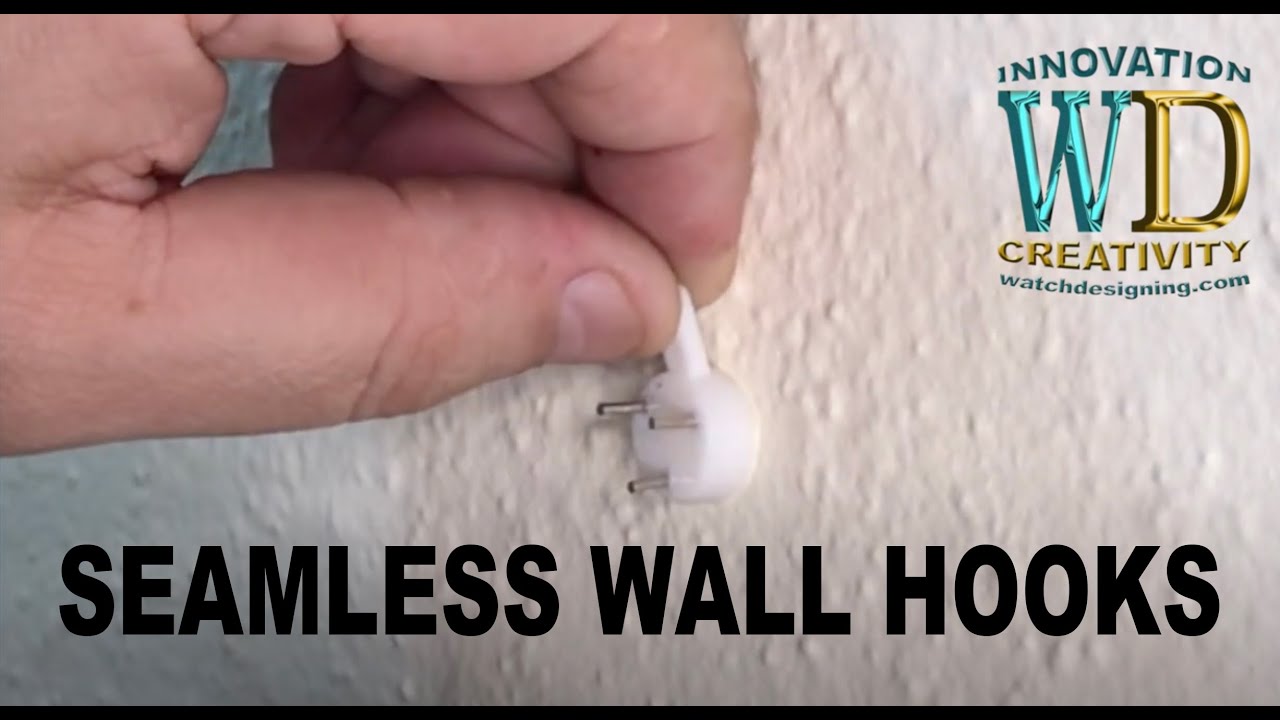
Credit: www.youtube.com
Creative Uses For Non Trace Hooks
Non trace wall hooks offer many ways to improve your space. They hold items without leaving marks on walls. This makes them perfect for renters or those who change decor often. Using these hooks creatively can help you keep things tidy and stylish. Below are some ideas to use non trace hooks in smart and fun ways.
Decorative Displays
Use non trace hooks to hang pictures or art without nails. Create a gallery wall by arranging frames in patterns. Hang lightweight mirrors or small shelves to add depth. String fairy lights or fabric for a cozy atmosphere. These hooks make decorating easy and damage-free.
Organizing Small Items
Non trace hooks help keep small items neat and accessible. Hang keys, jewelry, or hats to avoid clutter. Use them in the kitchen for utensils or towels. In the bathroom, hang brushes or loofahs. This method saves space and keeps items visible.
Seasonal Decorations
Change your decor with seasons using these hooks. Hang wreaths or garlands for holidays without holes. Display ornaments or seasonal banners on walls and doors. Store decorations on hooks when not in use. This keeps your space festive and easy to update.
Common Mistakes To Avoid
Non trace wall hooks offer a clean and easy way to hang items without damage. Many users make simple mistakes that reduce their effectiveness. Avoid these errors to get the best results. Proper use extends the life of the hooks and protects your walls.
Overloading Hooks
Each hook has a weight limit. Exceeding this limit causes the hook to fall. Heavy items pull the adhesive off the wall. Always check the weight limit before hanging anything. Use multiple hooks for heavier objects.
Ignoring Surface Preparation
Clean the wall before applying the hook. Dirt, dust, or grease weakens the adhesive bond. Use rubbing alcohol for cleaning, not water or soap. Let the surface dry completely. Proper cleaning ensures the hook sticks well.
Rushing The Application
Press the hook firmly and hold for at least 30 seconds. The adhesive needs time to bond with the wall. Do not hang items immediately after applying. Wait for the recommended time on the package. Patience improves the hook’s grip and durability.
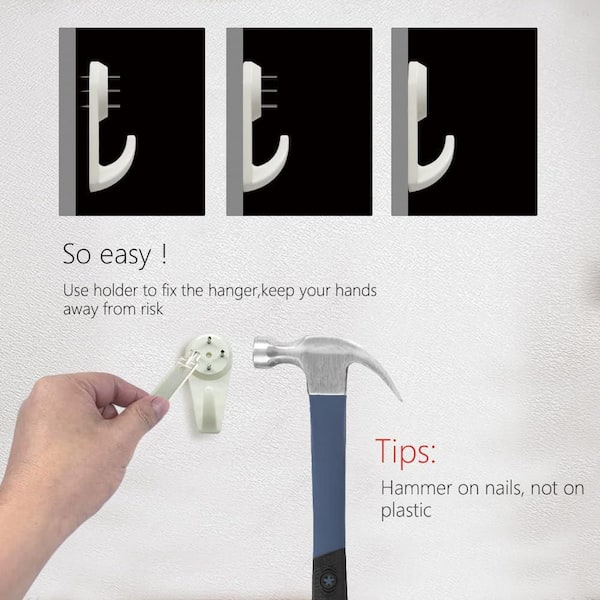
Credit: www.homedepot.com
Frequently Asked Questions
What Are Non-trace Wall Hooks?
Non-trace wall hooks are adhesive hooks designed to hold items without damaging walls. They leave no marks or residue when removed, making them ideal for renters or temporary setups. These hooks use strong, removable adhesives to secure objects without nails or drilling.
How To Install Non-trace Wall Hooks Correctly?
Clean the wall surface with rubbing alcohol before applying the hook. Peel off the adhesive backing and press firmly for 30 seconds. Allow the adhesive to set for an hour before hanging items. Avoid placing hooks on rough or uneven surfaces for best results.
What Items Can I Hang On Non-trace Wall Hooks?
You can hang lightweight items like keys, hats, small frames, and kitchen utensils. Avoid heavy objects that exceed the hook’s weight limit, usually around 5 pounds. Check the product specifications to ensure safe use and prevent damage to walls or items.
Can Non-trace Wall Hooks Damage Painted Walls?
Non-trace wall hooks are designed to minimize damage but may affect some paint types. They work best on smooth, non-porous surfaces like glass or tiles. Test a small area first to ensure easy removal without paint peeling or wall damage.
Conclusion
Non-trace wall hooks offer a simple way to hang items without damage. They keep walls clean and free from holes. Using them saves time and effort during removal. Choose the right hook for your wall type and weight needs. They help organize spaces neatly and safely.
Try these hooks for easy decorating and better space use. Small changes can make a big difference in your home. Enjoy a tidy room without worrying about marks or stains.