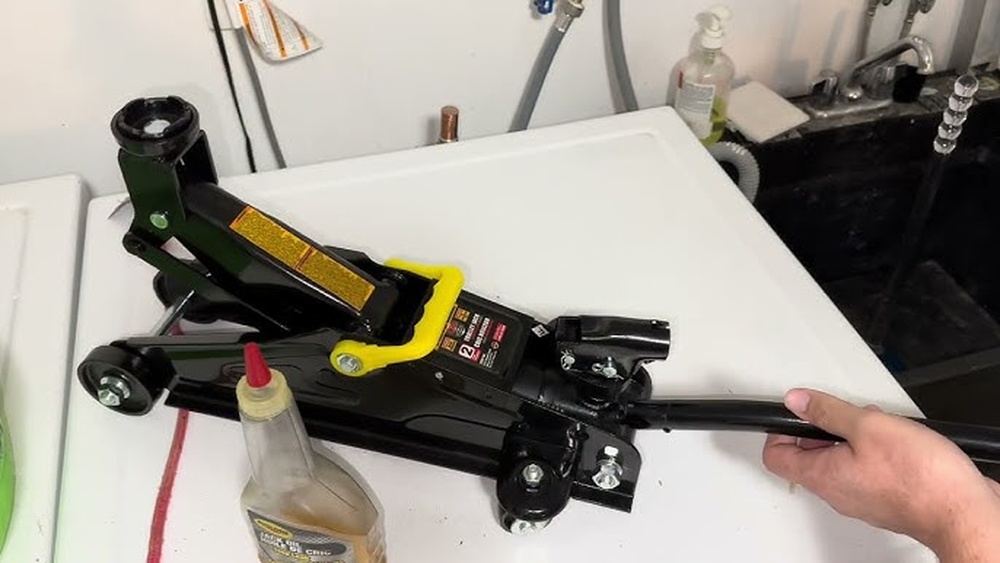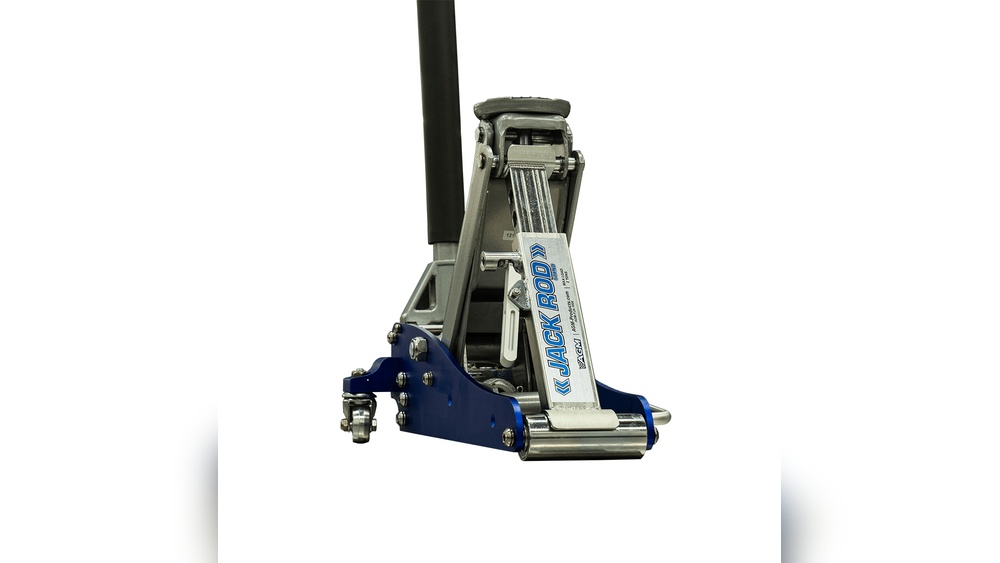
If you want to work safely and confidently under your car, knowing how to use a floor jack and stands is a must. These tools are essential for lifting your vehicle off the ground and keeping it stable while you fix, inspect, or upgrade parts.
But using them the wrong way can be dangerous. In this guide, you’ll learn simple, step-by-step instructions that anyone can follow. By the end, you’ll feel ready to tackle your next project with the right skills and the peace of mind that comes from working safely.
Keep reading—you’re about to make your car work easier and safer than ever before.
Credit: www.redlinestands.com
Choosing The Right Floor Jack
Choosing the right floor jack is important for safe and easy lifting. A good jack matches your vehicle’s size and weight. It also fits your workspace and budget. Knowing the types, weight limits, and build quality helps you pick the best tool. This guide explains these key points clearly.
Types Of Floor Jacks
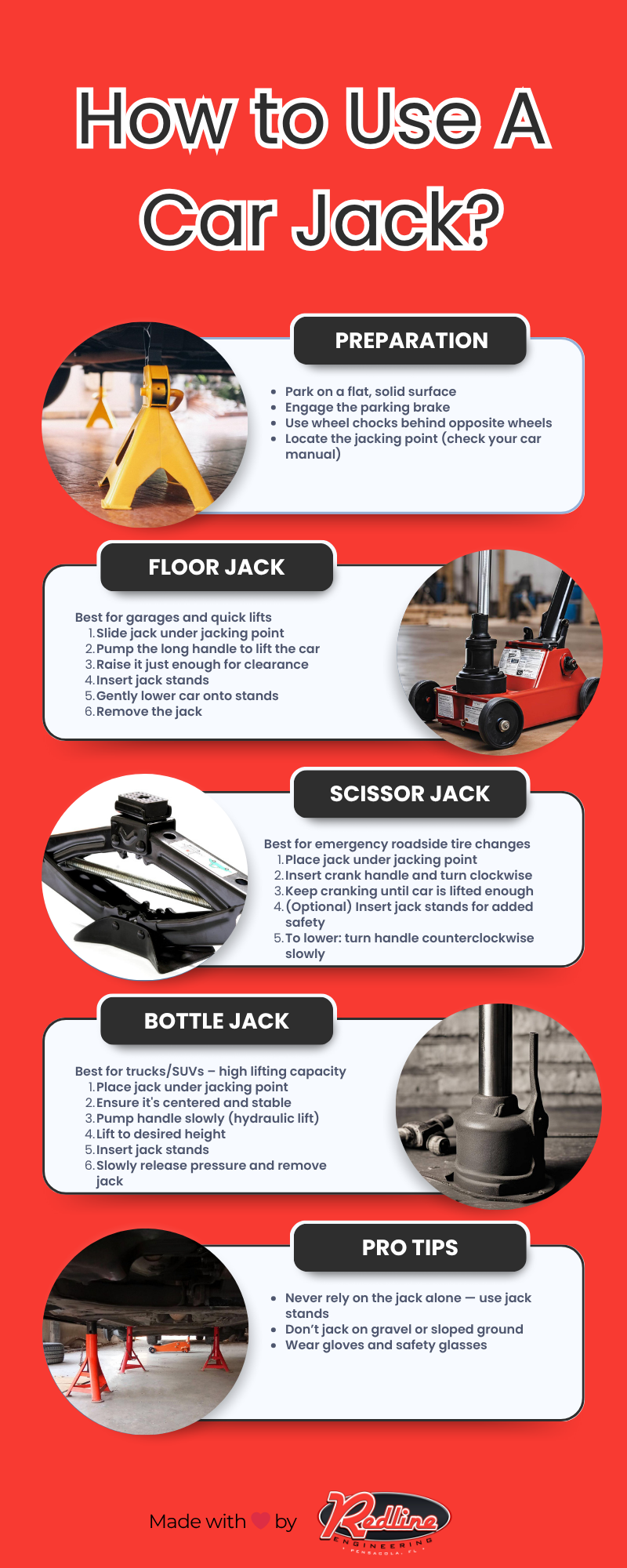
Hydraulic jacks use fluid to lift heavy loads smoothly. They are common and easy to use. Scissor jacks are simple and light but lift less weight. Bottle jacks have a small base and high lifting power. Choose one that suits your car and work area.
Weight Capacity Considerations
Every floor jack has a weight limit. This limit shows the heaviest load it can lift safely. Check your vehicle’s weight before buying. Pick a jack with a higher capacity than your car’s weight. This ensures safety and prevents damage.
Material And Build Quality
Strong materials make jacks durable and safe. Steel jacks last long and handle heavy loads. Aluminum jacks are lighter but still strong. Look for solid welds and sturdy parts. Good build quality means your jack will work well for years.
Selecting Suitable Jack Stands
Selecting the right jack stands is crucial for safety and efficiency when working with a floor jack. The stands must support your vehicle securely. Choosing the wrong type or size can lead to accidents or damage. This section explains key factors to consider before buying or using jack stands.
Different Jack Stand Designs
Jack stands come in several designs. The most common are tripod and four-leg stands. Tripod stands are lighter and easier to move. Four-leg stands offer more stability but can be heavier. Some stands have ratchet mechanisms for height adjustment. Others use a pin lock system. Choose a design that fits your needs and feels stable.
Load Rating And Stability
Every jack stand has a load rating. This number tells how much weight the stand can hold safely. Always pick stands with a load rating higher than your vehicle’s weight. Stability is just as important as load capacity. Wide bases and solid construction improve stability. Avoid stands that wobble or feel weak under pressure.
Proper Placement Tips
Place jack stands on a flat, hard surface. Avoid soft ground or slopes. Position the stands under strong points on the vehicle frame. Consult your vehicle manual for exact locations. Make sure the stand contacts the frame securely. Adjust the height carefully to keep the vehicle level. Double-check the stands before starting work.
Preparing Your Vehicle
Preparing your vehicle is the first step before using a floor jack and stands. Proper preparation keeps you safe and protects your car. It also makes the job easier and more efficient. Follow simple steps to get your vehicle ready for lifting.
Finding A Safe Work Surface
Choose a flat, hard surface to work on. Avoid soft ground, gravel, or slopes. A solid surface stops the jack from slipping or sinking. A driveway or garage floor is best. Clear the area around the car to avoid accidents.
Engaging Parking Brake
Set the parking brake firmly. This stops the car from moving during lifting. Double-check that the brake is fully engaged. Do not rely on the transmission alone to hold the car.
Chocking The Wheels
Place wheel chocks on the wheels that stay on the ground. Use blocks or wedges to stop the wheels from rolling. Put chocks behind or in front of the tires, depending on the incline. This adds extra safety during the lift.
Using The Floor Jack Safely
Using a floor jack safely is very important to avoid accidents. The floor jack lifts your vehicle so you can work underneath. You must follow simple steps to keep yourself and your vehicle safe. This guide explains how to use the floor jack correctly.
Locating The Jack Points
Find the correct jack points on your vehicle. These are strong spots designed to hold the jack. Check your vehicle manual or look for reinforced metal areas. Placing the jack in the wrong spot can damage your car or cause it to fall.
Operating The Jack Handle
Insert the handle into the jack securely. Pump the handle up and down slowly. This action raises the jack and lifts the car. Do not rush or use excessive force. Slow, steady movements keep the process safe and smooth.
Lifting The Vehicle Smoothly
Lift the vehicle in small steps. Stop and check the stability often. Make sure the vehicle stays balanced on the jack. Once at the needed height, place jack stands under the car. Never rely on the jack alone to hold the vehicle.
Setting Up Jack Stands
Setting up jack stands is an essential step after lifting your vehicle with a floor jack. It helps keep the car stable and safe while you work underneath. Proper setup prevents accidents and protects both you and your vehicle.
Positioning Stands Correctly
Place the stands under strong points of the vehicle. Look for the frame or designated lift points. Avoid weak areas like plastic parts or exhaust pipes. Adjust the height of the stands to match the lifted vehicle’s height. Make sure both stands sit evenly on the ground.
Lowering Vehicle Onto Stands
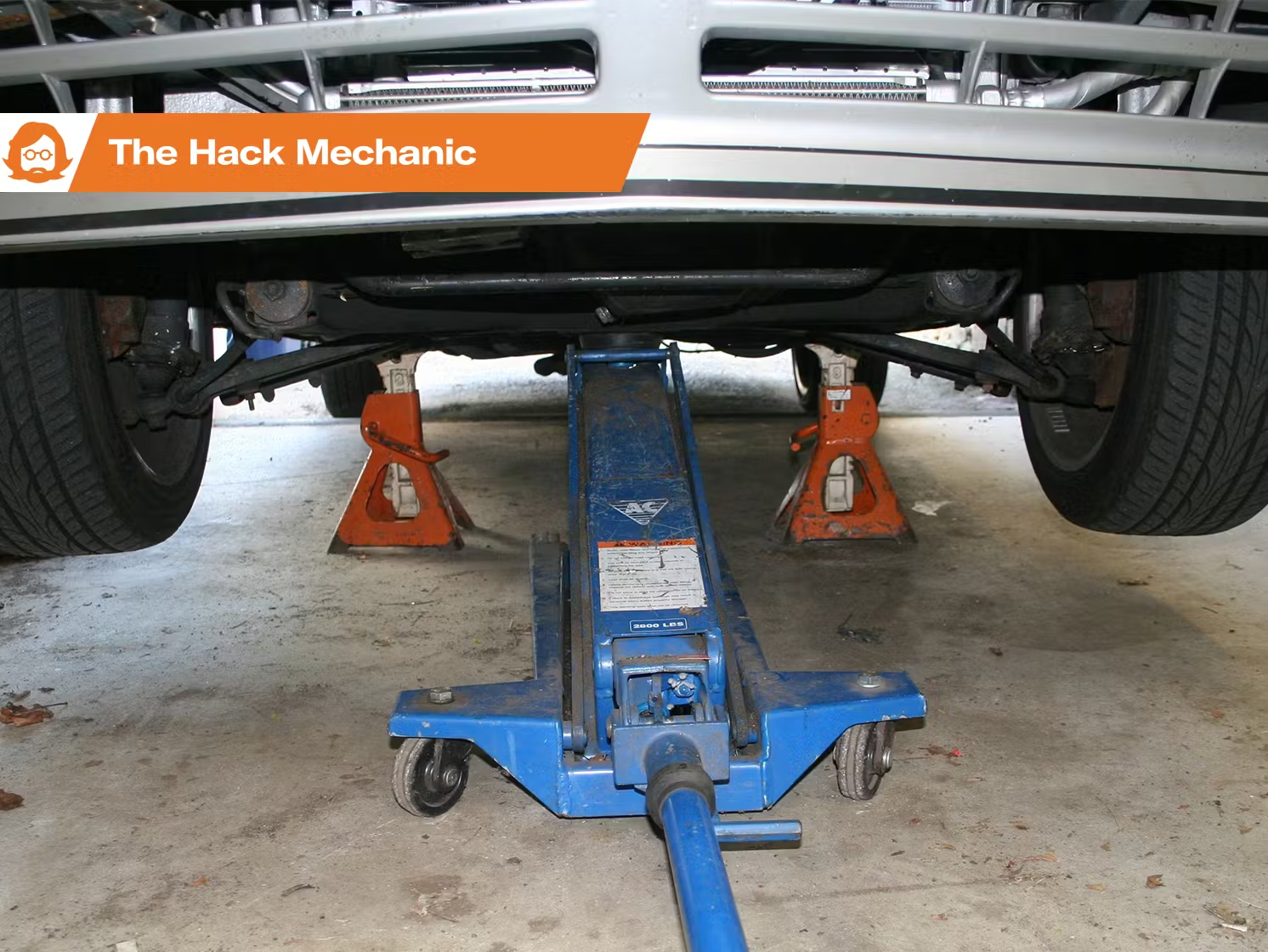
Slowly lower the floor jack until the vehicle rests firmly on the stands. Do this gently to avoid shifting or slipping. Keep hands and feet clear during this step. The vehicle should not wobble or move once lowered on the stands.
Double-checking Stability
Push the vehicle slightly to test stability. Check each stand for solid contact with the ground and vehicle. If there is any movement, raise the vehicle again and reposition the stands. Never work under a vehicle that feels unstable.
Credit: www.hagerty.com
Safety Precautions During Work
Working with a floor jack and stands can be risky without proper safety steps. Following safety rules protects you and your vehicle. It lowers the chance of accidents and injuries. This section covers key safety precautions for safe lifting and support.
Avoiding Overloading
Check the weight limit of your floor jack and stands. Never lift a vehicle heavier than the tool’s capacity. Overloading can cause the jack to fail or collapse. Always weigh your vehicle or check the manual for its weight. Use equipment with a higher rating for heavier vehicles.
Never Working Under Unsupported Vehicle
Never slide under a car held only by a floor jack. The jack can slip or lose pressure suddenly. Always use jack stands to support the vehicle. Place the stands on solid ground under strong frame points. Remove the jack slowly after the vehicle is stable on the stands.
Using Protective Gear
Wear gloves to protect your hands from sharp parts and dirt. Use safety glasses to shield your eyes from debris. Sturdy shoes protect your feet from falling objects. Dress in close-fitting clothes to avoid getting caught in moving parts. Safety gear reduces injury risk during your work.
Maintaining Your Equipment
Maintaining your floor jack and stands is key to safe use and long life. Regular care keeps them working well and prevents accidents. Simple tasks like cleaning and checking for damage can save costly repairs later.
Cleaning And Lubrication
Clean your floor jack and stands after each use. Wipe off dirt, dust, and grease with a clean cloth. Dirt can cause parts to stick or wear out faster. Use light machine oil on moving parts. This helps the jack lift smoothly and stops rust. Avoid using too much oil; just a small amount is enough.
Inspecting For Damage
Check your equipment before every use. Look for cracks, dents, or bent parts on the jack and stands. Examine the hydraulic system for leaks or low fluid. Make sure the locking mechanisms work correctly. Replace or fix damaged parts right away. Using damaged equipment can be dangerous.
Proper Storage Practices
Store your floor jack and stands in a dry place. Keep them away from moisture to prevent rust. Lower the jack to its lowest position before storing. Store stands in a stable, upright position. Cover the equipment with a cloth or plastic sheet. This protects them from dust and dirt.

Credit: www.wikihow.com
Frequently Asked Questions
How Do I Safely Use A Floor Jack?
Always position the floor jack under the vehicle’s designated lift point. Pump the handle steadily to lift. Avoid quick or jerky movements. Use jack stands immediately to support the vehicle before working underneath.
When Should I Use Jack Stands With A Floor Jack?
Never rely on the floor jack alone for support. Use jack stands once the vehicle is lifted. They provide stable, secure support for safety while you work underneath the vehicle.
What Are The Key Steps To Operate A Floor Jack?
Place the jack on a flat surface. Position it under the vehicle’s lift point. Pump the handle to raise the vehicle. Insert jack stands before starting work. Lower the jack slowly after finishing.
How Do I Choose The Right Floor Jack And Stands?
Select a floor jack that supports your vehicle’s weight. Check weight ratings on both jack and stands. Ensure jack stands are sturdy and adjustable. Prioritize quality and durability for safety.
Conclusion
Using a floor jack and stands helps you work safely under your vehicle. Always place the jack on a flat surface for stability. Lift the car slowly and check that it is secure before going underneath. Position the stands under strong points to hold the weight.
Never rely on the jack alone to support the car. Taking these steps protects you and makes repairs easier. Practice these tips often to gain confidence. Safety first, every time you lift your car. Simple tools, smart use, better results.