You want your home to feel safe and secure, right? One of the best ways to boost your door’s security is by installing a deadbolt.
But maybe you’re wondering, “How do I put a deadbolt in my door without making a mess or calling a pro? ” You’re in the right place. This guide will walk you through every step, using simple words and clear instructions.
By the end, you’ll have the confidence to lock your door with a strong, reliable deadbolt—giving you peace of mind every time you close it. Keep reading, and let’s make your home safer together.
Choosing The Right Deadbolt
Choosing the right deadbolt is important for your door’s security and ease of use. The right deadbolt fits your door well and offers strong protection. It also matches your home’s style and meets your security needs. This guide helps you pick the best deadbolt for your door.
Types Of Deadbolts
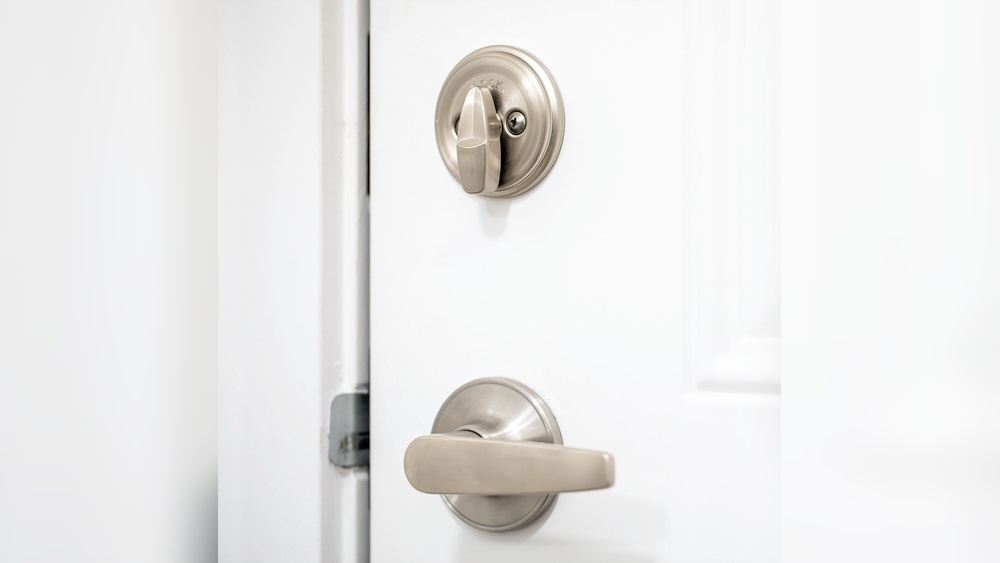
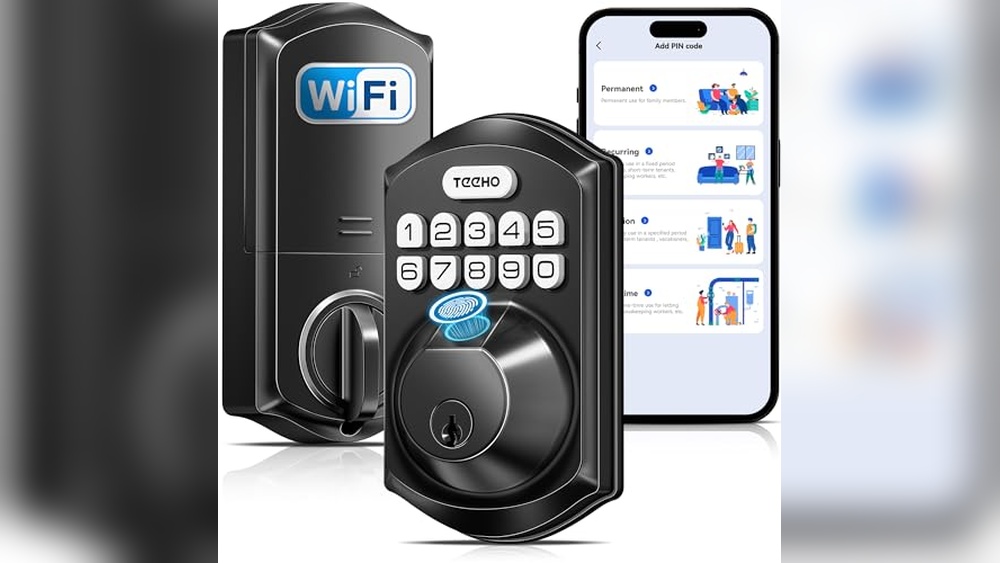
Single-cylinder deadbolts use a key outside and a thumb turn inside. They are easy to use and common for many doors. Double-cylinder deadbolts need a key on both sides. They add security but can be tricky in emergencies. There are also keypad deadbolts, which use codes to unlock. These provide keyless entry and convenience.
Material And Finish Options
Deadbolts come in different metals like brass, stainless steel, and bronze. Brass is strong and resists rust well. Stainless steel is very durable and good for all weather. Bronze looks classic and ages nicely. Finishes include polished, matte, and satin. Choose a finish that fits your door and home style.
Security Features To Consider
Look for deadbolts with hardened steel inserts to stop saw attacks. Anti-pick pins help prevent lock picking. Some models have bump-resistant designs to block lock bumping. A long bolt, at least one inch, is stronger against forced entry. Check if the deadbolt is tested and meets security standards.
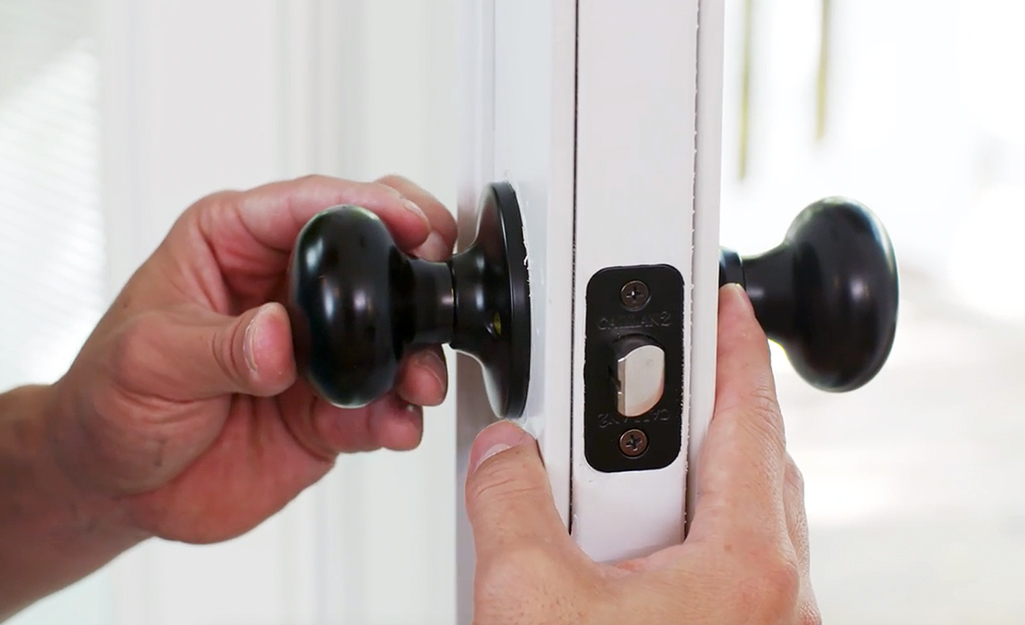
Credit: www.homedepot.com
Tools And Materials Needed
Installing a deadbolt on your door requires the right tools and materials. Using proper equipment makes the job easier and safer. Prepare all items before starting to avoid interruptions.
Basic Tools
- Drill with drill bits
- Phillips screwdriver
- Hammer
- Measuring tape
- Pencil
- Chisel
- Level
Additional Supplies
- Deadbolt lock set
- Wood screws (usually included)
- Masking tape (to mark drill points)
- Wood filler (for fixing mistakes)
Safety Equipment
- Safety goggles to protect your eyes
- Work gloves to protect your hands
- Dust mask to avoid breathing sawdust
Preparing The Door
Preparing the door is the first step to install a deadbolt properly. It ensures the lock fits well and works smoothly. Careful preparation prevents mistakes and saves time.
Measuring And Marking
Measure the height where the deadbolt will go. Usually, it sits about 6 to 12 inches above the door handle. Use a tape measure and pencil to mark the spot clearly. Mark the center of the door edge for the bolt hole too. Accurate marks help drill in the right place.
Drilling The Holes
Choose drill bits that match the deadbolt size. Start with a small pilot hole to guide the bigger drill bit. Drill through the door face for the lock cylinder. Then drill the edge of the door for the bolt. Drill slowly to avoid splintering the wood. Keep the drill straight for clean holes.
Cleaning And Smoothing Edges
Remove wood chips and dust from drilled holes. Use sandpaper to smooth rough edges carefully. Smooth edges help the lock fit tight and work well. Check the holes again before installing the deadbolt. Clean holes make installation easier and neater.
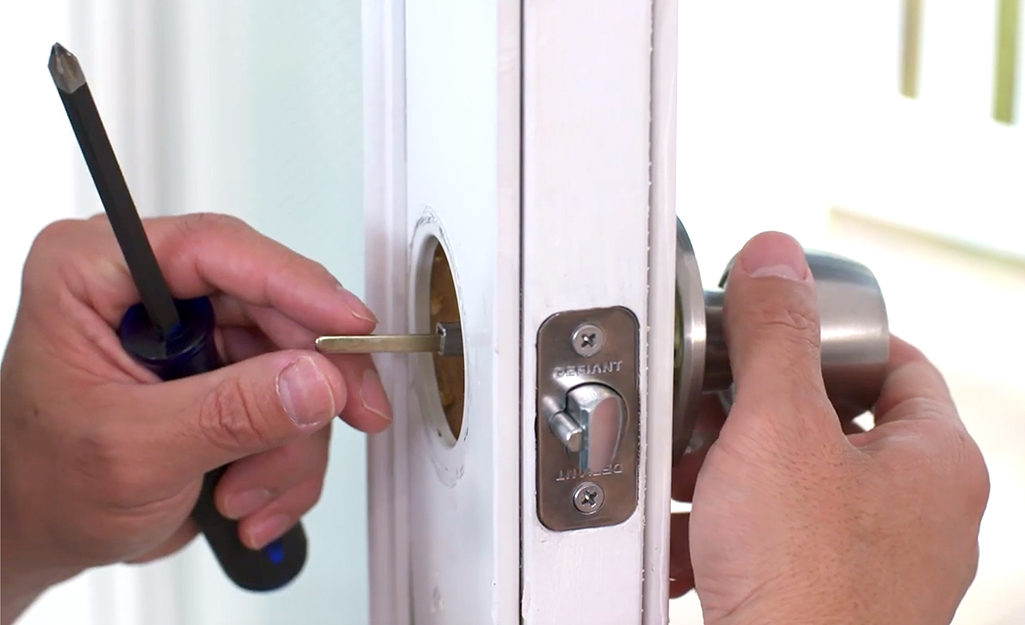
Credit: www.homedepot.com
Installing The Deadbolt
Installing the deadbolt is an important step to improve your door’s security. Proper installation ensures the lock works smoothly and protects your home well. This section guides you through the key steps.
Inserting The Deadbolt Mechanism
Start by sliding the deadbolt into the side hole of the door. Make sure the bolt faces the correct direction, usually with the slanted edge pointing into the door frame. Push it in until the faceplate sits flush with the door edge.
Check that the bolt moves smoothly by turning the thumb turn or key. Adjust if it sticks or does not slide fully out.
Attaching The Exterior And Interior Plates
Place the exterior plate with the key cylinder on the outside of the door. Align the spindle through the deadbolt mechanism hole.
Next, position the interior plate on the inside of the door, lining up the spindle and screw holes. Both plates should fit snugly against the door surface.
Securing With Screws
Insert screws into the holes on both plates. Tighten them evenly to avoid misalignment. Do not overtighten, as this can damage the door or lock.
Test the deadbolt by turning the key and thumb turn again. The bolt should extend and retract easily without resistance.
Aligning The Strike Plate
Aligning the strike plate is a key step in installing a deadbolt. It helps the bolt slide smoothly into the door frame. Proper alignment also ensures the door locks securely. A misaligned strike plate can cause the deadbolt to stick or not lock at all.
Positioning The Strike Plate
Start by closing the door and marking where the deadbolt hits the door frame. Hold the strike plate against this mark. Check if the bolt fits into the strike plate hole without gaps. Adjust the plate’s position until the bolt fits perfectly.
Chiseling For A Flush Fit
Trace the outline of the strike plate on the door frame. Use a chisel to carve out the wood inside the outline. The goal is to make the strike plate sit flush with the frame surface. Work slowly and remove small wood pieces at a time.
Fastening The Plate
Place the strike plate back into the carved area. Use screws to attach it firmly to the door frame. Tighten the screws evenly to avoid shifting. Test the deadbolt to confirm smooth locking and unlocking action.
Testing The Deadbolt
Testing the deadbolt is the final step in securing your door. It ensures the lock works properly and fits well. A smooth operation helps keep your home safe. Take time to check every part of the deadbolt.
Checking Lock Operation
Turn the key in the lock several times. It should move easily without sticking. Push the deadbolt in and out to see if it slides smoothly. Test both sides of the door to confirm the lock works well.
Adjusting Alignment
Look at the deadbolt and the strike plate on the door frame. They must line up perfectly. If the bolt does not fit into the strike plate, loosen the screws. Adjust the plate until the bolt slides in without force.
Ensuring Smooth Function
Close the door slowly while locking the deadbolt. Listen for any grinding or resistance. If you feel any tight spots, check the door’s position and hinges. A properly working deadbolt locks easily every time.
Maintenance Tips
Proper maintenance keeps your deadbolt working smoothly and extends its life. Small tasks done regularly prevent bigger problems later. Pay attention to your lock’s condition to ensure safety and ease of use.
Lubrication
Apply a graphite-based lubricant to the keyhole and bolt. Avoid oil-based products that attract dust and dirt. Lubricate the lock twice a year for smooth operation. This reduces sticking and wear on the parts.
Regular Inspections
Check the lock for rust, loose screws, or misalignment. Test the key to ensure it turns easily. Tighten screws as needed to keep the deadbolt secure. Early detection of issues prevents lock failure.
When To Replace
Replace the deadbolt if the key sticks or won’t turn. Consider replacement if the lock is rusty or damaged. Old locks may not provide good security. Upgrading improves safety and peace of mind.

Credit: support.shopyalehome.com
Frequently Asked Questions
How Do I Install A Deadbolt On A Door?
Start by marking and drilling holes for the deadbolt. Insert the bolt mechanism and attach the faceplate. Secure the lock cylinder and test the deadbolt operation. Follow manufacturer instructions for best results.
What Tools Do I Need To Install A Deadbolt?
You need a drill, hole saw, screwdriver, measuring tape, and pencil. These tools help in drilling precise holes and securing the deadbolt properly.
How Long Does It Take To Put A Deadbolt On A Door?
Installing a deadbolt typically takes 30 to 60 minutes. Time varies based on skill level and door type.
Can I Install A Deadbolt On Any Door Type?
Most standard doors can have deadbolts installed. However, metal or very thin doors may require special hardware or professional help.
Conclusion
Installing a deadbolt adds strong security to your door. The steps are simple and clear to follow. Take your time and check each part fits well. Tighten screws carefully to keep the lock steady. Test the lock several times to ensure smooth use.
A well-installed deadbolt helps protect your home. Keep your door safe with this easy upgrade. Safety starts with a good lock on your door.