If you own a riding mower, knowing how to use a floor jack can save you time and money when it’s time for maintenance or repairs. Lifting your mower safely and securely is key to avoiding accidents and damage.
In this guide, you’ll learn simple, step-by-step instructions to use a floor jack like a pro—even if you’ve never done it before. By the end, you’ll feel confident handling your mower with ease and keeping it in top shape. Ready to get started?
Let’s dive in.
Choosing The Right Floor Jack
Choosing the right floor jack is important for safe and easy lifting of your riding mower. The right jack supports the mower’s weight and fits under it properly. This choice makes repairs and maintenance easier and safer. Understanding the types and weight limits helps you pick the best floor jack for your mower.
Types Of Floor Jacks Suitable For Riding Mowers
There are several types of floor jacks that work well with riding mowers. Hydraulic floor jacks are common. They lift heavy loads smoothly and with little effort. Bottle jacks are smaller but strong and good for tight spaces. Scissor jacks are lightweight and portable but usually lift less weight. Choose one that fits your mower’s size and storage space.
Weight Capacity Considerations
Check your mower’s weight before buying a floor jack. The jack must hold more than the mower’s weight. A jack with too low capacity can fail and cause injury. It is safer to select a jack with a capacity 25% higher than your mower’s weight. This extra strength handles uneven surfaces and small shifts during lifting.

Credit: centromedicoloira.com
Preparing Your Riding Mower
Preparing your riding mower properly makes using a floor jack safer and easier. Taking a few simple steps helps prevent accidents and damage. This preparation ensures the mower is stable and ready for lifting.
Clearing The Area
Start by removing any tools, toys, or debris near the mower. A clean area prevents tripping or slipping. It also gives you enough space to work comfortably with the floor jack.
Engaging The Parking Brake
Set the parking brake firmly to stop the mower from moving. This keeps the mower stable while you lift it. Check that the brake holds the mower in place before proceeding.
Removing Attachments
Take off any mower attachments like grass catchers or trailers. These add weight and can shift during lifting. Removing them makes the mower lighter and safer to jack up.
Locating Jack Points On The Mower
Knowing where to place the floor jack is very important. It keeps the mower safe and stable. Wrong jack points can cause damage or accidents. Finding the right spots helps you lift the mower easily. This section guides you on how to locate these points correctly.
Manufacturer Recommendations
Always start with the mower’s manual. It shows exact jack points. Follow these instructions carefully. Manufacturers design these spots to support weight. Using the manual reduces risk of damage. If you lost the manual, check the brand’s website. Some manuals are available as free downloads.
Common Jacking Spots
Most riding mowers have strong spots under the frame. The front axle and rear differential are good choices. The mower deck’s edges often work too. Avoid placing the jack near plastic parts or fuel tanks. Use a flat, solid area to place the jack pad. This prevents slipping and ensures safety.
Positioning The Floor Jack
Positioning the floor jack correctly is crucial for safe lifting of your riding mower. A wrong position can cause the mower to slip or fall. Take your time to place the jack carefully before lifting.
Aligning The Jack Under The Mower
Start by locating the mower’s strong frame parts. These are usually near the front or center undercarriage. Avoid soft or plastic parts that can break easily. Slide the floor jack under the mower until the lifting pad touches the frame.
Make sure the jack sits flat on the ground. Check that the lifting point is directly under a strong part of the mower frame. This alignment prevents damage and keeps the mower steady during lifting.
Ensuring Stability
Before lifting, check the floor jack’s base for full contact with the floor. Uneven ground can cause the jack to tilt. Use a flat, solid surface like a concrete driveway or garage floor.
Place wheel chocks behind the mower’s rear wheels. This stops any movement while the mower is raised. Slowly pump the jack handle and watch the mower rise evenly. Stop if you notice any wobbling or slipping.
Lifting The Mower Safely
Lifting a riding mower safely is important to avoid damage and injury. Using a floor jack correctly keeps the mower steady. It also helps you work under the mower with ease. Follow simple steps to lift your mower without problems.
Operating The Jack Handle
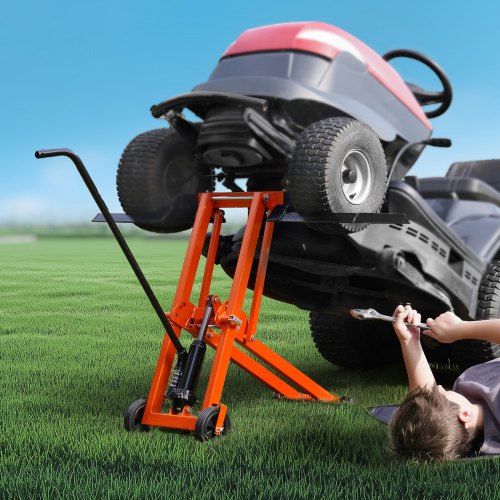
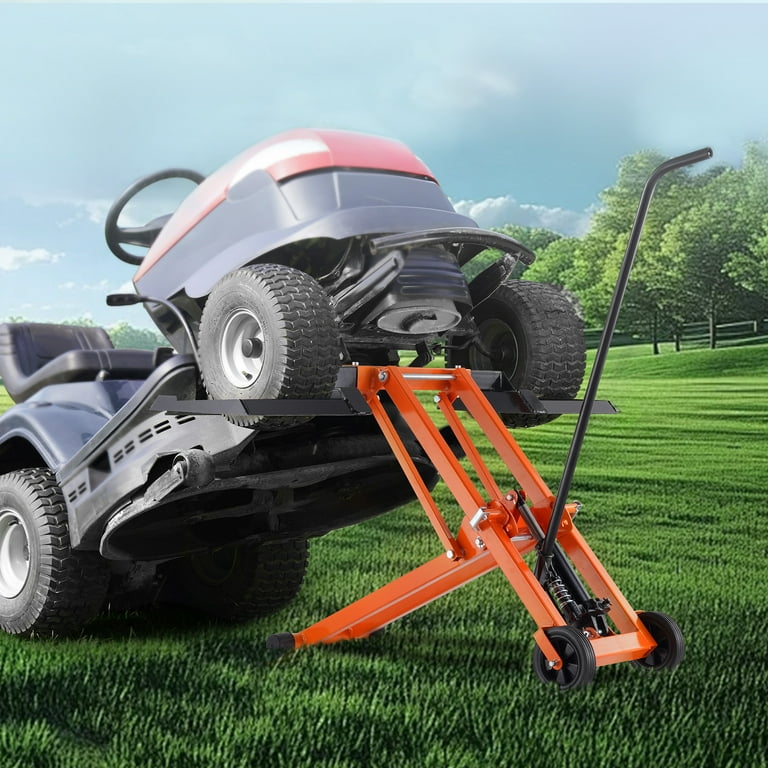
Place the floor jack under the mower’s frame. Find a strong, flat spot to lift from. Slowly pump the jack handle up and down. The mower will begin to rise. Do not rush. Move the handle steadily to keep control. Stop if the mower shifts or feels unstable.
Monitoring Lift Height
Watch the mower as it lifts. Stop at a height that gives you enough space to work. Avoid lifting the mower too high. It can become unsafe. Use a jack stand for extra support. Never rely only on the floor jack to hold the mower up. Check the mower’s balance often while lifted.
Using Jack Stands For Extra Safety
Using jack stands adds an important layer of safety when working on a riding mower. A floor jack lifts the mower, but jack stands hold it securely in place. This prevents accidents caused by the mower falling unexpectedly. Always use jack stands to protect yourself during repairs or maintenance.
Placement Of Jack Stands
Place jack stands under solid parts of the mower frame. Avoid soft or moving parts. Choose spots that can carry the mower’s weight without bending. Position the stands evenly on both sides. This keeps the mower stable and balanced while lifted.
Double-checking Stability
After placing the jack stands, gently shake the mower. Check that it does not wobble or shift. Make sure the stands do not slip or move on the ground. Test stability before starting any work under the mower. Safety comes first to prevent injuries and damage.
Lowering The Mower Properly
Lowering the mower properly is important for safety and machine care. It helps avoid damage to the mower and prevents accidents. Take your time and follow the right steps to lower the mower smoothly. This will keep you safe and make your work easier.
Releasing The Jack Slowly
Start by turning the release valve on the floor jack very slowly. This controls the descent speed and stops sudden drops. Keep hands and feet clear from under the mower. Watch the mower lower steadily to the ground. A slow release reduces stress on the mower parts.
Removing The Jack And Stands
Once the mower rests securely on the ground, remove the jack carefully. Then, lift the stands away from under the mower. Make sure the mower is stable before pulling away any supports. Store the jack and stands in a safe place for next use. This prevents accidents and keeps your tools ready.
Credit: hp-clinics.com
Common Mistakes To Avoid
Using a floor jack on a riding mower needs care and attention. Many people make simple mistakes that can cause damage or injury. Avoiding these errors helps keep you safe and your mower in good shape. Read on to learn the common mistakes to avoid.
Ignoring Safety Precautions
Safety is the first rule when using a floor jack. Not wearing gloves or eye protection puts you at risk. Always work on a flat, stable surface to prevent the mower from tipping. Never rely on the jack alone to hold the mower up. Use jack stands to support the weight safely.
Check the floor jack for damage before use. Faulty equipment can fail and cause accidents. Take your time and follow all safety steps carefully. This protects you and your mower.
Using Incorrect Jack Points
Not all parts of the mower can support its weight. Using the wrong jack points can damage the frame or cause the mower to fall. Consult your mower’s manual to find the correct lifting spots. These points are designed to hold the mower safely.
Placing the jack under soft parts like plastic or thin metal is a bad idea. It may bend or break. Always position the jack on strong, flat areas to lift the mower steadily. This prevents costly damage and keeps you safe.
Maintenance Tips For Floor Jacks
Maintaining your floor jack is key for safe and easy use on your riding mower. A well-kept jack works smoothly and lasts longer. Taking small steps regularly can prevent big problems later.
Regular Inspection
Check the floor jack before each use. Look for oil leaks under the jack. Oil leaks mean the jack may not lift properly. Inspect the wheels and handle for damage. Make sure the lifting arm moves freely. Tighten any loose bolts or screws. Test the jack by lifting a small load carefully. Stop using the jack if it feels unstable or noisy.
Proper Storage
Store the floor jack in a dry, clean place. Avoid damp or dusty areas. Keep it away from direct sunlight. Lower the lifting arm completely before storing. This reduces pressure on the hydraulic system. Cover the jack with a cloth to block dirt. Store the jack on a flat surface to prevent tipping. Proper storage keeps the jack ready for the next use.
Credit: www.walmart.com
Frequently Asked Questions
How Do You Safely Position A Floor Jack Under A Riding Mower?
Place the floor jack under the mower’s reinforced frame or designated lifting points. Ensure the mower is on a flat, stable surface. Avoid lifting parts like the axle or deck to prevent damage and maintain safety during the process.
What Is The Best Floor Jack Type For Riding Mowers?
A low-profile floor jack is ideal for riding mowers. It fits easily under the mower’s low clearance and offers stable lifting. Choose one with a capacity of at least 2 tons for safe and effective lifting.
How High Should You Lift A Riding Mower With A Floor Jack?
Lift the mower just enough to remove or service parts safely. Typically, raising it 6 to 12 inches is sufficient. Avoid lifting too high to maintain stability and prevent the mower from tipping over.
Can I Use A Floor Jack To Change Riding Mower Tires?
Yes, a floor jack can safely lift the mower to change tires. Secure the mower with jack stands after lifting. This ensures stability and safety while you work on the tires.
Conclusion
Using a floor jack on a riding mower makes maintenance safer and easier. Always place the jack under strong parts of the mower. Lift slowly and check stability before working. Lower the mower carefully after finishing. Following these steps helps avoid accidents and damage.
Keep your mower in good shape with proper lifting tools. Simple care extends the life of your equipment. Stay safe and work smart every time you use your floor jack.